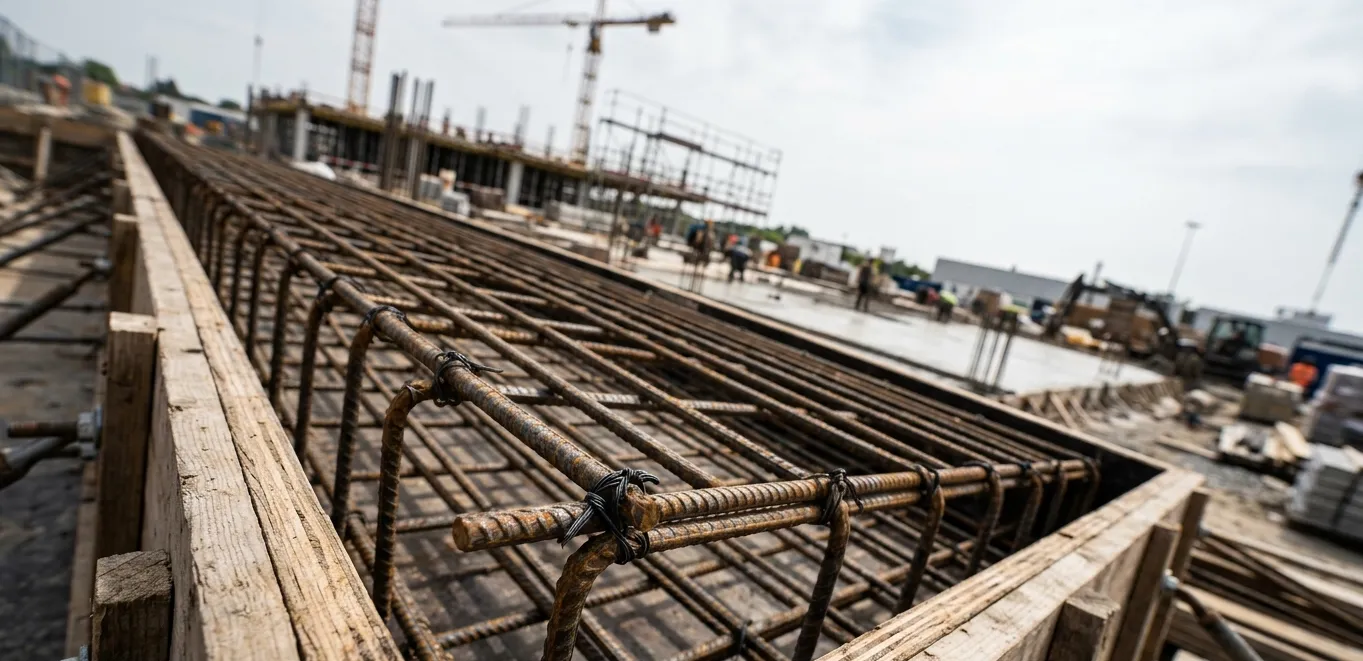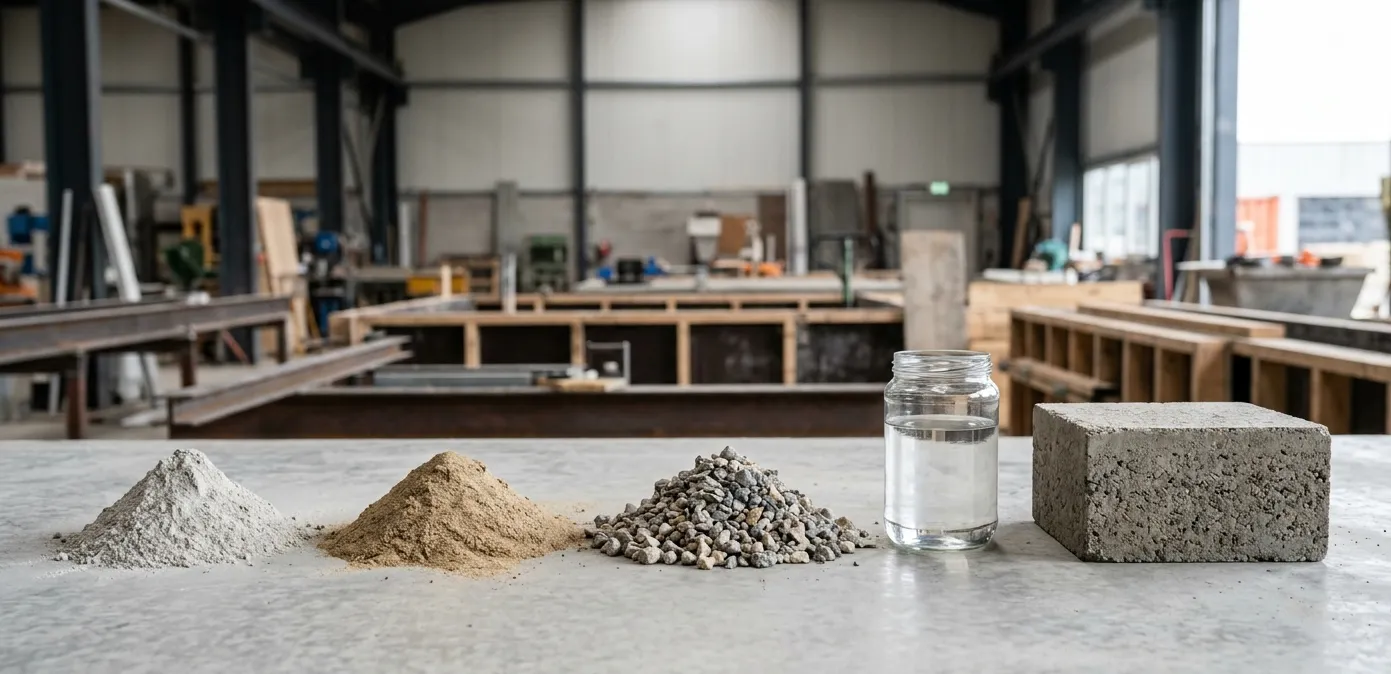
Reinforced concrete is a composite construction material made of concrete embedded with steel bars, mesh, or fibers that resist tensile and shear forces. Plain concrete carries compression well but cracks under tension. The steel reinforcement inside reinforced concrete absorbs that tension, producing a structural material strong in both directions.
Engineers use reinforced concrete in foundations, beams, columns, slabs, bridges, and high-rise structures. The combination works because concrete and steel share similar thermal expansion rates, so the two materials expand and contract together under temperature changes.
What Is Concrete?
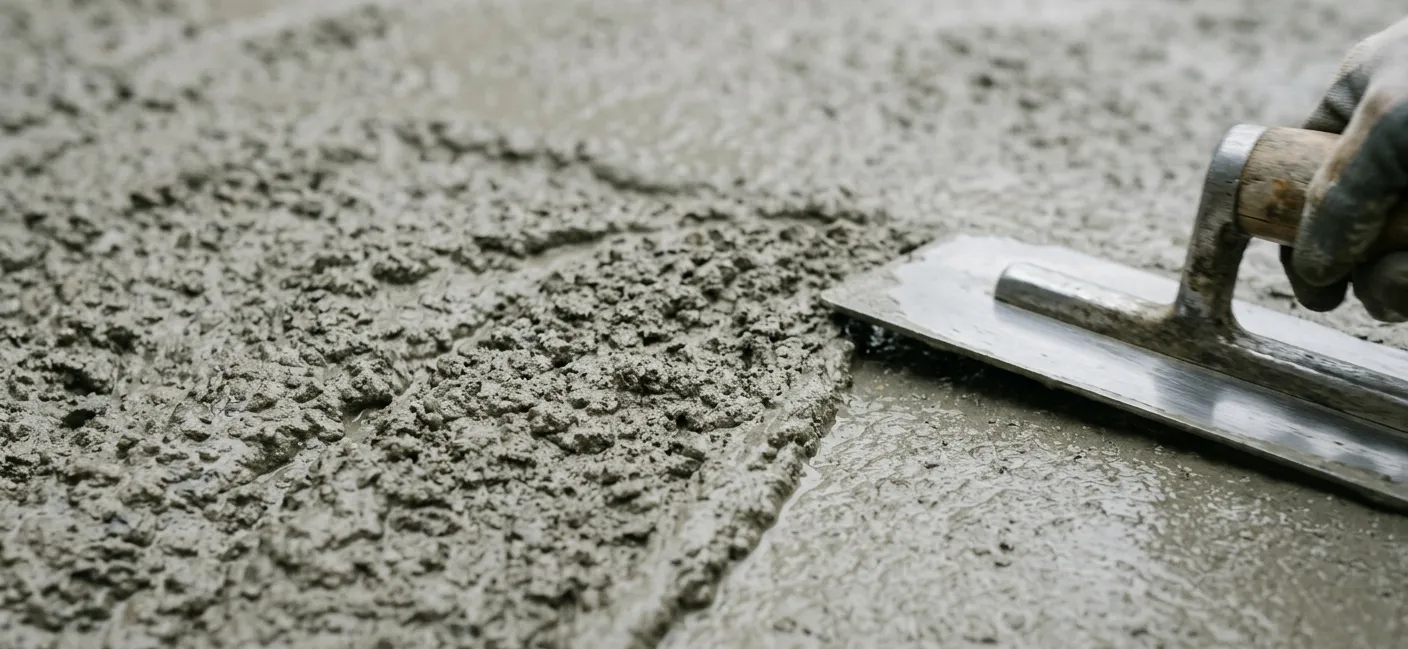
Concrete is a building material formed by mixing cement, water, sand, and coarse aggregate into a paste that hardens through a chemical reaction called hydration. The cement and water create a binding gel that locks the sand and aggregate particles into a solid mass.
Concrete reaches roughly 70% of its design strength within 7 days and close to 100% within 28 days under standard curing conditions. Builders classify concrete by its compressive strength rating, expressed in PSI or MPa, and by its mix design, which includes the water-to-cement ratio, aggregate size, and any chemical admixtures.
How Does Reinforced Cement Concrete Differ From Plain Concrete?
Reinforced cement concrete contains embedded steel bars that carry tensile loads, while plain concrete contains no internal reinforcement and resists only compressive loads. Plain concrete fails under bending stress because it lacks tensile capacity. Reinforced cement concrete distributes that bending stress across steel bars positioned at the tension zone of a structural member.
Reinforced cement concrete supports 10 to 100 times more tensile load than plain concrete of the same cross-section, depending on the rebar size and spacing. This strength difference makes reinforced cement concrete the standard choice for load-bearing slabs, beams, retaining walls, and multi-story buildings, while plain concrete remains suitable for sidewalks, driveways, and non-structural fill.
What Does Rebar Do in Concrete?
Rebar transfers tensile, shear, and flexural stress away from the concrete matrix and into the steel itself, preventing cracks from widening and structural members from failing under load. Concrete alone cracks once tensile stress exceeds roughly 10% of its compressive strength. Rebar bridges these cracks and holds the concrete sections together.
Rebar also controls shrinkage cracking during the curing phase. As concrete loses moisture and contracts, the bonded rebar restrains uneven movement across the slab or beam, keeping crack widths within an acceptable structural limit, typically under 0.3 mm for most applications.
What Are the Types of Rebar Used in Reinforced Concrete?
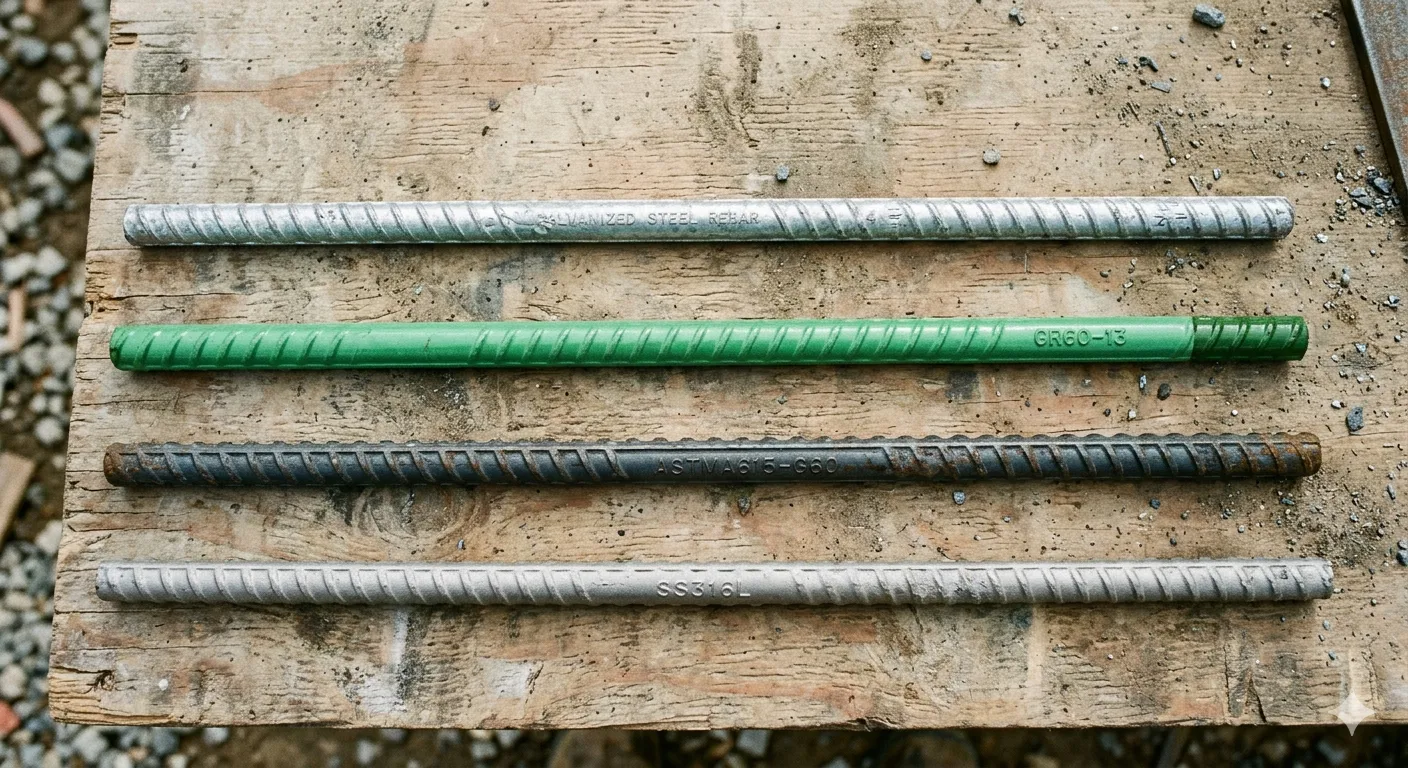
Reinforced concrete projects use 5 main rebar types, each suited to specific structural and environmental conditions:
- Use carbon steel rebar for standard structural framing in dry, non-corrosive environments.
- Apply epoxy-coated rebar in bridges, parking structures, and coastal projects exposed to chloride and moisture.
- Select galvanized rebar for marine structures requiring zinc-coated corrosion resistance.
- Choose stainless steel rebar for high-corrosion environments such as wastewater treatment plants.
- Install fiber-reinforced polymer (FRP) rebar in projects requiring non-conductive, non-corrosive reinforcement, such as MRI facilities.
Rebar size follows a standardized numbering system. A #4 bar measures 1/2 inch in diameter, while a #8 bar measures 1 inch in diameter, with each number representing an increment of 1/8 inch.
What Is Ready Mix Concrete and How Does It Relate to Reinforced Concrete?
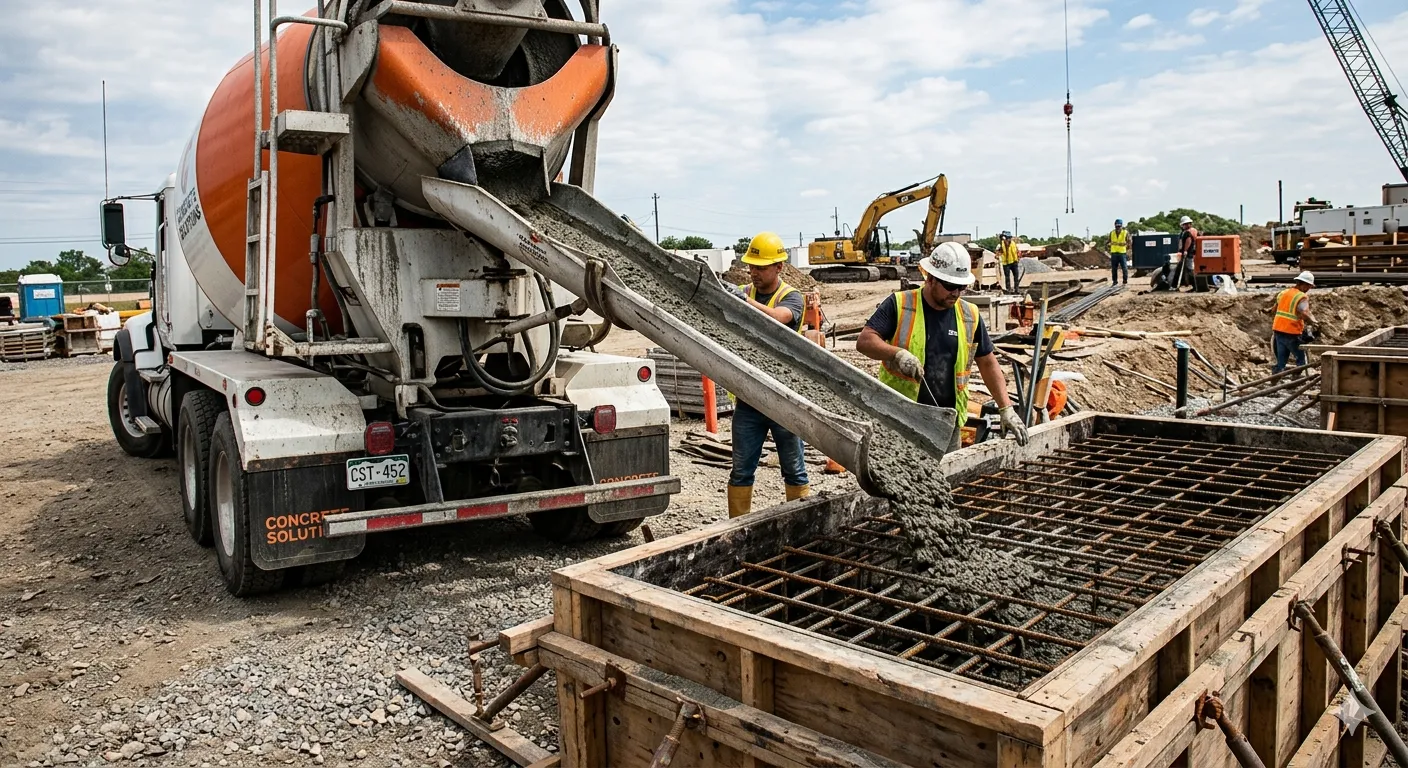
Ready mix concrete is concrete batched at a centralized plant and delivered to a construction site in a fresh, unhardened state inside a transit mixer. Ready mix concrete provides consistent mix proportions and strength ratings, which matters directly for reinforced concrete work where bond strength between rebar and concrete depends on uniform paste quality.
Ready mix concrete trucks must deliver and place their load within 90 minutes of batching under standard ASTM specifications. This delivery window keeps the concrete workable enough to flow around rebar cages without forming voids or honeycombing.
What Concrete Construction Materials Are Used in Reinforced Concrete?
Concrete construction material components for reinforced concrete include Portland cement, fine and coarse aggregate, water, steel reinforcement, and chemical admixtures that control setting time and workability. Each material contributes a distinct structural function to the finished element.
- Cement binds the aggregate particles through hydration.
- Aggregate provides bulk volume and compressive load-bearing capacity.
- Water activates the cement’s chemical reaction and controls mix workability.
- Steel rebar carries tensile and shear stress.
- Admixtures adjust setting time, air entrainment, or water reduction.
How Much Rebar Concrete Do You Need for a Project?
Rebar concrete quantities depend on the structural span, load requirements, slab thickness, and local building code spacing rules, typically calculated as pounds of steel per cubic yard of concrete. A standard residential slab uses 0.5 to 1 pound of rebar per square foot, while structural beams and columns require significantly higher steel ratios.
Use a concrete calculator to determine the exact cubic yardage of concrete needed for footings, columns, or walls based on length, width, and depth. Use a concrete slab calculator to calculate slab volume and rebar grid spacing for flatwork such as driveways, patios, and foundation slabs.
What Are the Applications of Reinforced Concrete?
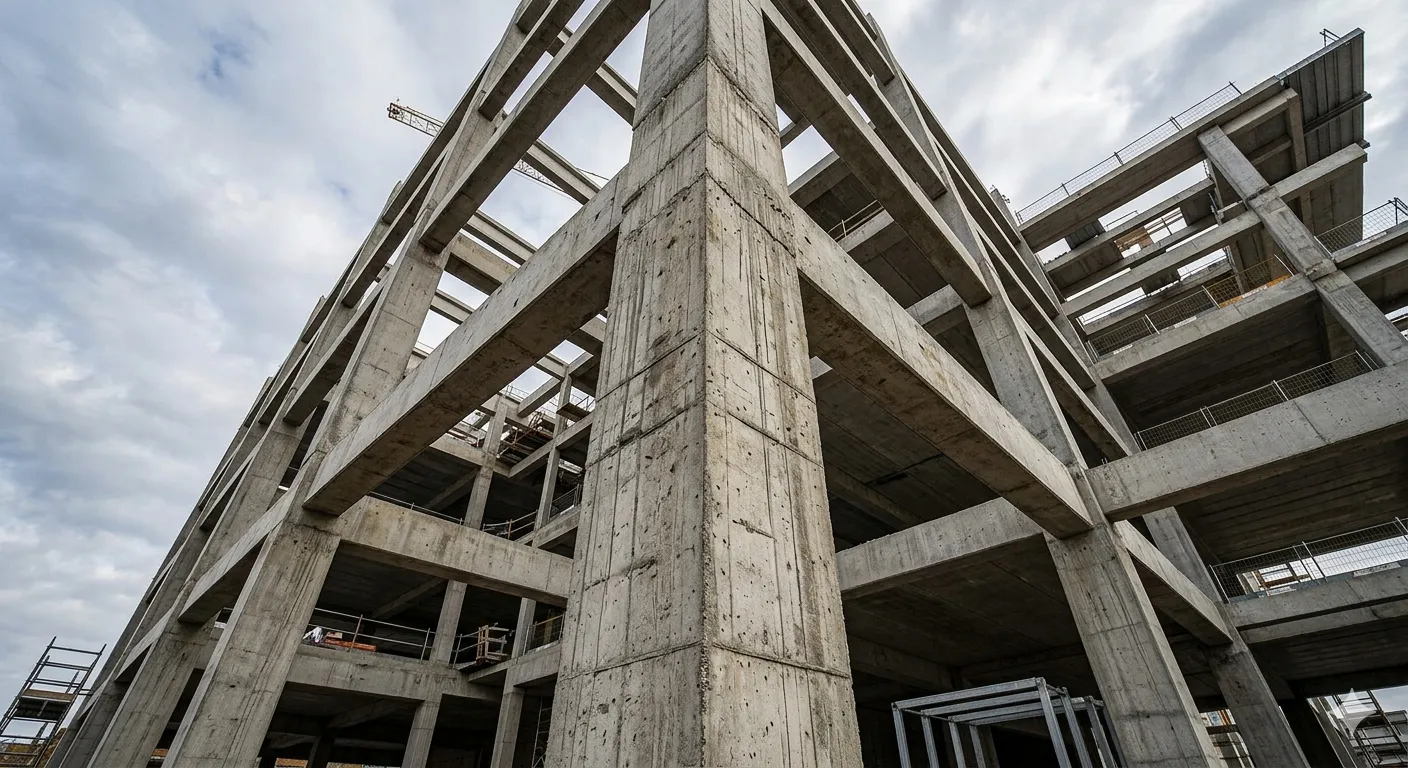
Reinforced concrete serves 6 primary structural applications across residential, commercial, and infrastructure projects:
- Support building foundations and footings.
- Frame beams and columns in multi-story structures.
- Span bridge decks and overpasses.
- Retain soil in retaining walls.
- Form floor and roof slabs.
- Construct water tanks, tunnels, and dams.
What Are the Advantages of Reinforced Concrete?
Reinforced concrete delivers 5 measurable advantages over plain concrete and timber framing:
- Resists tensile, compressive, and shear forces simultaneously.
- Extends service life to 50 to 100 years with proper maintenance.
- Reduces fire risk compared to wood-framed structures, since concrete does not combust.
- Lowers long-term maintenance costs through corrosion-resistant rebar coatings.
- Adapts to custom architectural shapes through formwork flexibility.
Frequently Asked Questions
Is rebar concrete the same as reinforced concrete?
Rebar concrete is reinforced concrete that specifically uses steel reinforcing bars, while reinforced concrete is the broader category that also includes wire mesh and fiber reinforcement.
What grade of rebar is used in reinforced concrete?
Grade 60 rebar, with a minimum yield strength of 60,000 PSI, is the standard rebar grade used in reinforced concrete construction across residential and commercial projects.
Can reinforced concrete crack?
Reinforced concrete can develop hairline shrinkage cracks during curing, but the embedded rebar prevents these cracks from widening into structural failures.
How long does reinforced concrete last?
Reinforced concrete structures last 50 to 100 years when built with proper concrete cover over the rebar and maintained against chloride and moisture exposure.