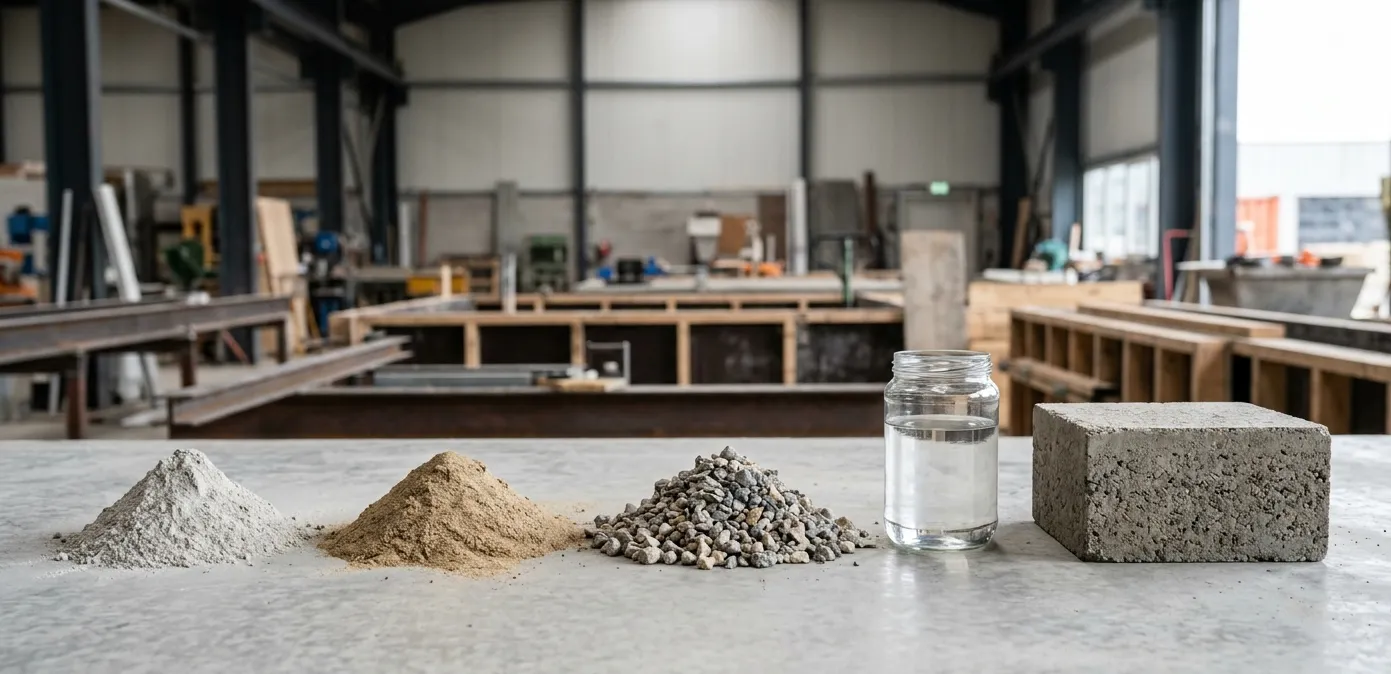
Ready mix concrete is concrete that is manufactured in a batching plant according to a precise mix design, then transported to a construction site in a transit mixer truck. The mix arrives ready to pour, eliminating on-site batching. This guide covers its composition, production process, grades, delivery, cost, and use cases.
What Is Ready Mix Concrete?
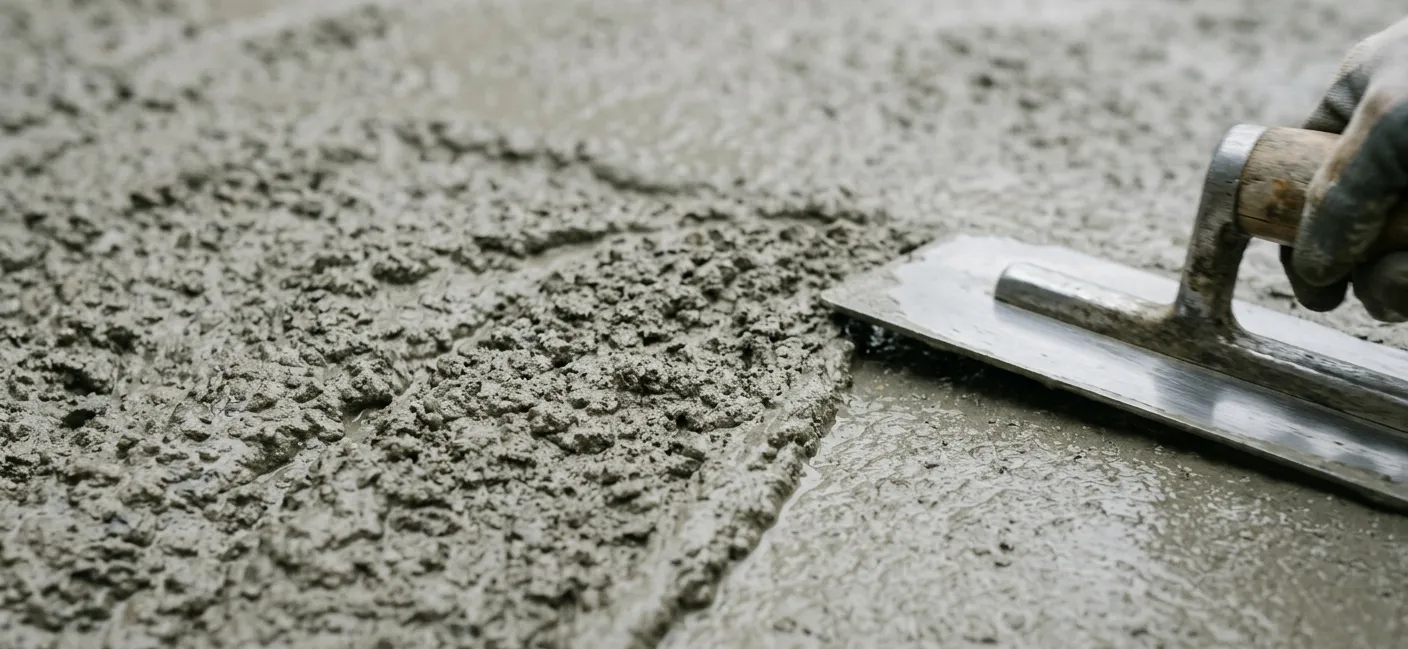
Ready mix concrete is a factory-produced concrete mixture delivered to a construction site in a fresh, unhardened state, ready for direct placement. It is also called ready mixed concrete. A batching plant combines cement, aggregates, water, and admixtures in fixed proportions, then loads the mix into a transit mixer for transport.
Ready mix concrete differs from site-mixed concrete in one structural way: the mixing happens off-site, under controlled plant conditions, rather than by hand or portable mixer at the job site. This control produces consistent strength and reduces material waste.
What Are the Main Components of Ready Mix Concrete?
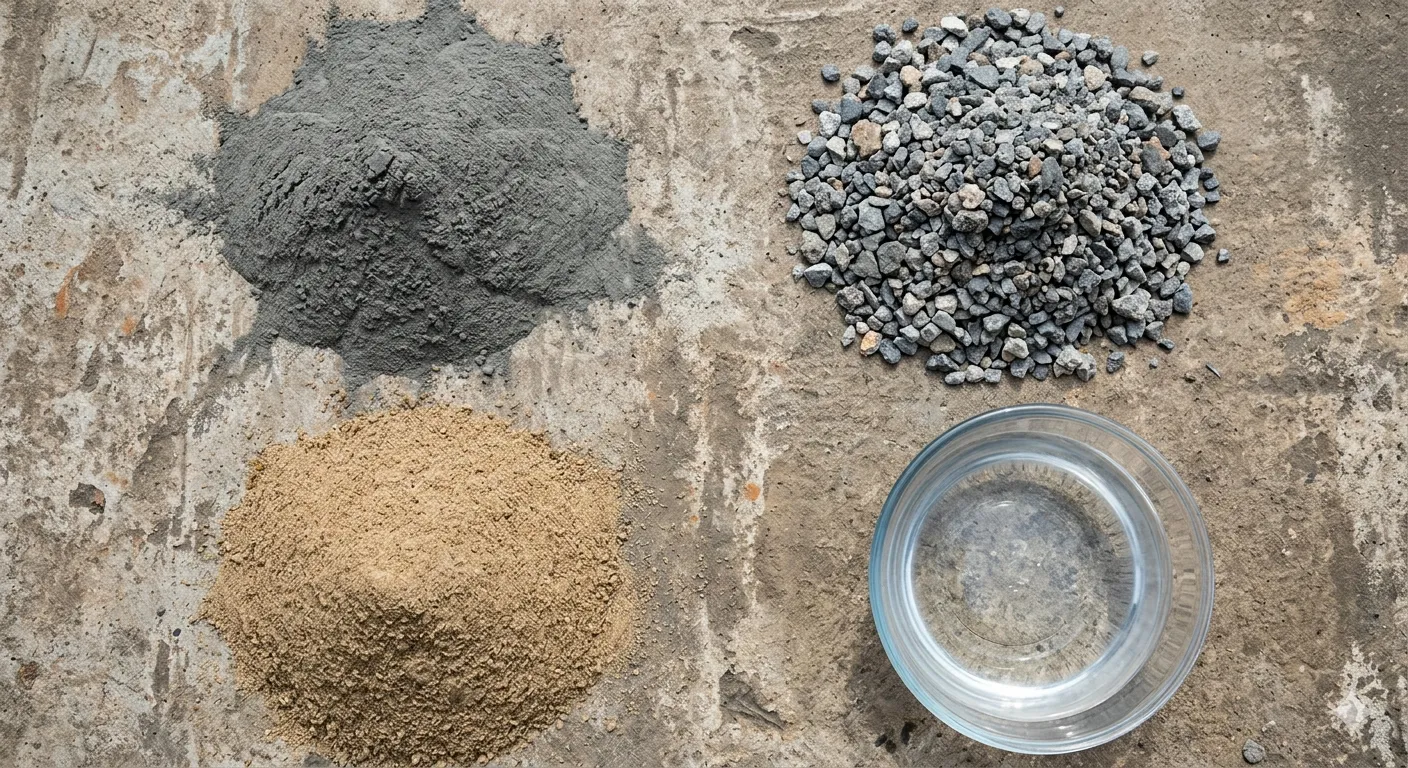
Ready mix concrete contains four core components, each with a defined function in the final mix.
- Cement acts as the binding agent that hardens through hydration and holds aggregates together.
- Coarse aggregate (gravel or crushed stone) provides the structural bulk and load-bearing strength.
- Fine aggregate (sand) fills voids between coarse particles and improves workability.
- Water triggers the hydration reaction that converts the dry mix into a solid matrix.
- Admixtures (plasticizers, retarders, accelerators) adjust setting time, workability, or durability for specific site conditions.
A standard batching plant mix uses a water-cement ratio between 0.4 and 0.6, depending on the target strength grade.
How Is Ready Mix Concrete Made?
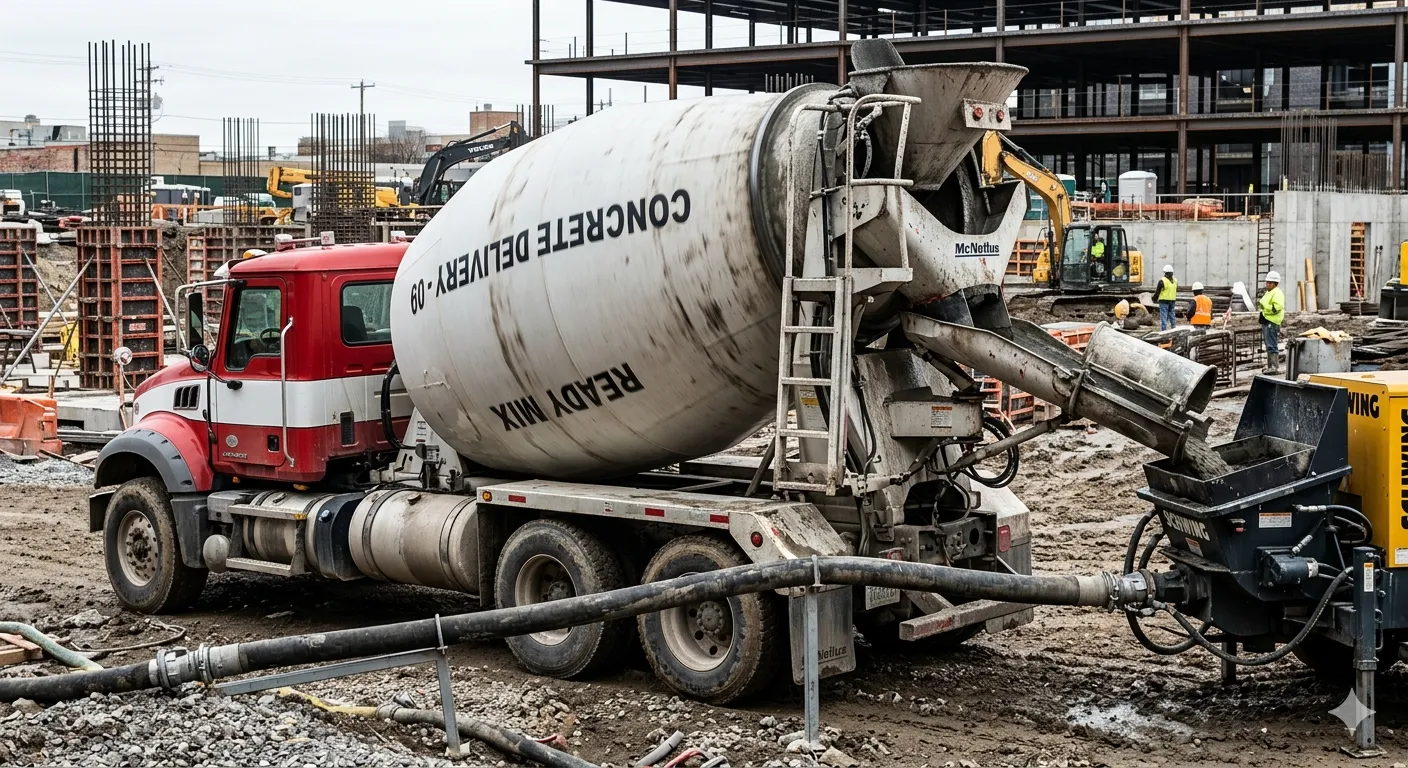
A batching plant produces ready mix concrete through computer-controlled weighing and mixing of raw materials, following one of two methods: central-mixed or transit-mixed (shrink-mixed) production.
In central-mixed production, the plant mixes all components fully in a stationary drum before loading the finished concrete into the truck. In transit-mixed production, the plant combines dry materials and water in the truck, and the rotating drum completes the mixing during transport. Both methods follow the same mix design specification, measured by weight rather than volume for accuracy.
What Are the Types and Grades of Ready Mix Concrete?
Ready mix concrete is classified by grade, where each grade number represents the compressive strength in megapascals (MPa) after 28 days of curing.
- M10 and M15 suit non-structural work such as pathways and leveling courses.
- M20 and M25 suit residential slabs, footings, and low-rise structural elements.
- M30 to M40 suit high-rise structural columns, beams, and load-bearing walls.
- M45 and above suit specialized applications such as bridges, dams, and heavy industrial flooring.
Beyond standard grades, ready mix plants also supply high-strength concrete, fiber-reinforced concrete, and self-compacting concrete for specific structural or finishing requirements.
How Is Ready Mix Concrete Delivered to the Site?
Ready mix concrete delivery uses a rotating-drum transit mixer truck that keeps the mix agitated and workable between the plant and the pour site. The drum rotates continuously during transport to prevent segregation and premature setting.
Concrete delivery operates under a strict time window. Most batching plants enforce a 90-minute discharge limit from the moment water contacts cement, after which the mix begins losing workability. Distance from the plant to the site directly limits the delivery radius for a given mix design. For large or elevated pours, the delivery truck connects to a concrete pump, which moves the mix through a pipeline to the placement point.
What Determines Ready Mix Concrete Cost?
Ready mix cost is determined by five primary factors: strength grade, order volume, delivery distance, regional material prices, and any specialty admixtures.
Higher grades cost more per cubic meter because they require a higher cement content. Small orders carry a higher per-unit cost than bulk orders because plants apply minimum-load charges. Delivery distance adds a transport surcharge once the site exceeds the plant’s standard radius. Use a concrete calculator to estimate the volume needed for a project before requesting a supplier quote, since volume directly drives the total cost.
What Are the Advantages and Disadvantages of Ready Mix Concrete?
Ready mix concrete carries distinct advantages and disadvantages compared to site-mixed concrete.
Advantages:
- Ensures consistent strength through computer-controlled batching
- Reduces labor requirements at the job site
- Saves time by eliminating manual mixing
- Limits material waste through precise proportioning
- Improves site cleanliness by removing storage piles of raw materials
Disadvantages:
- Requires site access for large delivery trucks
- Imposes a fixed discharge window of 90 minutes
- Increases cost for small-volume orders due to minimum-load charges
- Depends on delivery timing, which traffic or distance can disrupt
When Should You Use Ready Mix Concrete?
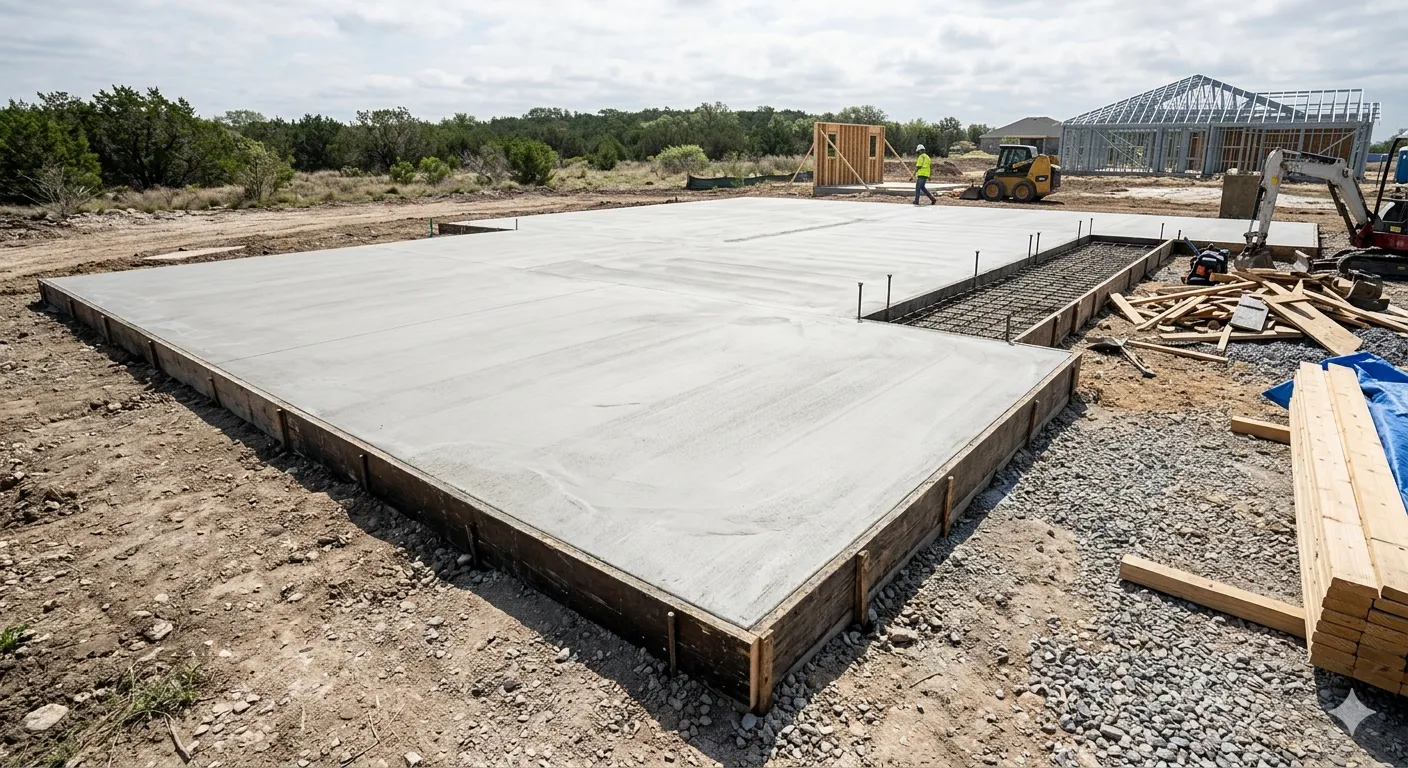
Ready mix concrete suits projects that need consistent quality, large pour volumes, or fast turnaround: foundations, structural slabs, driveways, columns, and commercial flooring. Use a concrete slab calculator to confirm slab thickness and volume requirements before ordering.
Small, irregular, or remote jobs with limited truck access often favor site-mixed concrete instead, since ready mix delivery depends on road access and a fixed discharge window.
How Do You Order Ready Mix Concrete for a Project?
Ordering ready mix concrete follows four steps: specify the required grade, calculate the total volume, confirm site access for a transit mixer truck, and schedule the delivery window with the supplier.
- Specify the grade based on structural requirements (e.g., M20 for a residential slab)
- Calculate the volume using project dimensions
- Confirm truck access, including turning radius and any pumping requirements
- Schedule delivery to align with the crew’s placement and finishing timeline
For a full breakdown of materials, mix ratios, and standards, see this concrete construction material guide. Readers new to the base material can also review what is concrete for foundational definitions.
Frequently Asked Questions
Is ready mix concrete the same as ready mixed concrete?
Yes. Ready mix concrete and ready mixed concrete refer to the same product: factory-batched concrete delivered fresh to a construction site by transit mixer.
How long does ready mix concrete stay workable after mixing?
Ready mix concrete stays workable for approximately 90 minutes from the time water contacts cement, after which the mix loses the consistency needed for proper placement and finishing.
Does ready mix concrete cost more than site-mixed concrete?
Ready mix cost per cubic meter is often lower for large-volume orders due to plant efficiency, but it can exceed site-mixed cost for small orders because of minimum-load and delivery charges.