Concrete floors are one of the most durable flooring options for homes, garages, basements, patios, workshops, and commercial buildings. However, despite their strength, they are not maintenance-free. Dirt, grease, mold, moisture, and everyday wear can gradually dull the surface or even damage certain finishes if the wrong cleaning methods are used.
Whether you’re wondering how to clean concrete floors in your garage, basement, living room, or outdoor patio, the correct approach depends on the type of concrete you’re working with. Sealed, polished, stained, painted, and unfinished concrete all require different cleaning techniques to preserve their appearance and extend their lifespan.
In this guide, you’ll learn:
- How to identify your concrete floor type
- The best cleaning products for different finishes
- Step-by-step instructions for cleaning concrete floors
- How to remove common stains safely
- Tips to keep concrete floors looking new for years
Let’s start with the quickest method.
Quick Answer: How to Clean Concrete Floors
If you need the short version, follow these six simple steps:
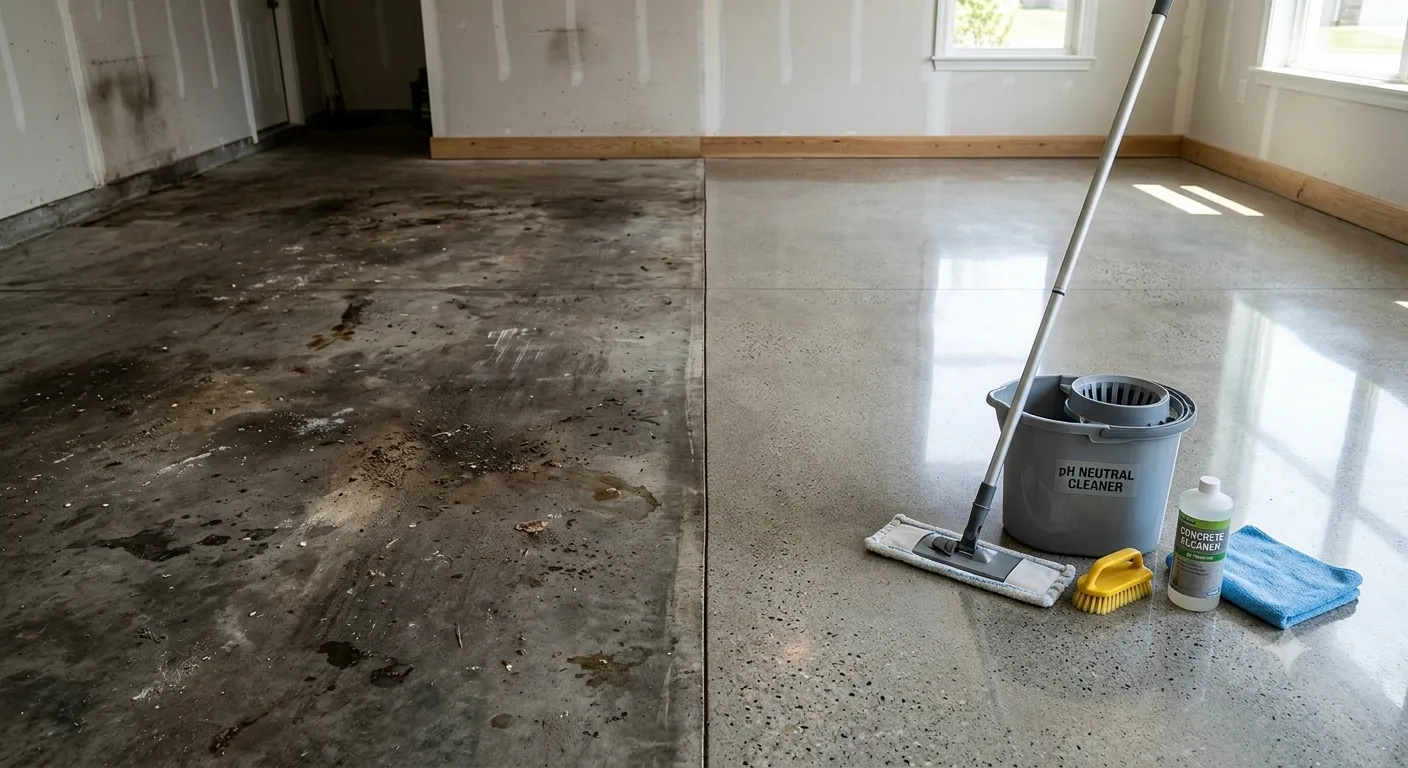
- Sweep or vacuum the floor to remove loose dirt and dust.
- Determine whether the concrete is sealed, unsealed, polished, painted, or stained.
- Mix a pH-neutral cleaner with warm water.
- Mop or scrub the surface using a microfiber mop or soft-bristle brush.
- Rinse thoroughly with clean water.
- Allow the floor to dry completely before walking on it.
Avoid harsh acidic cleaners unless you’re preparing concrete for staining or painting, as they can damage protective sealers and decorative finishes.
Understand Your Concrete Floor Before Cleaning
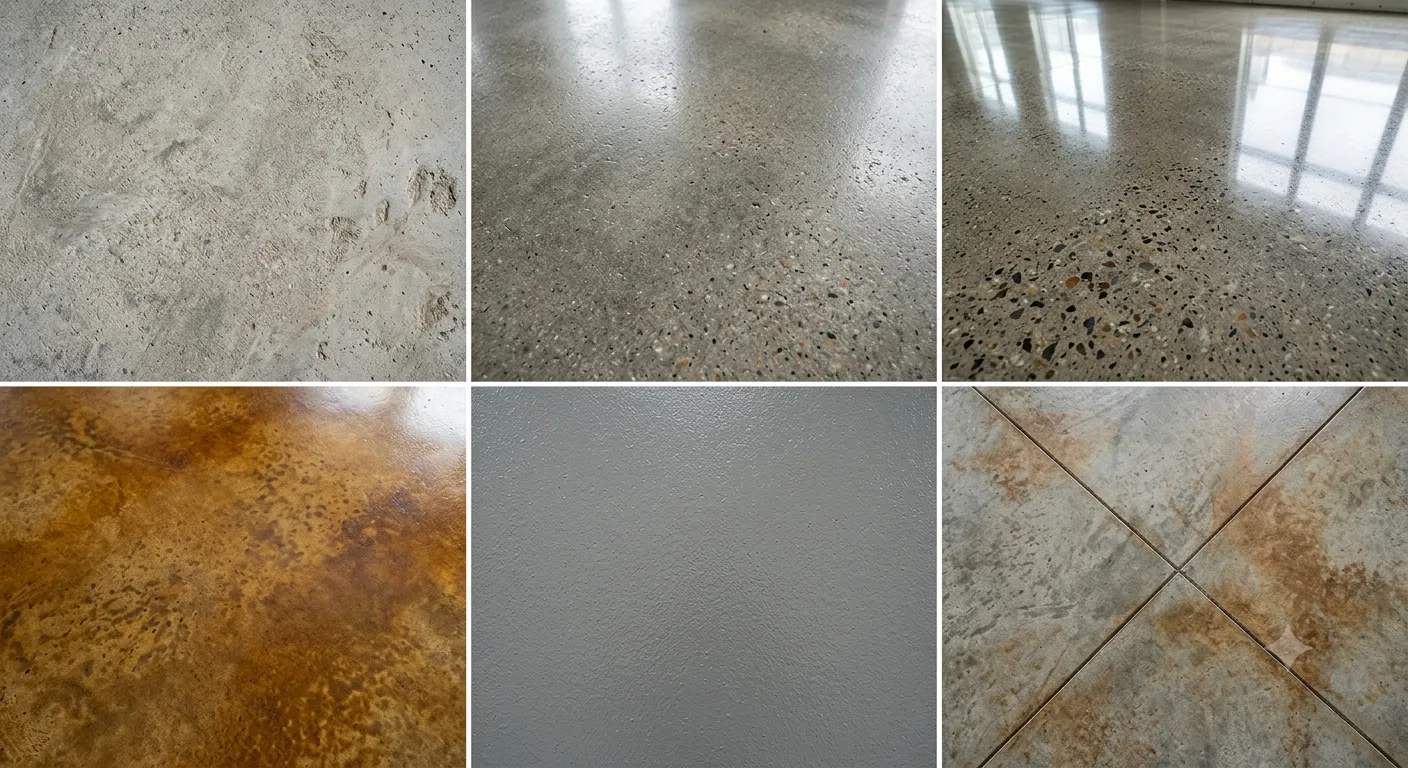
One of the biggest mistakes homeowners make is treating every concrete floor the same way. In reality, different finishes react differently to water, chemicals, and scrubbing.
Before choosing a cleaner, identify your floor type.
Sealed Concrete Floors
A sealed concrete floor has a protective coating that prevents moisture, oil, and stains from penetrating the surface.
Common locations include:
- Garages
- Living rooms
- Warehouses
- Commercial buildings
- Finished basements
Characteristics
- Slight shine or satin finish
- Water beads on the surface
- Easier to clean
- Resistant to stains
These floors should only be cleaned with pH-neutral cleaners to protect the sealer.
Unsealed Concrete Floors
If you’re wondering how to clean unsealed concrete floors, the first thing to understand is that these floors are porous.
Water, oil, dirt, and chemicals can soak directly into the concrete, making stains more difficult to remove.
Common examples include:
- Older basements
- Utility rooms
- Workshops
- Storage areas
Because they absorb liquids quickly, avoid leaving water on the floor for extended periods.
Finished Concrete Floors
Finished concrete has been smoothed, densified, or mechanically finished during installation.
It often appears smoother than raw concrete and may have a slight sheen.
These floors generally require:
- Regular dust removal
- Damp mopping
- Mild detergents
Learning how to clean finished concrete floors correctly helps preserve their appearance without wearing away protective treatments.
Unfinished Concrete Floors
Unfinished concrete has no coating or decorative finish.
You’ll commonly find unfinished concrete in:
- Basements
- Crawl spaces
- Workshops
- Utility areas
If you’re searching for how to clean unfinished concrete floors, remember they require deeper cleaning because dirt penetrates the surface more easily.
Painted Concrete Floors
Painted concrete adds color while protecting the surface underneath.
Examples include:
- Basement floors
- Laundry rooms
- Garage floors
- Patios
Painted floors should never be scrubbed aggressively with wire brushes because they can scratch or peel the paint.
When learning how to clean painted concrete floors, always choose non-abrasive cleaners.
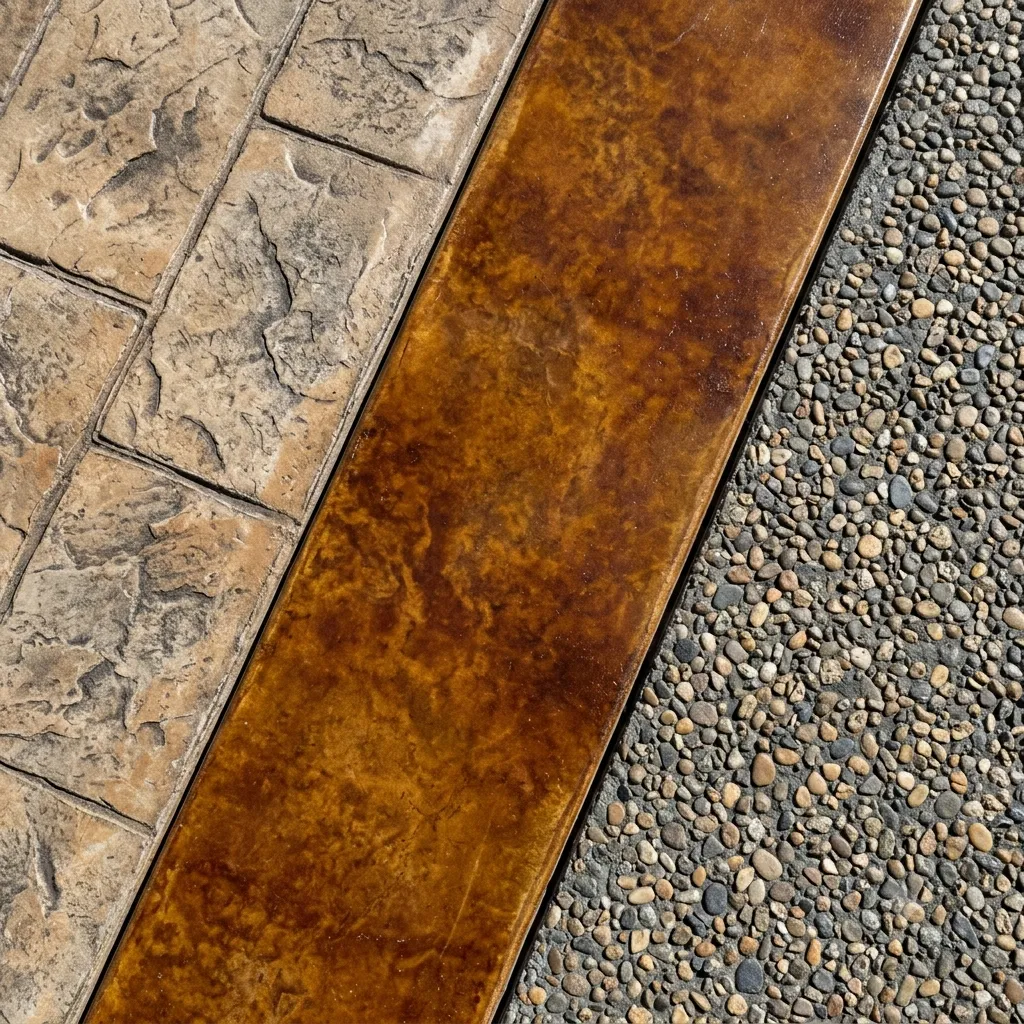
Stained Concrete Floors
Concrete stains penetrate the concrete instead of sitting on top like paint.
They provide a decorative appearance while maintaining the natural texture of concrete.
There are two common types:
- Acid stains
- Water-based stains
Both require gentle cleaning to preserve their color.
Acid-Stained Concrete Floors
Acid staining creates permanent color by chemically reacting with minerals inside the concrete.
Because the color becomes part of the concrete itself, acid-stained floors are extremely durable.
However, harsh alkaline or acidic cleaners may damage the protective sealer applied afterward.
If you’re researching how to clean acid stain concrete floors, always use pH-neutral cleaning products.
Scored Concrete Floors
Scored concrete contains decorative grooves that imitate tile, stone, or large slabs.
Although attractive, dirt often accumulates inside the scoring lines.
Routine brushing keeps debris from building up inside these grooves.
Interior vs. Exterior Concrete Floors
Indoor and outdoor concrete face different challenges.
Indoor concrete
- Dust
- Food spills
- Foot traffic
- Pet accidents
Outdoor concrete
- Mud
- Leaves
- Mold
- Algae
- Rainwater
- UV exposure
Because outdoor concrete experiences more environmental stress, stronger cleaning methods are sometimes necessary.
Cleaning Supplies You’ll Need
Using the proper equipment makes cleaning faster and reduces the risk of damaging the surface.
Basic Cleaning Tools
Keep these tools on hand:
- Push broom
- Soft-bristle broom
- Dust mop
- Microfiber mop
- Bucket
- Soft scrub brush
- Wet vacuum
- Garden hose (for outdoor areas)
- Pressure washer (when appropriate)
Avoid steel brushes on decorative concrete because they may scratch the finish.
Best Cleaning Products
For most concrete floors, simple products work surprisingly well.
Recommended cleaners include:
- Warm water
- Mild dish soap
- pH-neutral concrete cleaner
- Baking soda
- Hydrogen peroxide
- Commercial degreaser
- Mold remover (for mildew)
- Concrete-safe disinfectant
Avoid using ammonia or acidic products on sealed or polished concrete.
Cleaner Comparison Table
| Cleaner | Best For | Avoid On |
| Warm water | Routine cleaning | Heavy grease |
| Dish soap | Light dirt | Oil stains |
| pH-neutral cleaner | Sealed concrete | None |
| Baking soda | Mild stains | None |
| Degreaser | Garage oil | Decorative finishes without testing |
| Hydrogen peroxide | Mold removal | Colored fabrics nearby |
| Pressure washer | Outdoor patios | Indoor floors |
How to Clean Concrete Floors Step by Step
Regardless of the type of concrete, the overall cleaning process follows the same sequence.
Step 1: Remove Loose Dirt
Begin by sweeping thoroughly.
Pay attention to:
- Corners
- Expansion joints
- Floor edges
- Under shelving
Loose dirt acts like sandpaper if scrubbed into the surface.
Vacuuming afterward removes fine dust that sweeping often leaves behind.
Step 2: Identify the Floor Finish
Before mixing any cleaner, determine whether your floor is:
- Sealed
- Painted
- Polished
- Stained
- Unsealed
- Finished
- Decorative
Choosing the wrong cleaner can dull polished surfaces or damage protective sealers.
Step 3: Prepare the Cleaning Solution
For routine cleaning:
- Fill a bucket with warm water.
- Add a pH-neutral concrete cleaner according to the manufacturer’s instructions.
If no specialized cleaner is available, mix a few drops of mild dish soap into warm water.
Avoid creating excessive soap suds, as residue can attract dirt after the floor dries.
Step 4: Mop or Scrub the Floor
Dip your microfiber mop into the cleaning solution and wring out excess water.
Work in small sections.
For textured concrete, use a soft-bristle brush to loosen embedded dirt.
Do not oversaturate unsealed concrete because excess moisture may penetrate the surface.
Step 5: Rinse Thoroughly
Soap residue leaves concrete looking dull.
Rinse with clean water after washing.
Outdoor areas can simply be rinsed with a garden hose.
Indoor floors should be mopped with fresh water until no cleaner remains.
Step 6: Allow the Floor to Dry
Proper drying helps prevent:
- Water spots
- Slippery surfaces
- Mold growth
- Mineral deposits
Improve airflow by opening windows or using fans when cleaning interior spaces.
How to Clean Interior Concrete Floors
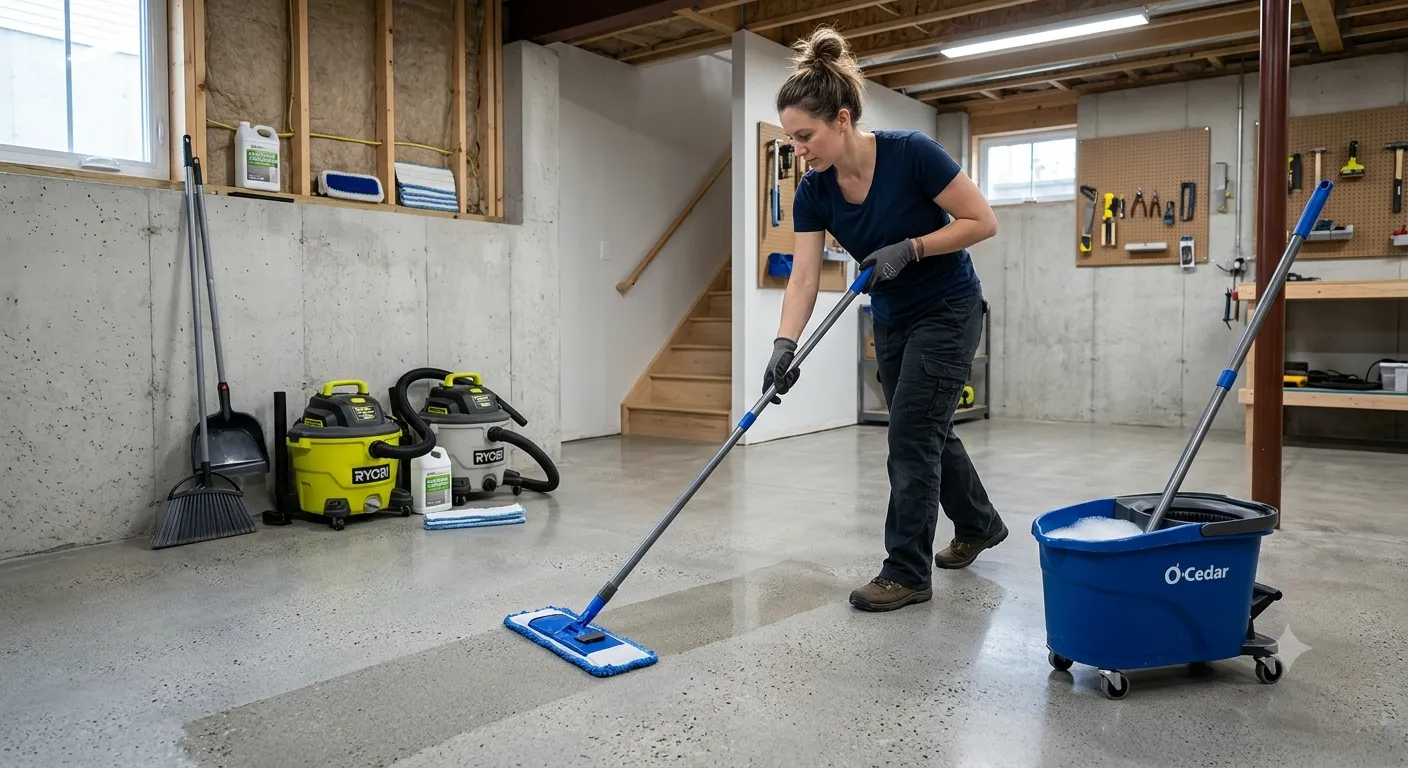
Many modern homes feature decorative interior concrete flooring because of its durability and contemporary appearance.
If you’re looking for how to clean interior concrete floors or how to clean indoor concrete floor surfaces, regular maintenance is the key to keeping them attractive.
Daily Maintenance
- Dust mop daily.
- Vacuum weekly.
- Wipe spills immediately.
Fine dust particles gradually scratch decorative finishes if left unattended.
Weekly Cleaning
Once a week:
- Sweep thoroughly.
- Mop using warm water and a pH-neutral cleaner.
- Rinse with clean water.
- Dry using a microfiber cloth if needed.
Removing Common Indoor Stains
Food stains
Clean with warm water and dish soap.
Coffee
Use hydrogen peroxide diluted with water.
Pet accidents
Clean immediately using a concrete-safe enzymatic cleaner.
Mud
Allow it to dry before sweeping to avoid spreading it across the floor.
Tips for Long-Term Care
- Place mats at entrances.
- Use felt pads beneath furniture.
- Avoid dragging heavy appliances.
- Clean spills as soon as possible.
- Reapply sealer when recommended by the manufacturer.
These habits significantly reduce wear and help preserve the floor’s appearance.
How to Clean Concrete Floors Outside
Outdoor concrete constantly faces dirt, rain, algae, leaves, and vehicle traffic.
Cleaning methods vary depending on whether you’re working on a patio, driveway, walkway, or porch.
Start by Removing Loose Debris
Use a stiff outdoor broom to remove:
- Leaves
- Grass clippings
- Dirt
- Small stones
- Branches
This prevents debris from scratching the surface during washing.
Wash the Surface
Mix warm water with a concrete-safe cleaner.
Scrub the concrete using a deck brush.
For larger areas, a pressure washer can save time—but always use an appropriate pressure setting to avoid damaging older or decorative concrete.
Rinse Thoroughly
Rinse the entire area with clean water and allow it to dry before replacing outdoor furniture or rugs.
How to Clean Concrete Floors in a Basement
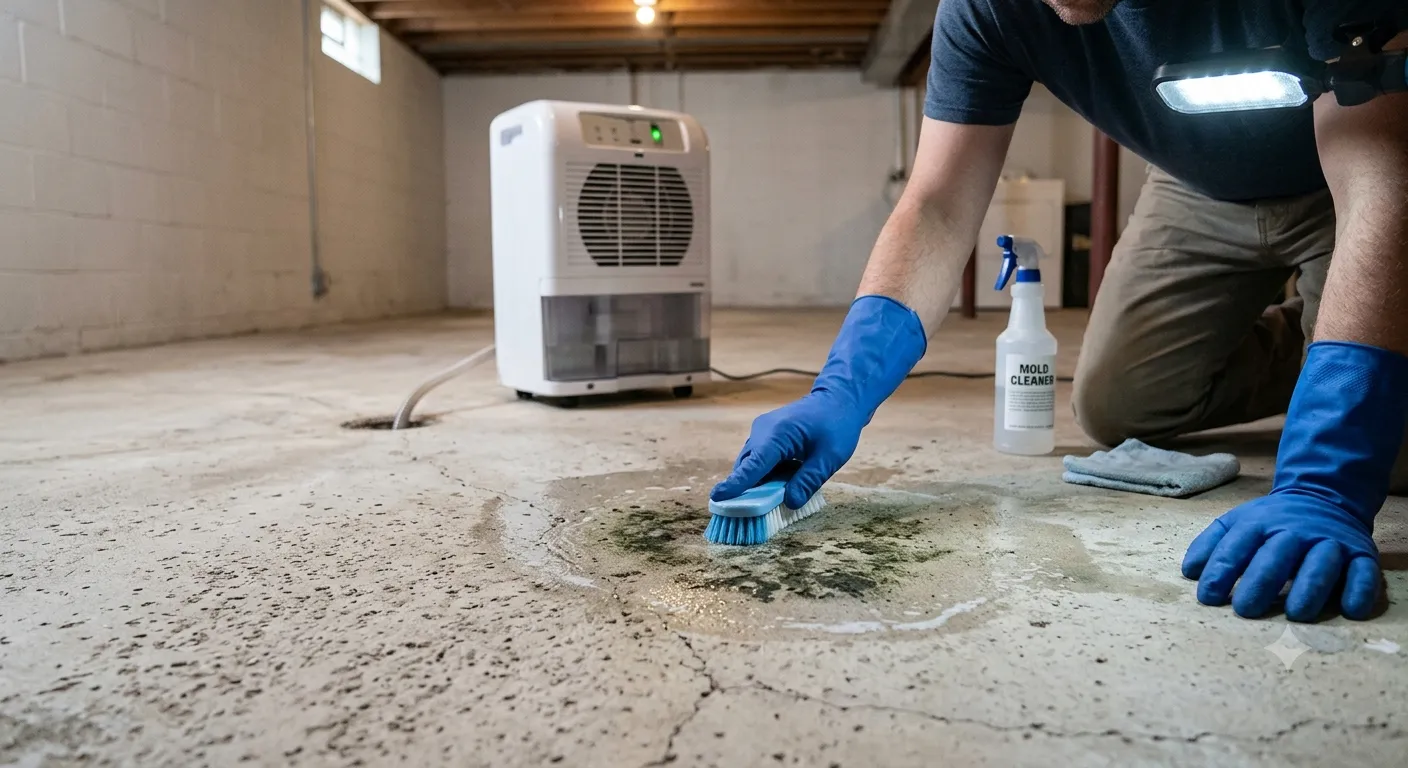
Basements present unique cleaning challenges that you won’t typically encounter in other areas of the home. High humidity, limited ventilation, moisture intrusion, and occasional water leaks make basement concrete floors more susceptible to mold, mildew, efflorescence, and stubborn stains.
Whether you’re searching for how to clean concrete floor in basement or how to clean unfinished concrete basement floor, the process begins with addressing moisture before cleaning.
Step 1: Remove Loose Dirt and Dust
Begin by removing all loose debris.
Use a:
- Push broom
- Shop vacuum
- HEPA vacuum (if available)
Pay special attention to:
- Wall edges
- Expansion joints
- Around water heaters
- Floor drains
- Storage shelves
Concrete dust can settle into pores, making regular sweeping essential.
Step 2: Inspect the Basement for Moisture
Before washing the floor, inspect for signs of water damage.
Look for:
- Damp spots
- White powder (efflorescence)
- Musty odors
- Mold growth
- Cracks allowing water intrusion
Cleaning alone won’t solve these issues if moisture continues entering the basement.
Step 3: Prepare a Safe Cleaning Solution
For routine cleaning, combine:
- Warm water
- A pH-neutral concrete cleaner
For light dirt, a few drops of mild dish soap are sufficient.
Avoid harsh chemicals unless you’re dealing with mold or heavy contamination.
Step 4: Scrub the Surface
Use a microfiber mop for smooth concrete.
For textured or unfinished concrete, scrub gently using a soft-bristle brush.
Avoid soaking unfinished concrete because excessive water penetrates its porous surface.
Step 5: Rinse and Dry Thoroughly
Rinse with clean water and remove excess moisture using:
- Wet vacuum
- Dry mop
- Towels
Run fans or a dehumidifier until the basement is completely dry.
Drying is just as important as cleaning because lingering moisture encourages mold growth.
Tips for Maintaining Basement Concrete Floors
- Sweep weekly.
- Use a dehumidifier during humid months.
- Repair foundation cracks promptly.
- Store boxes on shelves instead of directly on the floor.
- Keep floor drains clean.
How to Clean a Concrete Basement Floor After a Flood
If your basement has recently flooded, cleaning the floor requires more than simply removing mud. Floodwater often contains bacteria, chemicals, and contaminants that can penetrate porous concrete.
If you’re researching how to clean concrete basement floor after a flood, follow these steps carefully.
Safety First
Before entering the basement:
- Shut off electricity if necessary.
- Wear waterproof boots.
- Use rubber gloves.
- Wear eye protection.
- Use an N95 mask if mold is present.
If sewage backed up during the flood, professional remediation may be necessary.
Remove Standing Water
Use one or more of the following:
- Submersible pump
- Wet vacuum
- Buckets
- Floor squeegee
The faster water is removed, the less likely mold will develop.
Remove Mud and Debris
Floodwater often leaves behind:
- Mud
- Sand
- Leaves
- Organic matter
Allow heavy mud to dry slightly before scraping it away.
Sweep and vacuum the remaining debris.
Wash the Concrete
Mix a concrete-safe cleaner with warm water.
Scrub every section using a stiff nylon brush.
Focus on:
- Corners
- Expansion joints
- Floor drains
- Areas beneath appliances
Disinfect the Surface
After cleaning, disinfect the floor using a concrete-safe disinfectant suitable for flood cleanup.
Follow the manufacturer’s instructions regarding dilution and contact time.
Avoid mixing cleaning chemicals together.
Dry the Basement Completely
Drying may take several days.
Use:
- Fans
- Dehumidifiers
- Open windows (if weather permits)
Concrete should be completely dry before replacing carpets, furniture, or storage items.
Check for Long-Term Damage
Inspect for:
- Cracks
- Surface scaling
- Efflorescence
- Mold growth
- Loose concrete
Address structural issues before finishing or sealing the floor.
How to Clean Mold from Concrete Floors
Concrete may appear solid, but its porous structure can trap moisture, making it an ideal environment for mold under the right conditions.
Whether you’re looking for how to clean mold from concrete floor, how to clean mold off concrete floor, or how to clean mold on concrete floor, eliminating moisture is just as important as removing the mold itself.
Why Mold Grows on Concrete
Common causes include:
- High humidity
- Basement leaks
- Flooding
- Poor ventilation
- Condensation
- Plumbing leaks
Simply cleaning visible mold won’t prevent it from returning if moisture remains.
Signs of Mold
Watch for:
- Black spots
- Green patches
- White fuzzy growth
- Musty smell
- Persistent dampness
Mold often develops behind stored boxes or furniture where airflow is limited.
Step 1: Protect Yourself
Wear:
- Gloves
- Safety glasses
- Long sleeves
- N95 respirator
Avoid dry brushing mold because spores can become airborne.
Step 2: Remove Loose Debris
Sweep or vacuum using a HEPA-equipped vacuum if possible.
Dispose of contaminated materials properly.
Step 3: Apply a Mold Cleaner
Choose a cleaner specifically designed for mold removal on masonry or concrete surfaces.
Allow it to remain on the surface for the recommended dwell time.
Step 4: Scrub the Concrete
Use a nylon scrub brush to loosen mold from the concrete surface.
Pay attention to:
- Cracks
- Expansion joints
- Corners
- Around floor drains
Repeat if necessary.
Step 5: Rinse and Dry
Remove cleaning residue with clean water.
Dry thoroughly using:
- Fans
- Wet vacuum
- Dehumidifier
Complete drying prevents mold from re-establishing itself.
Prevent Mold from Returning
Reduce future mold problems by:
- Keeping humidity below 50%
- Improving ventilation
- Repairing leaks immediately
- Sealing foundation cracks
- Using a dehumidifier during humid weather
How to Clean Oil Off a Concrete Garage Floor
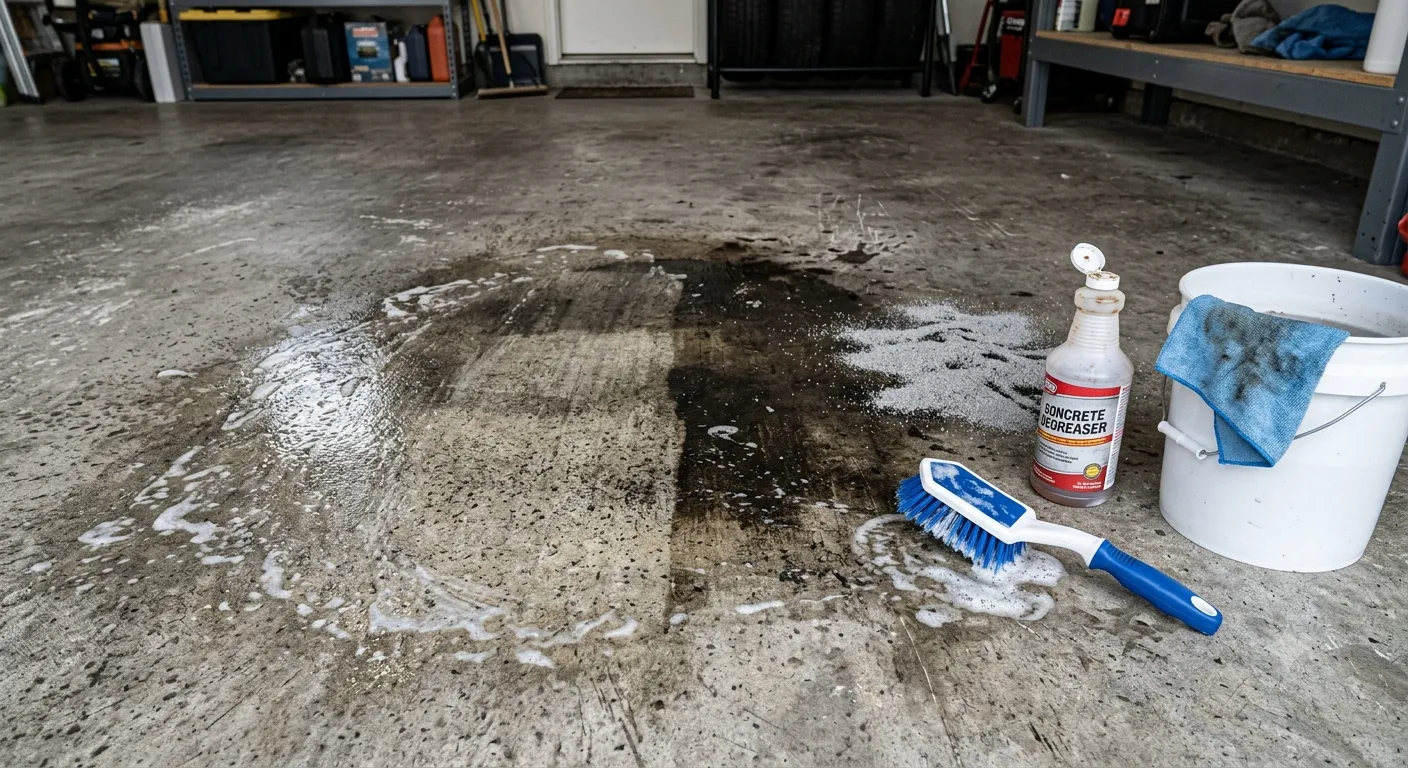
Garage floors frequently collect oil, grease, transmission fluid, and fuel stains. Because concrete is porous, oil quickly penetrates below the surface if not cleaned promptly.
If you’re searching for how to clean oil off concrete garage floor, acting quickly offers the best chance of removing the stain completely.
Fresh Oil Spills
For new spills:
- Cover the spill with cat litter or an absorbent material.
- Let it absorb the oil for several hours.
- Sweep up the material.
- Apply a concrete degreaser.
- Scrub with a stiff nylon brush.
- Rinse thoroughly.
Fresh stains are much easier to remove than older ones.
Old Oil Stains
Older stains require more effort.
Use a commercial degreaser designed for concrete and allow it to penetrate before scrubbing.
Repeat the process if necessary.
Deep stains may lighten significantly rather than disappear completely.
Homemade Cleaning Methods
For mild oil stains, you can try:
- Baking soda paste
- Dish soap and warm water
Apply the mixture, scrub gently, and rinse well.
Always test homemade solutions in an inconspicuous area first.
Prevent Future Oil Stains
- Repair leaking vehicles.
- Use drip pans.
- Clean spills immediately.
- Seal garage concrete every few years.
A quality concrete sealer makes future cleanup much easier.
How to Clean Unsealed Concrete Floors
Learning how to clean unsealed concrete floors requires extra care because these surfaces readily absorb water, dirt, grease, and chemicals.
Unlike sealed concrete, unsealed concrete has no protective barrier.
Daily Cleaning
- Sweep frequently.
- Vacuum fine dust.
- Wipe spills immediately.
The longer contaminants remain, the deeper they penetrate.
Deep Cleaning
- Sweep thoroughly.
- Prepare a mild cleaning solution.
- Scrub with a soft-bristle brush.
- Rinse lightly.
- Dry completely.
Avoid saturating the floor with water.
What to Avoid
Never use:
- Harsh acids
- Wire brushes
- Strong solvents
- Excessive water
These can damage the concrete surface or increase staining.
Consider Applying a Sealer
If your unsealed floor stains easily, applying a penetrating concrete sealer can improve stain resistance while simplifying future maintenance.
How to Clean Finished Concrete Floors
Finished concrete floors provide a smoother appearance and are commonly found in homes, retail spaces, and offices.
If you’re wondering how to clean finished concrete floors, routine maintenance goes a long way toward preserving their appearance.
Daily Care
- Dust mop regularly.
- Vacuum corners.
- Clean spills immediately.
Fine grit can dull finished surfaces over time.
Weekly Cleaning
Use:
- Warm water
- pH-neutral cleaner
- Microfiber mop
Avoid abrasive scrubbers that may wear down the finish.
Remove Scuff Marks
Scuff marks from shoes or furniture can often be removed using a damp microfiber cloth and a small amount of neutral cleaner.
Avoid harsh scrubbing.
Maintain the Finish
Inspect the floor periodically for signs of wear.
If the protective finish begins to deteriorate, consider resealing or refinishing according to the manufacturer’s recommendations.
How to Clean a Sealed Concrete Floor
A sealed floor is one of the easiest concrete surfaces to maintain because the protective coating prevents dirt and liquids from penetrating the concrete.
If you’re searching for how to clean a sealed concrete floor, focus on preserving the sealer rather than aggressively scrubbing the surface.
Routine Cleaning
Weekly maintenance should include:
- Sweeping
- Vacuuming
- Damp mopping with a pH-neutral cleaner
This removes dirt without damaging the protective coating.
Remove Spills Quickly
Although sealed concrete resists staining, liquids left on the surface for extended periods may eventually discolor the sealer.
Clean spills promptly.
Avoid Harsh Chemicals
Do not use:
- Acidic cleaners
- Strong alkalis
- Abrasive powders
- Metal brushes
These products can shorten the life of the sealer and reduce its gloss.
When Should You Reseal?
Most sealed concrete floors benefit from resealing every 2 to 5 years, depending on:
- Foot traffic
- Moisture exposure
- Sunlight
- Type of sealer used
Signs that resealing may be needed include:
- Water no longer beads on the surface.
- The finish appears dull.
- Stains become more difficult to remove.
- The floor looks worn in high-traffic areas.
Regular resealing helps maintain stain resistance and extends the life of the concrete floor.
How to Clean Painted Concrete Floors
Painted concrete floors are popular in garages, laundry rooms, patios, workshops, and finished basements because they improve appearance while providing an extra layer of protection against moisture and stains. However, painted surfaces require gentler care than bare concrete to prevent chipping, peeling, or fading.
If you’re wondering how to clean painted concrete floors, the goal is to remove dirt without damaging the paint coating.
Identify the Paint Type
Before cleaning, determine whether your floor is coated with:
- Acrylic concrete paint
- Epoxy floor paint
- Masonry paint
- Porch and patio paint
Different paints have varying levels of durability, but all benefit from gentle cleaning methods.
Step 1: Remove Loose Dirt
Sweep or vacuum the floor thoroughly before mopping.
Pay extra attention to:
- Corners
- Baseboards
- Expansion joints
- Around shelving and appliances
Loose grit can act like sandpaper and scratch painted surfaces.
Step 2: Prepare a Mild Cleaning Solution
Mix warm water with a pH-neutral cleaner or a few drops of mild dish soap.
Avoid using excessive detergent because soap residue can leave a dull film on painted concrete.
Step 3: Mop the Floor
Use a microfiber mop dampened—not soaked—with the cleaning solution.
Work in small sections, rinsing the mop frequently to avoid spreading dirt across the surface.
Step 4: Remove Stubborn Marks
For scuff marks or sticky residue:
- Apply a small amount of neutral cleaner directly to the affected area.
- Allow it to sit for a minute.
- Gently scrub with a soft sponge or nylon brush.
Avoid abrasive scrub pads that can scratch or remove paint.
Step 5: Rinse and Dry
Mop the floor with clean water to remove any remaining cleaner.
Allow the surface to air dry completely before replacing rugs or furniture.
Cleaners to Avoid
Do not use the following on painted concrete unless the paint manufacturer specifically recommends them:
- Wire brushes
- Steel wool
- Harsh degreasers
- Acid-based cleaners
- Ammonia
- Strong bleach solutions
- Pressure washers at close range
These products may strip or weaken the paint.
Pro Tips for Painted Concrete
- Place protective mats beneath heavy equipment.
- Use felt pads under furniture legs.
- Clean spills immediately to prevent staining.
- Repaint worn areas before moisture reaches the concrete.
How to Clean Stained Concrete Floors
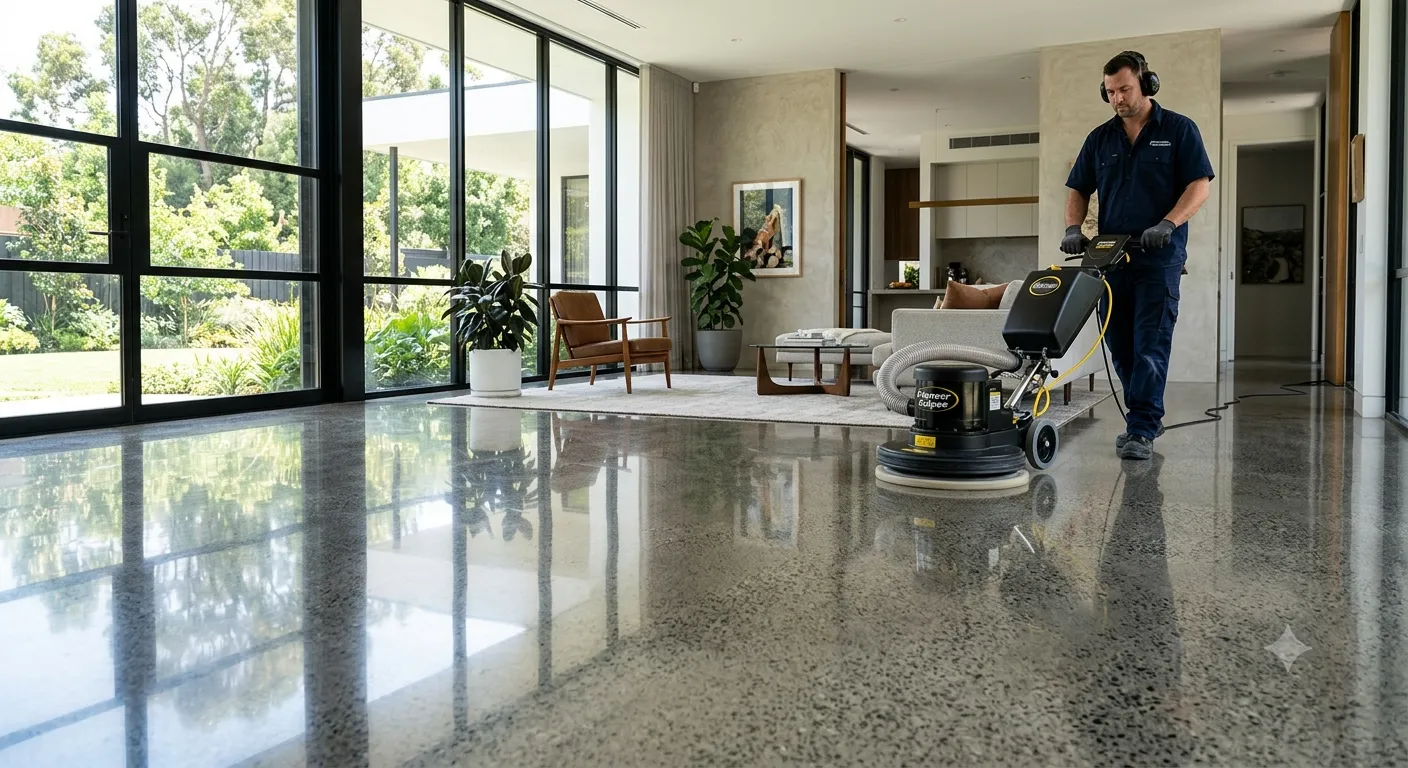
Decorative stained concrete combines the durability of concrete with the appearance of natural stone or polished flooring. Unlike paint, stains penetrate the surface, creating rich, long-lasting color.
If you’re looking for how to clean stained concrete floors, preserving the protective sealer is just as important as cleaning the concrete itself.
Types of Stained Concrete
Most decorative floors are finished with either:
- Acid stains
- Water-based stains
Both are usually protected by a clear concrete sealer.
Daily Cleaning
Dust and dirt can gradually wear down the protective sealer.
For routine maintenance:
- Dust mop daily in high-traffic areas.
- Vacuum weekly using a soft floor attachment.
- Wipe spills immediately.
Weekly Cleaning
Mix a pH-neutral concrete cleaner with warm water.
Use a microfiber mop to clean the surface.
Avoid flooding the floor with water because excessive moisture may eventually weaken certain sealers.
Removing Common Stains
Food and Beverage Stains
Use warm water and a neutral cleaner.
Mud
Allow the mud to dry before sweeping.
Grease
Use a concrete-safe degreaser designed for decorative surfaces.
Shoe Marks
Rub gently with a damp microfiber cloth.
Protecting Decorative Stains
To preserve the appearance of stained concrete:
- Avoid dragging heavy furniture.
- Clean sand and grit regularly.
- Place mats near entrances.
- Reapply sealer when recommended.
Products to Avoid
Never clean stained concrete with:
- Vinegar
- Citrus cleaners
- Muriatic acid
- Abrasive powders
- Steel brushes
These can damage the protective finish or alter the appearance of the stain.
How to Clean Acid-Stained Concrete Floors
Acid staining creates permanent color by reacting chemically with minerals in the concrete rather than coating the surface. The resulting finish is durable and distinctive, but it still depends on a protective sealer to resist moisture and wear.
If you’re researching how to clean acid stain concrete floors, gentle maintenance is essential.
Why Acid-Stained Floors Need Special Care
Although the color penetrates the concrete, the protective sealer on top can be scratched, dulled, or worn away by harsh cleaning methods.
Preserving this sealer helps maintain the floor’s color and shine.
Routine Cleaning
For everyday care:
- Sweep or dust mop the floor.
- Vacuum corners and edges.
- Mop using a pH-neutral cleaner.
- Rinse with clean water if necessary.
- Dry with a microfiber mop.
Removing Dirt from Textured Areas
Some acid-stained floors have decorative textures that trap dust.
Use a soft nylon brush to loosen dirt before mopping.
Avoid stiff metal brushes that may damage the finish.
Restoring Shine
If the floor begins to lose its luster:
- Clean thoroughly.
- Allow the surface to dry.
- Apply a concrete floor polish designed for sealed decorative concrete, if recommended by the sealer manufacturer.
If the sealer is badly worn, resealing may be necessary.
Avoid These Mistakes
Never use:
- Bleach at full strength
- Acidic cleaners
- Vinegar
- Steam cleaners unless approved by the flooring manufacturer
- Abrasive scrubbing pads
These products can shorten the life of the sealer and diminish the floor’s appearance.
Maintenance Tips
To extend the life of acid-stained concrete:
- Sweep frequently.
- Use entry mats to trap dirt.
- Clean spills immediately.
- Reapply sealer every few years, depending on traffic and wear.
How to Clean Scored Concrete Floors
Scored concrete features decorative grooves cut into the surface to resemble tile, brick, or large stone slabs. While visually appealing, these grooves collect dust, sand, and debris more easily than smooth concrete.
If you’re searching for how to clean scored concrete floors, focus on cleaning both the flat surface and the scoring lines.
Sweep Thoroughly
Begin by sweeping the entire floor.
Use a soft-bristle broom to pull debris from the grooves.
Pay close attention to:
- Decorative cuts
- Corners
- Expansion joints
- Along walls
Vacuum the Grooves
A vacuum with a brush attachment removes fine dust that sweeping often misses.
This is especially useful for indoor scored concrete floors.
Mop the Surface
Prepare a bucket of warm water mixed with a pH-neutral cleaner.
Clean the floor using a microfiber mop.
Work in small sections to prevent dirt from settling back into the grooves.
Clean Decorative Grooves
For dirt trapped inside scoring lines:
- Apply the cleaning solution.
- Use a soft nylon brush to scrub the grooves.
- Wipe away loosened dirt with a microfiber cloth.
- Rinse lightly.
Avoid wire brushes, which may scratch decorative finishes.
Outdoor Scored Concrete
For patios or walkways:
- Sweep away leaves and dirt.
- Wash with a garden hose.
- Scrub stubborn dirt using a deck brush.
- Use a pressure washer cautiously if recommended for your surface.
Prevent Dirt Build-Up
Keeping scored concrete clean is easier when you:
- Sweep weekly.
- Remove leaves promptly.
- Wash outdoor surfaces seasonally.
- Keep decorative joints free of debris.
How to Clean and Polish Concrete Floors
Cleaning removes dirt, but polishing restores clarity, smoothness, and shine. Whether you have decorative concrete in a home or polished concrete in a commercial building, proper maintenance helps preserve its appearance and extend its lifespan.
If you’re looking for how to clean and polish concrete floors, follow these best practices.
Step 1: Clean the Floor Thoroughly
Polishing should always begin with a clean surface.
Remove:
- Dust
- Sand
- Mud
- Grease
- Stains
Sweep and mop the floor using a pH-neutral cleaner before polishing.
Step 2: Inspect for Damage
Before polishing, check for:
- Surface scratches
- Small cracks
- Chipped edges
- Worn sealer
- Dull traffic lanes
Repairing these issues first helps achieve a more even finish.
Step 3: Apply a Concrete Polish (If Appropriate)
Some sealed or polished concrete floors can benefit from a polish specifically designed for decorative concrete. Always verify compatibility with the existing sealer or finish.
Apply the product according to the manufacturer’s instructions using a clean microfiber mop or applicator.
Step 4: Buff the Surface
After the polish has cured (if required), buff the floor using:
- A microfiber polishing pad for residential floors.
- A burnisher or floor buffer for larger commercial spaces.
Buffing enhances gloss and smoothness while helping maintain the protective finish.
Step 5: Maintain the Shine
To keep polished concrete looking its best:
- Dust mop daily in high-traffic areas.
- Use only pH-neutral cleaners.
- Clean spills promptly.
- Place mats at entrances to reduce abrasive dirt.
- Re-polish or reseal as recommended by the flooring manufacturer.
Common Polishing Mistakes to Avoid
Avoid these practices, which can shorten the life of polished concrete:
- Using acidic or ammonia-based cleaners.
- Applying wax products not intended for concrete.
- Buffing a dirty floor.
- Allowing grit to remain on the surface.
- Ignoring worn sealers or protective coatings.
With consistent care, polished concrete floors can retain their appearance for many years while requiring less maintenance than many other flooring materials.
How to Clean Concrete Floors for Staining
Proper surface preparation is the foundation of a successful staining project. Whether you’re applying an acid stain or a water-based stain, the concrete must be clean, porous, and free of contaminants. Skipping this step can lead to uneven color, poor stain penetration, and disappointing results.
If you’re searching for how to clean concrete floors for staining, follow these preparation steps.
Step 1: Remove Furniture and Debris
Clear the entire area before cleaning.
Remove:
- Furniture
- Rugs
- Shelving
- Storage boxes
- Equipment
Sweep or vacuum thoroughly to eliminate dust and loose debris.
Step 2: Inspect the Surface
Check for:
- Oil stains
- Grease spots
- Paint splatters
- Adhesive residue
- Existing sealers
- Wax coatings
- Surface cracks
These contaminants can prevent the stain from penetrating the concrete evenly.
Step 3: Remove Oil and Grease
Use a concrete-safe degreaser to treat oily areas.
Allow the product to dwell according to the manufacturer’s instructions before scrubbing with a nylon brush.
Rinse thoroughly and let the surface dry.
Step 4: Remove Existing Sealers
Concrete stains penetrate the surface, so any existing sealer must be removed.
Depending on the sealer type, you may need:
- A concrete sealer remover
- Mechanical grinding
- Surface sanding
After removal, rinse and allow the floor to dry completely.
Step 5: Repair Cracks and Surface Damage
Fill minor cracks with a concrete repair product compatible with staining.
Keep in mind that repaired areas may absorb stain differently than the surrounding concrete.
Step 6: Test for Water Absorption
Sprinkle a small amount of clean water onto the concrete.
- If the water absorbs quickly, the surface is generally ready for staining.
- If the water beads up, contaminants or sealers may still be present and require additional cleaning.
Step 7: Allow the Floor to Dry
Before applying stain, the concrete should be completely dry unless the stain manufacturer specifies otherwise.
Moisture trapped in the slab can affect stain performance and color consistency.
Pro Tip: Always test the stain on an inconspicuous area before treating the entire floor.
How to Clean Concrete Floor for Painting
Paint adheres best to clean, dry, and properly prepared concrete. Dirt, dust, grease, and loose coatings can all cause paint to peel or blister over time.
If you’re looking for how to clean concrete floor for painting, preparation is just as important as the painting process itself.
Step 1: Remove Dust and Dirt
Sweep and vacuum the entire floor thoroughly.
Pay special attention to:
- Corners
- Expansion joints
- Baseboards
- Floor drains
Step 2: Degrease the Surface
Oil and grease are common causes of paint failure.
Apply a concrete degreaser to stained areas and scrub with a nylon brush.
Rinse thoroughly.
Step 3: Remove Loose Paint
If the floor has old paint that is peeling or flaking:
- Scrape loose material.
- Sand rough edges.
- Vacuum the dust.
A stable surface is essential for proper paint adhesion.
Step 4: Repair Surface Imperfections
Fill cracks, holes, and chips with a suitable concrete patching compound.
Allow repairs to cure according to the manufacturer’s instructions before proceeding.
Step 5: Etch the Concrete (If Required)
Some painting systems recommend etching smooth concrete to improve adhesion.
Always follow the paint manufacturer’s recommendations and safety precautions.
Step 6: Let the Surface Dry Completely
Concrete should be clean and dry before primer or paint is applied.
Excess moisture can lead to bubbling, peeling, or poor adhesion.
Common Concrete Floor Cleaning Mistakes
Even durable concrete can be damaged by improper maintenance. Avoid these common mistakes to extend the life of your floors.
Using the Wrong Cleaner
Not all cleaners are suitable for every type of concrete.
For example:
- Acidic cleaners can damage sealed or polished concrete.
- Harsh solvents may affect painted finishes.
- Abrasive powders can scratch decorative surfaces.
Choose a cleaner that matches your floor type.
Leaving Spills Too Long
Oil, coffee, chemicals, and other liquids can penetrate porous concrete quickly.
Cleaning spills immediately helps prevent permanent staining.
Using Excessive Water on Unsealed Concrete
Unsealed concrete absorbs moisture easily.
Too much water can:
- Encourage mold growth
- Increase drying time
- Carry contaminants deeper into the surface
Use only as much water as necessary and dry the floor thoroughly.
Skipping Regular Cleaning
Dust and grit act like sandpaper under foot traffic.
Routine sweeping and mopping help preserve both the concrete and any protective finish.
Ignoring Mold and Moisture Problems
Cleaning visible mold without addressing the source of moisture usually results in recurring growth.
Fix leaks, improve ventilation, and use a dehumidifier where necessary.
Dragging Heavy Furniture
Dragging heavy items across decorative concrete can scratch sealers and polished finishes.
Lift furniture or use furniture sliders whenever possible.
Waiting Too Long to Reseal
Protective sealers wear down over time.
Resealing at recommended intervals helps:
- Resist stains
- Reduce moisture penetration
- Preserve decorative finishes
- Simplify routine cleaning
Concrete Floor Maintenance Schedule
A simple maintenance routine helps keep concrete floors looking their best while reducing the need for deep cleaning.
| Frequency | Maintenance Task |
| Daily | Sweep or dust mop high-traffic areas. Clean spills immediately. |
| Weekly | Vacuum corners and edges. Damp mop using a pH-neutral cleaner. |
| Monthly | Inspect for stains, scratches, mold, or moisture issues. Clean grout lines or decorative grooves if present. |
| Every 6–12 Months | Perform a deep cleaning. Check expansion joints and repair minor damage. |
| Every 2–5 Years | Reseal sealed or decorative concrete floors, depending on traffic and manufacturer recommendations. |
Consistent maintenance is more effective—and often less expensive—than waiting until the floor becomes heavily soiled or damaged.
Frequently Asked Questions
Can I use vinegar to clean concrete floors?
Vinegar is acidic and may damage sealed, polished, or decorative concrete over time. For routine cleaning, a pH-neutral concrete cleaner is generally the safer choice.
Is bleach safe for concrete?
Bleach can disinfect concrete in certain situations, such as mold remediation, but it should be used carefully and according to the product label. Avoid frequent use on decorative or sealed concrete, as it may affect some finishes.
How often should concrete floors be cleaned?
High-traffic areas should be swept or dust mopped daily. Most residential concrete floors benefit from damp mopping once a week and a more thorough cleaning every few months.
Can I pressure wash indoor concrete floors?
No. Pressure washers are intended for outdoor use and can create excessive water, damage finishes, and introduce moisture problems indoors.
What’s the best cleaner for sealed concrete floors?
A pH-neutral cleaner specifically formulated for concrete is typically the safest option because it cleans effectively without harming the protective sealer.
Can dish soap clean concrete?
Yes. A small amount of mild dish soap mixed with warm water works well for routine cleaning of many concrete floors. Avoid using excessive soap, as residue can attract dirt.
How do I remove stubborn stains from concrete?
The best method depends on the stain:
- Oil and grease: Concrete degreaser
- Rust: Rust remover formulated for concrete
- Mold and mildew: Appropriate mold cleaner
- Food and beverage stains: pH-neutral cleaner and gentle scrubbing
Always test cleaning products in an inconspicuous area first.
How do I keep concrete floors looking new?
Regular sweeping, prompt spill cleanup, using pH-neutral cleaners, placing mats at entrances, and resealing decorative or sealed concrete when needed are some of the most effective ways to preserve the floor’s appearance.
Conclusion
Concrete floors are valued for their strength, versatility, and long service life, but they still require proper care to perform at their best. Whether you’re learning how to clean concrete floors, maintaining interior concrete flooring, tackling a basement floor after a flood, removing mold, cleaning oil stains from a garage floor, or preparing concrete for staining or painting, using the right cleaning method for the specific surface is essential.
The key is to identify the type of concrete you have before choosing a cleaning solution. Sealed, unsealed, painted, stained, polished, and decorative concrete each require different maintenance practices to protect their finish and prevent unnecessary damage.
By following a consistent cleaning routine, addressing spills promptly, controlling moisture, and resealing protective finishes when needed, you can keep your concrete floors looking clean and performing well for decades. Regular maintenance not only improves appearance but also reduces repair costs and helps preserve the durability that makes concrete one of the most reliable flooring materials available.
About Concrete Verse
Concrete Verse is your trusted digital resource for practical, expert-backed concrete information. Whether you’re a homeowner, DIY enthusiast, contractor, or construction professional, our mission is to simplify concrete projects with reliable guides, step-by-step tutorials, and educational resources.
In addition to our in-depth articles, we offer free tools to help you plan projects more accurately:
- Concrete Calculator – Quickly estimate how much concrete you need for footings, columns, walls, driveways, patios, sidewalks, and other projects, helping reduce material waste and improve budgeting.
- Concrete Slab Calculator – Calculate the volume, cubic yards, cubic feet, and number of concrete bags required for slabs of various dimensions, making it easier to plan residential and commercial slab pours.
Whether you’re learning how to clean concrete floors, repairing cracks, estimating concrete for a new foundation, or exploring best practices for installation and maintenance, Concrete Verse provides the knowledge and tools you need to complete your projects with confidence.