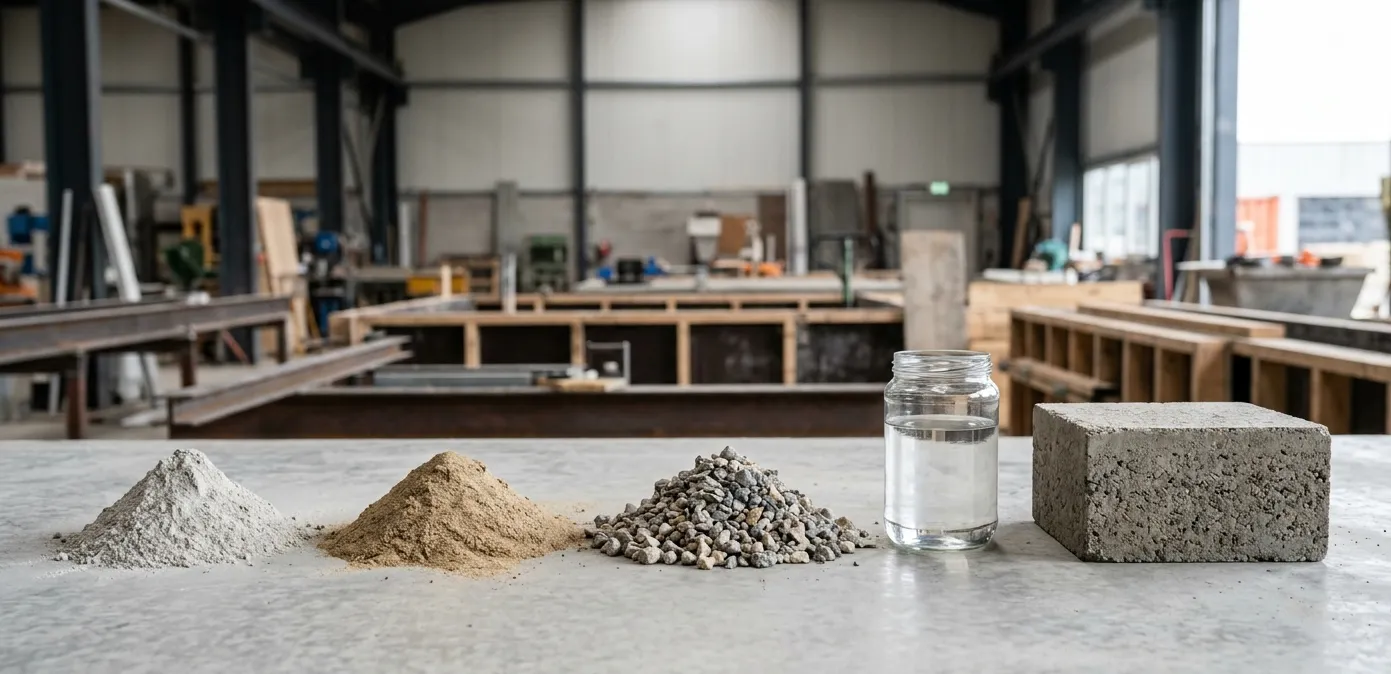
Decorative concrete is concrete that has been treated with color, texture, or pattern to improve its visual appearance beyond a standard gray slab. Contractors create this effect through staining, stamping, polishing, engraving, or adding pigment directly into the mix. Homeowners use decorative concrete for driveways, patios, pool decks, and interior floors because it combines the durability of concrete with the look of stone, brick, tile, or wood.
This guide covers the main types of decorative concrete, how each finish is produced, what they cost, and how to choose the right option for a specific project.
What Is Decorative Concrete?
Decorative concrete is a broad category that includes any concrete surface modified for appearance rather than structural function alone. The four core techniques are coloring, stamping, polishing, and engraving. Each technique can be combined with the others on a single project. For example, a contractor can stamp a slab to create a stone pattern and then color it to match natural stone tones.
Decorative concrete differs from plain concrete in three ways:
- Color — pigment is added to achieve a specific tone instead of natural gray.
- Texture — the surface is stamped, scored, or textured to mimic another material.
- Finish — the top layer is polished, sealed, or engraved to control sheen and durability.
Colored Concrete: How It’s Made
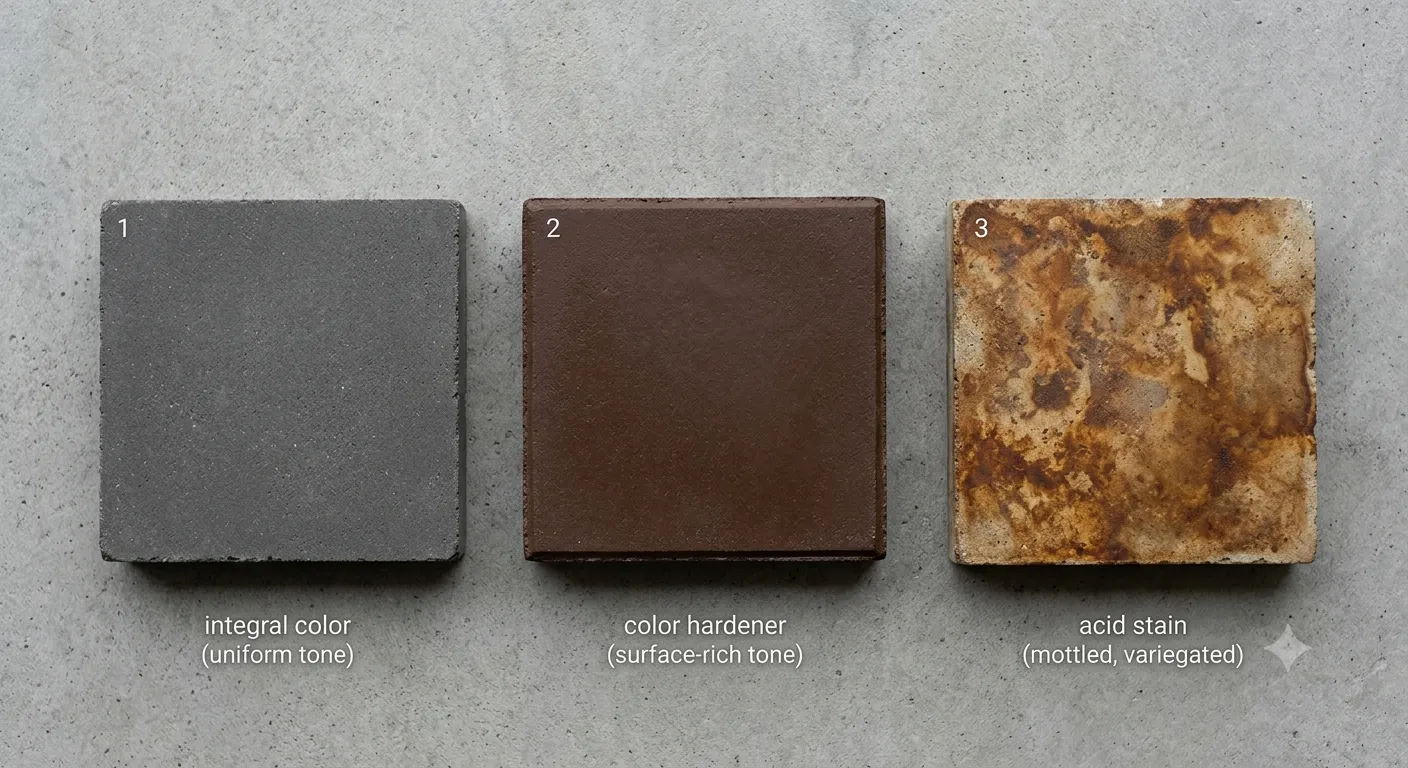
Colored concrete gets its tone from one of three methods: integral pigment, color hardener, or acid staining.
- Integral color is mixed into the concrete before it is poured. This produces a uniform color throughout the entire slab, not just the surface.
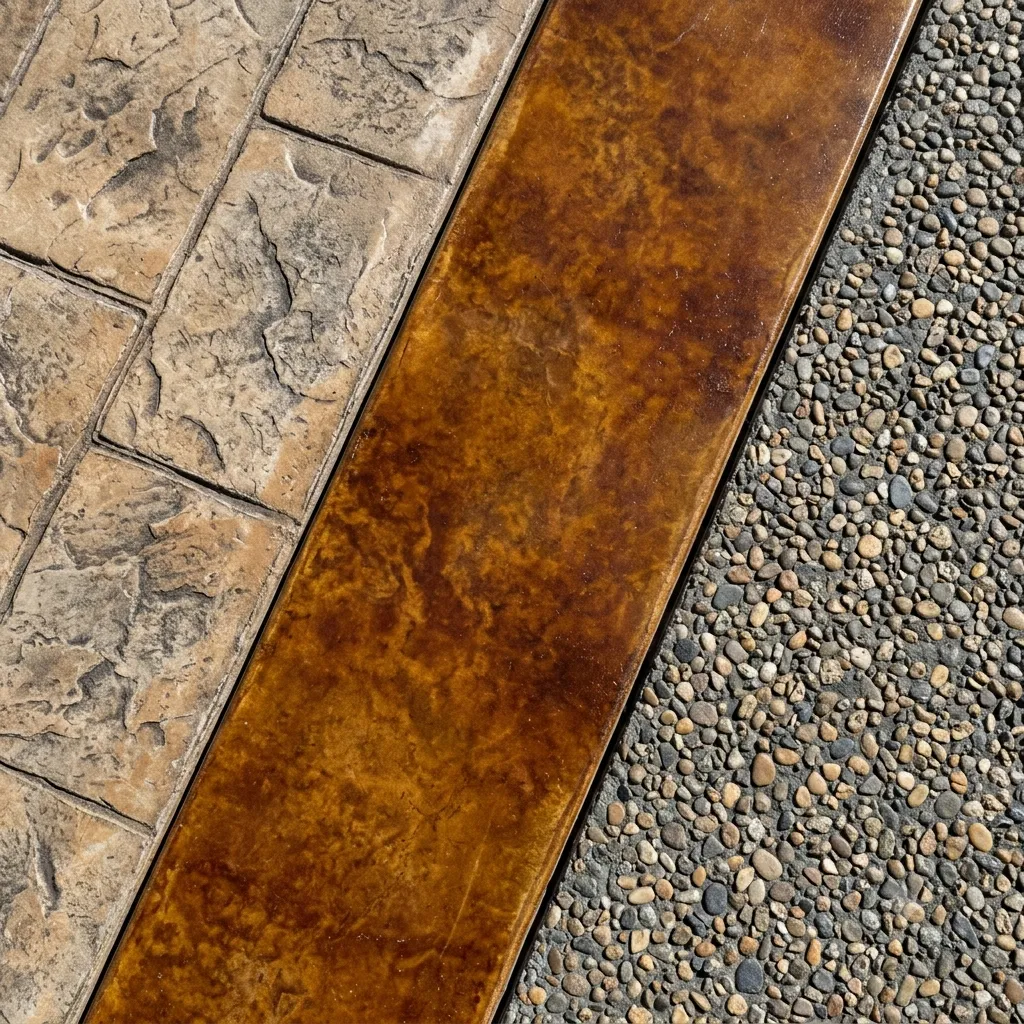
- Color hardener is broadcast onto the surface while the concrete is still wet. This method produces a harder, more durable surface than integral color alone and is the standard approach for stamped concrete.
- Acid stain is applied after the concrete has cured. It reacts chemically with the lime in the concrete, producing mottled, variegated tones that look closer to natural stone or marble.
Integral color costs less to apply but offers fewer color options at the deep end of the spectrum. Acid staining produces more dramatic, variegated results but requires a cured slab and additional labor time.
Stamped Concrete: Process and Patterns
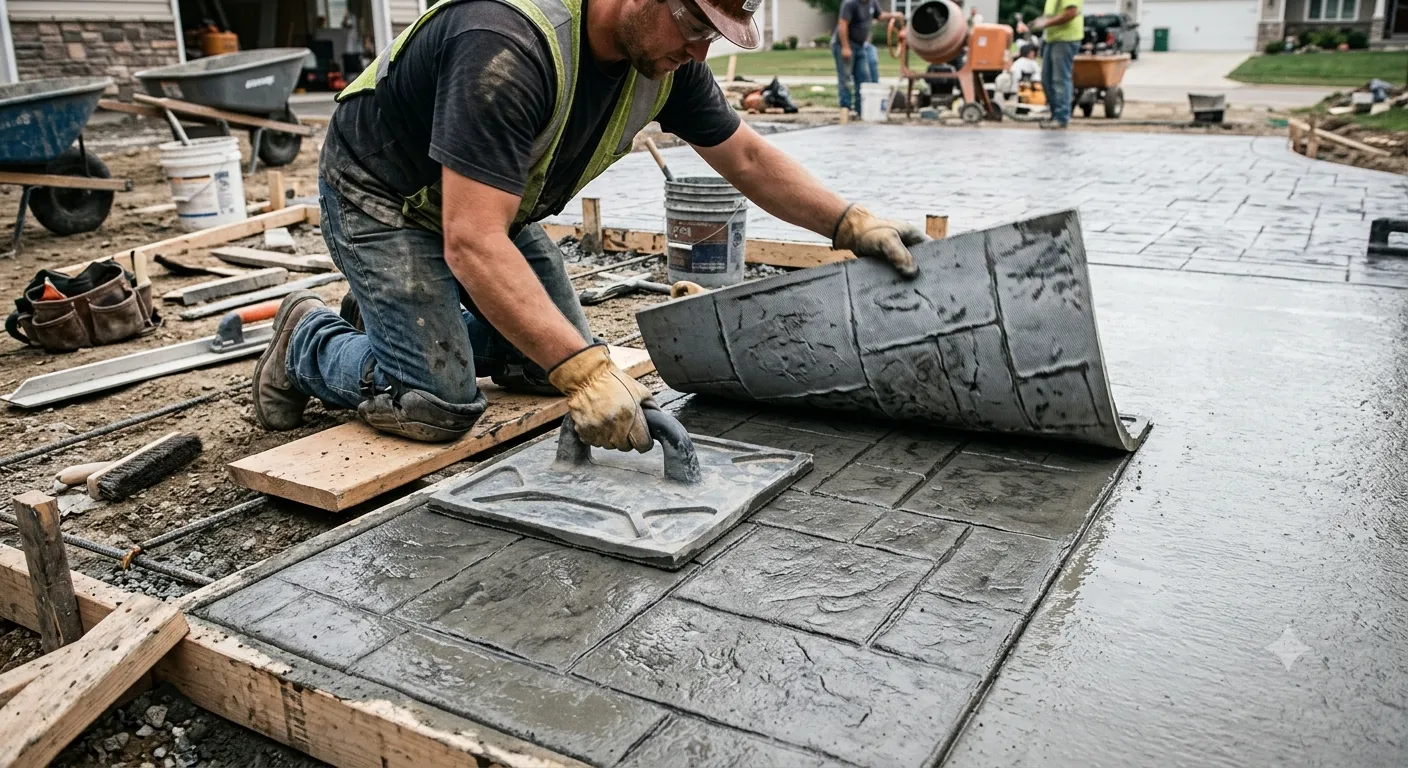
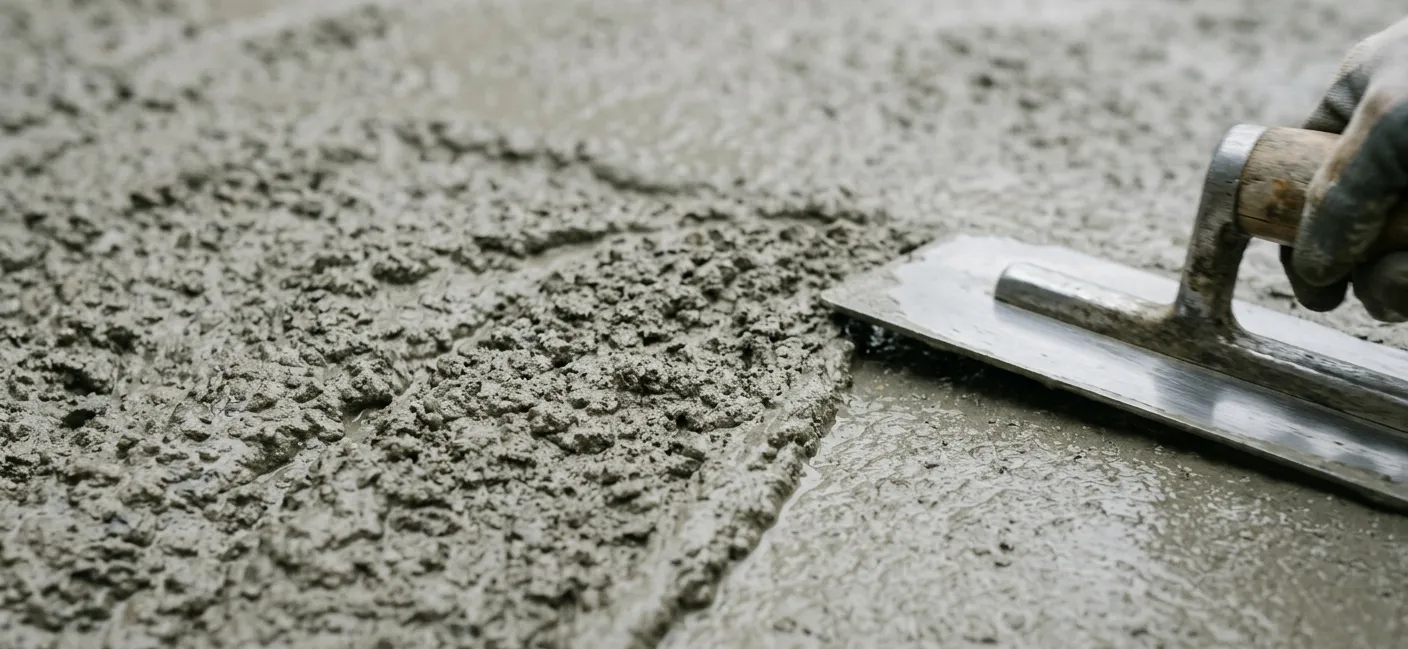
Stamped concrete is decorative concrete that has been textured with rubber stamps while the surface is still plastic, before it fully sets. The stamps press a pattern into the top layer, replicating the look of natural stone, brick, slate, or wood planking.
The stamping process follows four steps:
- Pour and screed the concrete slab.
- Broadcast a color hardener and float the surface.
- Apply a release agent to prevent the stamps from sticking.
- Press textured stamp mats into the surface in sequence before the concrete hardens.
Common stamped concrete patterns include ashlar slate, running bond brick, cobblestone, and wood plank. Each pattern requires a matched set of stamp mats sized to the project’s square footage. Before ordering material, use a concrete calculator to confirm the volume needed, and a concrete slab calculator to set the correct slab thickness for the intended load.
Polished and Engraved Concrete Finishes
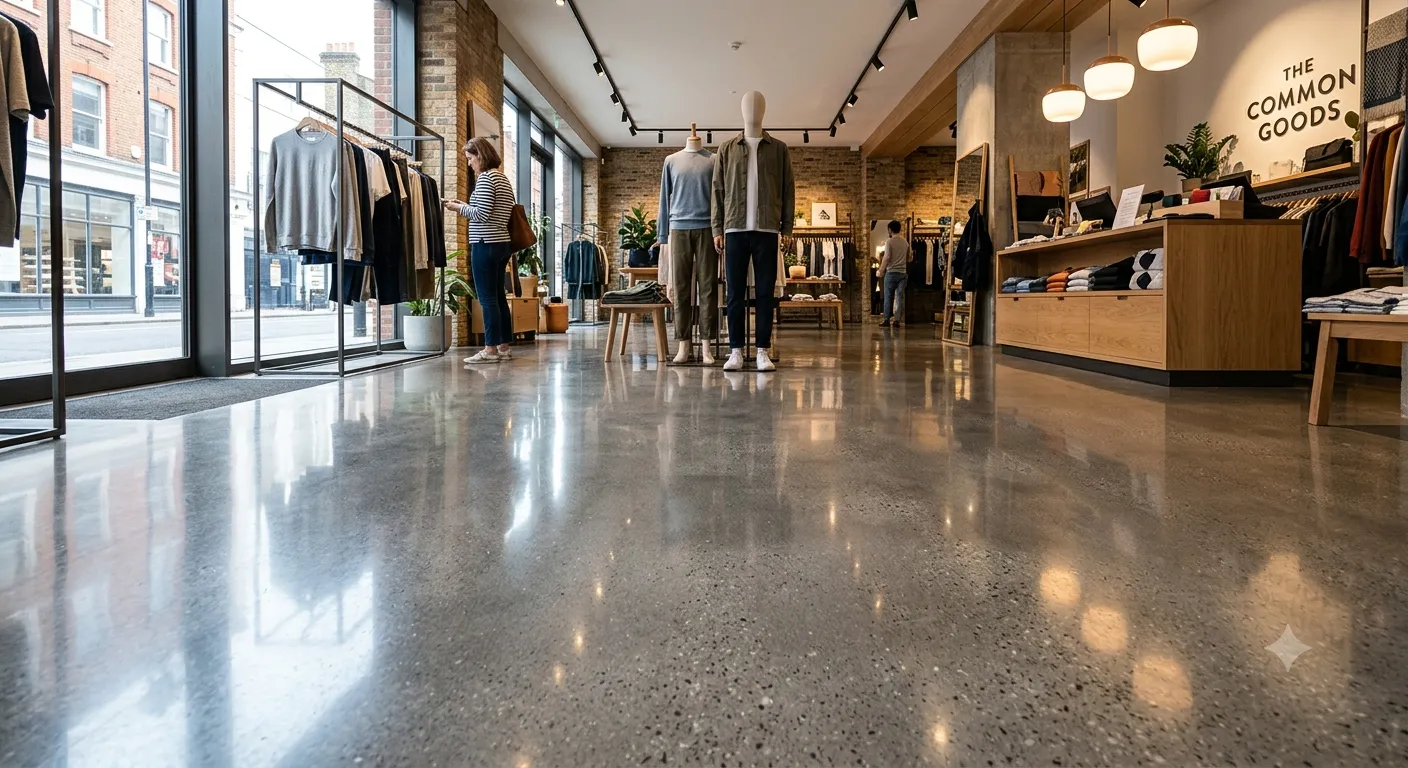
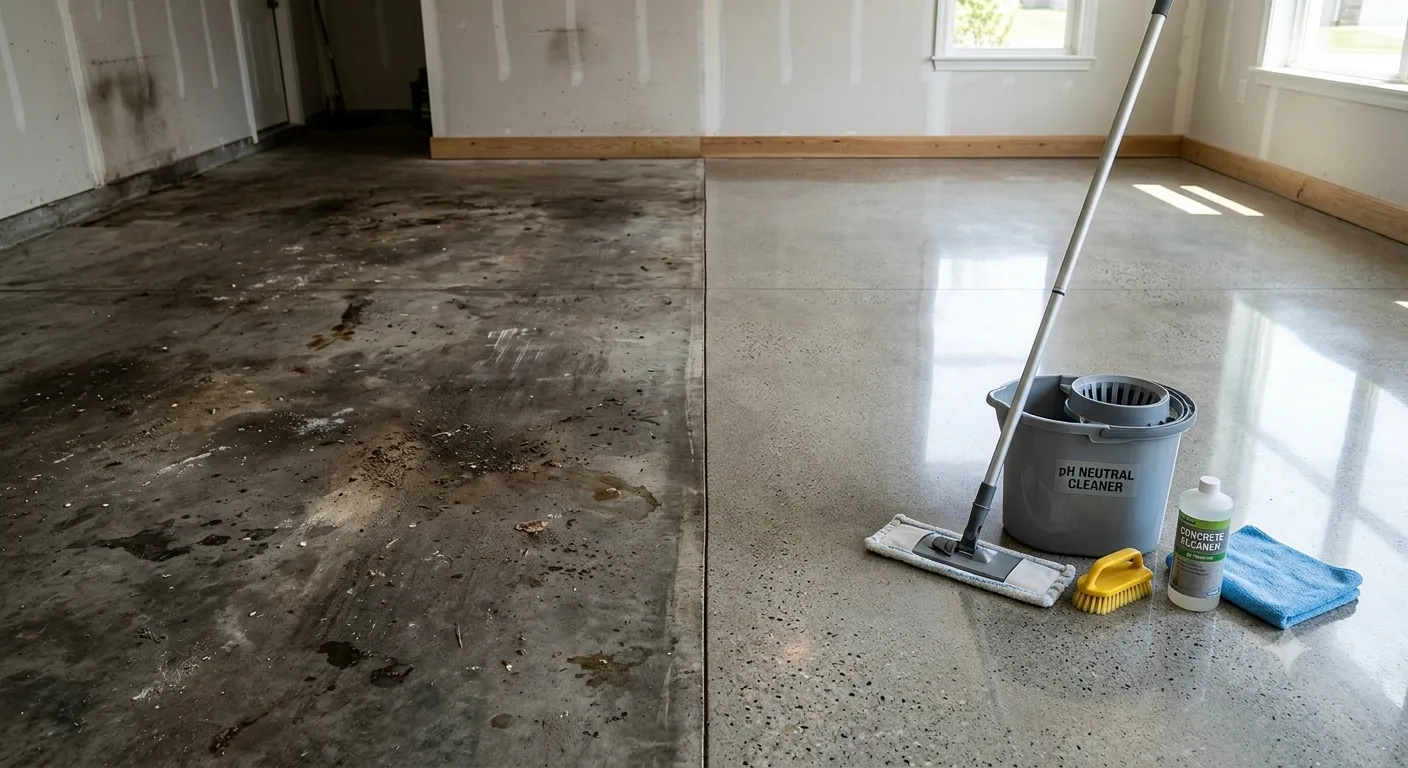
Polished concrete uses progressively finer diamond abrasives to grind the surface to a glossy sheen. This finish is common in interior floors, retail spaces, and garages because it requires no sealer reapplication and resists staining well. Polished concrete is rated by gloss level, from a flat satin finish up to a high-gloss mirror finish.
Engraved concrete, sometimes called concrete scoring, uses a saw or router to cut grout lines and decorative patterns into an existing slab. This technique works on slabs that are already poured and cured, making it a common renovation option when a full replacement is not practical.
Decorative Concrete Cost by Type
Cost varies by technique, labor intensity, and region. Typical national average price ranges per square foot are:
| Finish Type | Cost per Square Foot |
| Integral colored concrete | $8–$12 |
| Stamped concrete | $12–$18 |
| Acid-stained concrete | $10–$15 |
| Polished concrete | $7–$15 |
| Engraved/scored concrete | $4–$8 |
Pool decks and driveways with stamped patterns sit at the higher end because they require color hardener, release agents, and stamp labor. Interior polished floors cost less per square foot at scale because large open areas reduce labor cost per unit.
Decorative Concrete vs. Reinforced Concrete
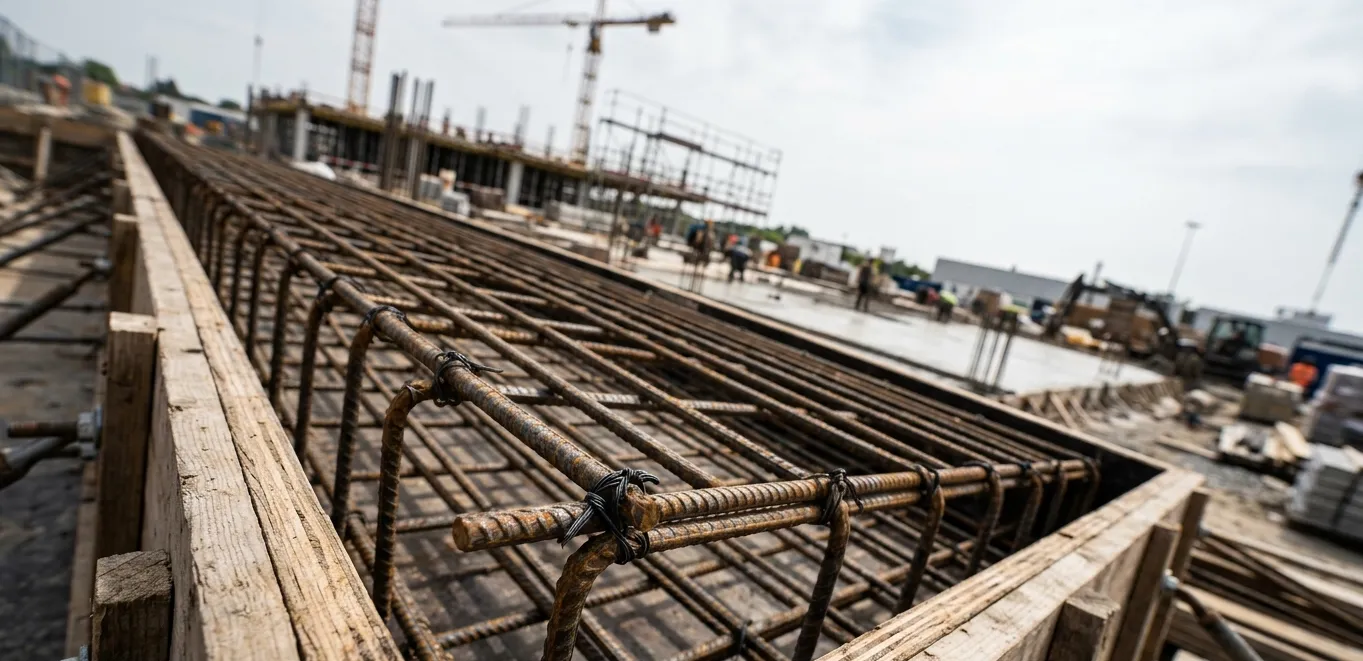
Decorative finishes affect the surface of a slab; they do not replace structural requirements. Driveways, pool decks subject to vehicle traffic, and any slab spanning unsupported ground still need reinforced concrete — concrete strengthened internally with rebar or wire mesh — to resist cracking under load. A contractor should design the structural slab first, then select the decorative finish, rather than choosing the finish before confirming the slab can support its intended use.
Choosing the Right Decorative Concrete Finish
Match the finish to the project’s exposure and use:
- Driveways and pool decks: stamped concrete with color hardener resists fading, traffic wear, and slipping when textured correctly.
- Patios: acid-stained concrete gives a natural stone look without a steep cost increase.
- Interior floors: polished concrete eliminates seams and reduces long-term maintenance.
- Renovated walkways: engraved concrete adds a decorative pattern to an existing slab without a full tear-out.
For a complete breakdown of base materials, mix ratios, and aggregate types used in any concrete project, see this concrete construction material guide.
Key Takeaways
Decorative concrete adds color, texture, and pattern to standard concrete without sacrificing strength, as long as the structural slab is designed correctly underneath. Integral color, color hardeners, and acid stains each produce a different visual result and a different price point. Stamped concrete remains the most popular driveway and patio finish because it replicates natural materials at a fraction of their installed cost. Before starting any project, confirm material quantities and slab specifications with the calculators and guides linked above to avoid under-ordering or under-engineering the slab.