Concrete is a composite construction material made from cement, aggregate, water, and admixtures. Builders combine these four components to form a moldable paste that hardens into a rigid, load-bearing mass. Concrete construction material serves as the primary structural and architectural building material in modern construction, from foundations to pavements to high-rise frames.
What Is Concrete as a Construction Material?
Concrete is a building material composed of cement, fine and coarse aggregate, water, and optional admixtures that bind together through a chemical reaction called hydration. The cement reacts with water to form a paste that coats the aggregate particles and hardens into a solid mass. This process gives concrete its structural strength and durability.
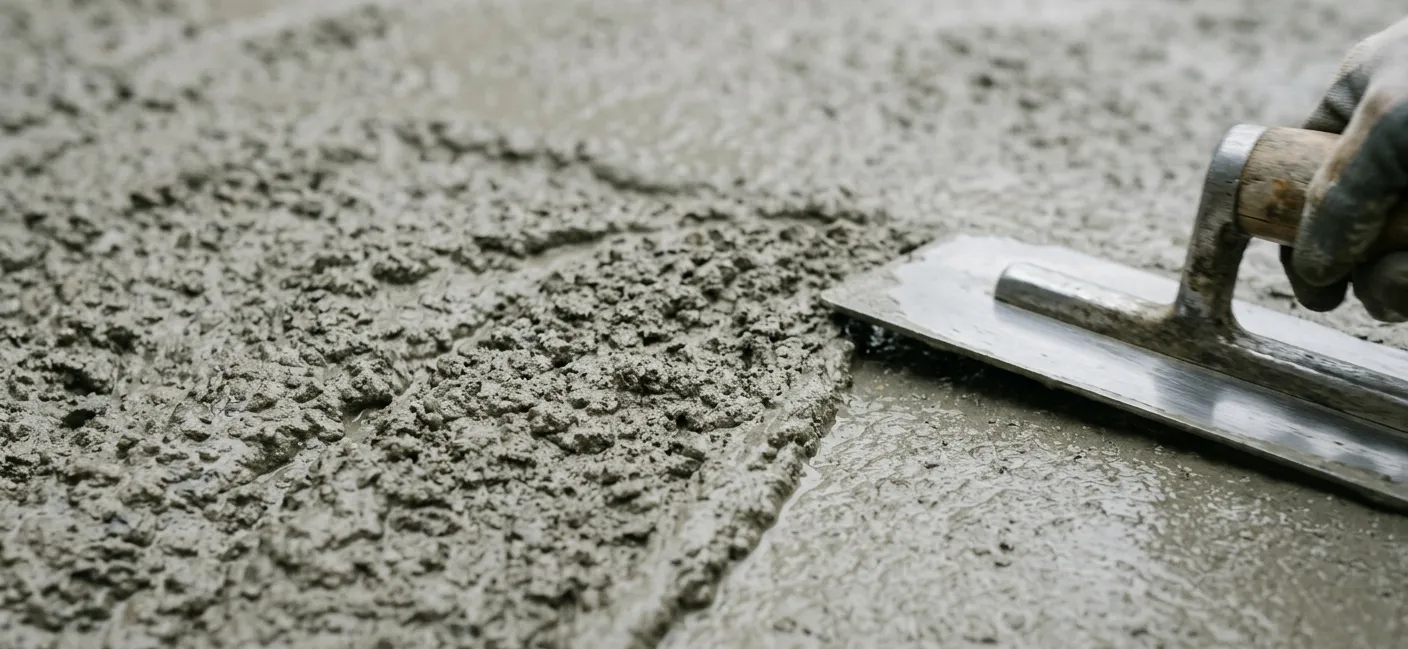
Concrete functions as a construction concrete material because it can be cast into virtually any shape before it sets. Fresh concrete behaves as a workable, fluid mixture. Cured concrete behaves as a rigid, compressive-strength-bearing solid. This dual behavior — fluid before curing, rigid after curing — defines concrete’s value as a building material concrete engineers rely on for both structural and non-structural elements.
For a complete breakdown of how concrete is defined, classified, and tested, see What Is Concrete.
What Is the Composition of Concrete Construction Material?
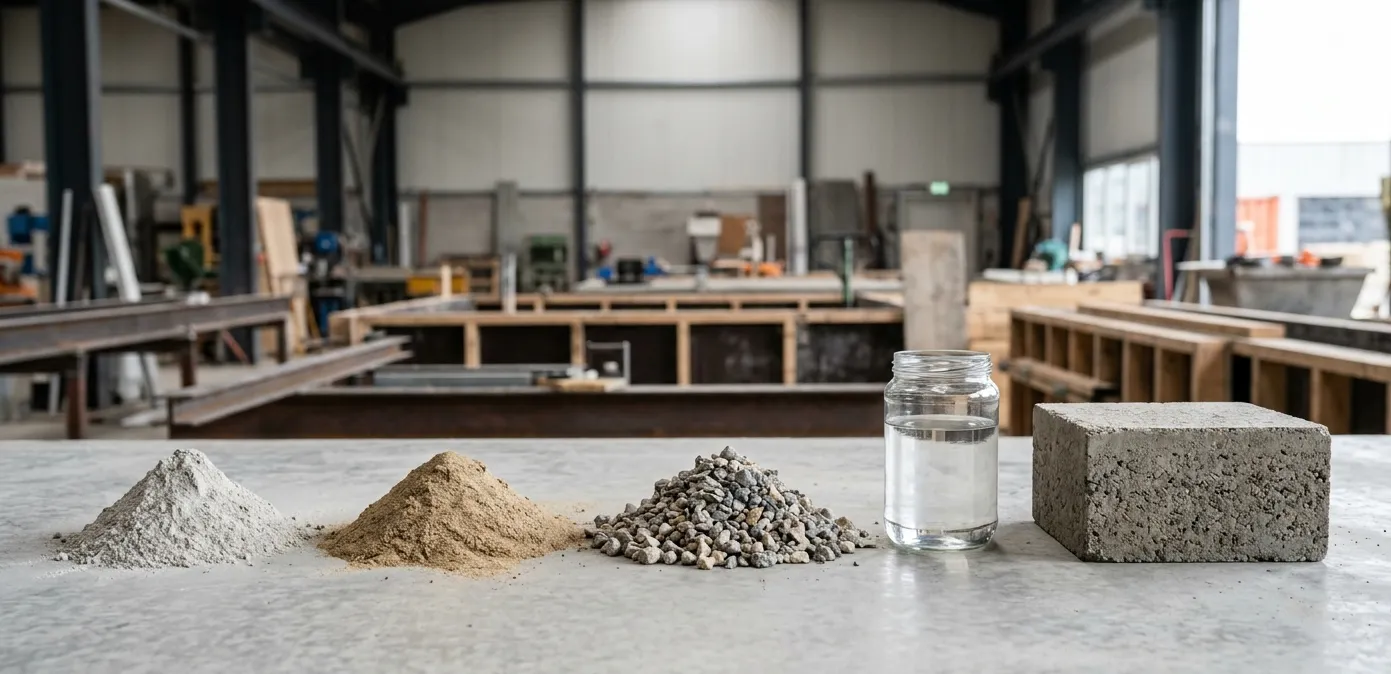
Concrete material contains four core components: cement, aggregate, water, and admixtures, combined in specific proportions to control strength, workability, and durability. Each component contributes a distinct attribute to the final mixture.
The composition breaks down as follows:
- Cement binds the aggregate particles together. Portland cement is the most common binder in concrete material worldwide.
- Aggregate provides volume and compressive resistance. Aggregate occupies 60% to 70% of the total weight of a concrete mixture, divided between coarse aggregate (gravel or crushed stone) and fine aggregate (sand).
- Water activates the hydration reaction with cement. The water-cement ratio controls both strength and workability; typical structural mixes use a ratio between 0.40 and 0.60.
- Admixtures modify specific properties such as setting time, workability, or air content. Superplasticizers, air-entraining agents, and accelerators are common admixture categories.
Portland cement is defined as a hydraulic binder produced by heating limestone and clay to form clinker, then grinding the clinker with gypsum. Hydraulic binders harden through a chemical reaction with water rather than by simply drying out.
A lower water-cement ratio produces higher compressive strength but reduces workability. A higher water-cement ratio increases workability but reduces long-term strength and durability. Engineers balance this ratio according to the structural application and the required slump.
What Are the Types of Concrete Construction Material?
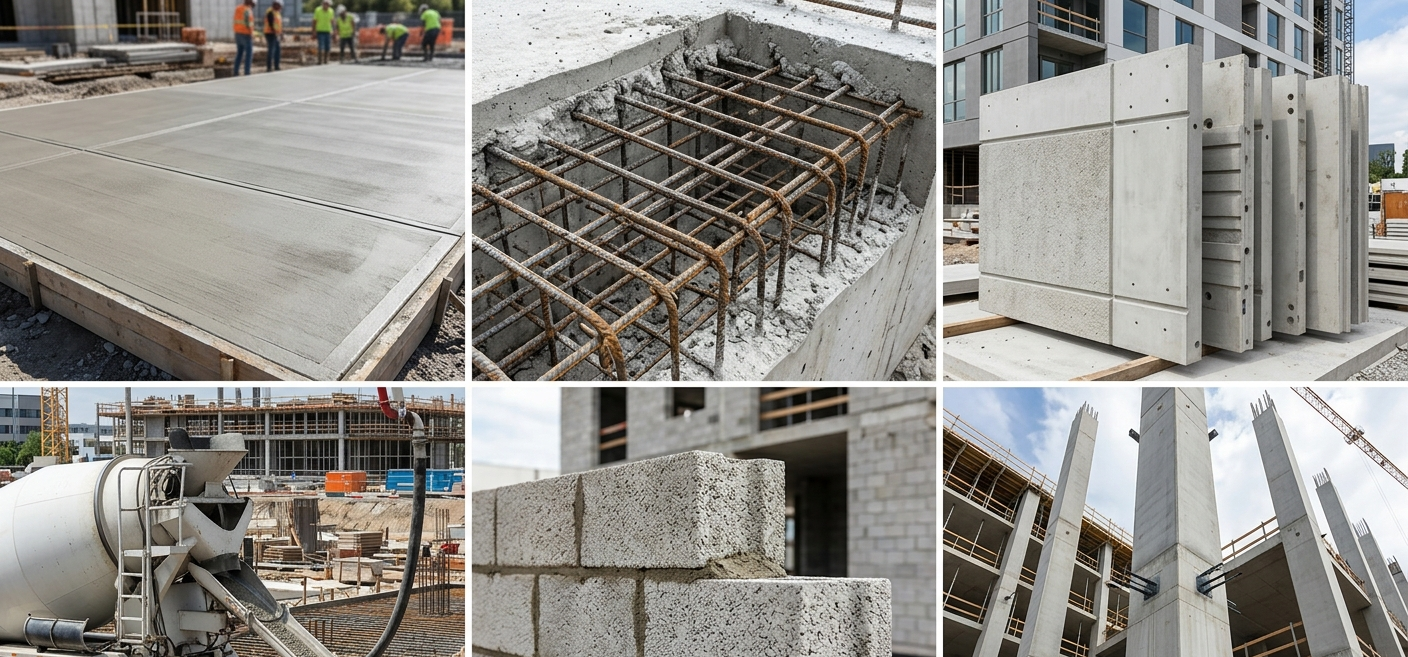
Concrete construction material exists in 6 primary types: plain cement concrete, reinforced cement concrete, precast concrete, ready-mix concrete, lightweight concrete, and high-strength concrete. Each type serves a distinct structural or application-based purpose.
- Plain cement concrete (PCC) uses cement, aggregate, and water without reinforcement. Builders use PCC for flooring, leveling courses, and non-load-bearing elements.
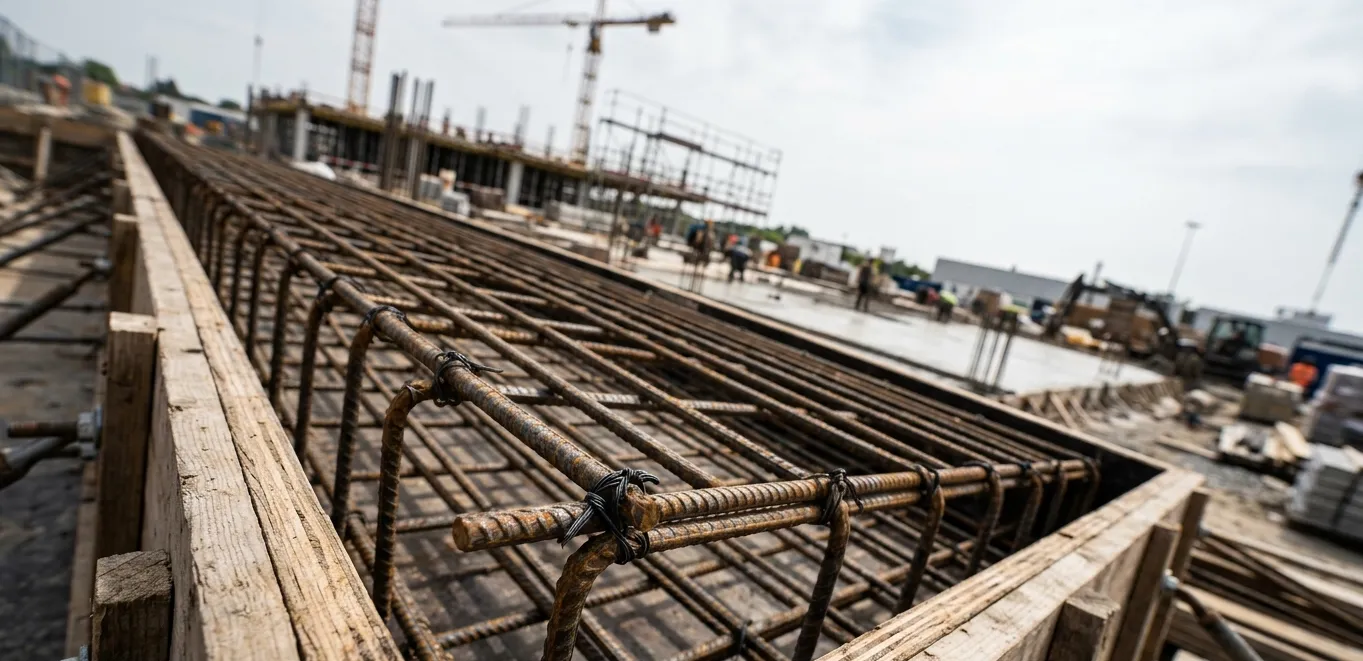
- Reinforced cement concrete (RCC) embeds steel bars within the concrete mass. RCC carries tensile loads that plain concrete cannot resist, making it the standard choice for beams, columns, and slabs.
- Precast concrete is cast and cured in a controlled factory setting, then transported to the construction site. Precast elements include wall panels, beams, and staircases.
- Ready-mix concrete (RMC) is batched at a central plant and delivered to the site in a fluid state inside transit mixers. Ready-mix concrete reduces on-site material handling and improves batch consistency.
- Lightweight concrete replaces standard aggregate with lightweight materials such as expanded clay or pumice, reducing dead load on a structure.
- High-strength concrete uses a low water-cement ratio, supplementary cementitious materials, and superplasticizers to achieve compressive strengths above 55 MPa, compared to 20 MPa to 40 MPa for normal-strength concrete.
Each type addresses a different combination of load requirement, site condition, and construction speed within the broader category of construction concrete.
What Are the Properties of Concrete as a Construction Material?
Concrete as a construction material exhibits 5 core properties: compressive strength, durability, workability, density, and permeability. These properties determine which concrete type and mix design fit a given structural application.
- Compressive strength measures the maximum load concrete resists before failure. Normal-strength concrete reaches 20 MPa to 40 MPa at 28 days. High-strength mixes reach 55 MPa to 84 MPa, and ultra-high-strength concrete formulations exceed 150 MPa in laboratory conditions, according to mix-design research published by the American Concrete Institute.
- Durability describes concrete’s resistance to weathering, chemical attack, and abrasion over its service life. Durability depends directly on the water-cement ratio and curing quality.
- Workability describes how easily fresh concrete can be mixed, placed, and finished. Slump tests measure workability on a 50 mm to 100 mm scale for standard structural mixes.
- Density measures the mass of concrete per unit volume. Normal-weight concrete has a density near 2,400 kg/m³, while lightweight concrete falls below 1,800 kg/m³.
- Permeability measures how easily water and chemicals penetrate the cured material. Lower permeability correlates directly with higher compressive strength and longer service life.
How Is Concrete Construction Material Used in Construction?

Concrete material is used in 5 primary construction applications: foundations, structural frames, pavements, precast elements, and decorative finishes. Each application matches a specific concrete type to its structural and exposure demands.
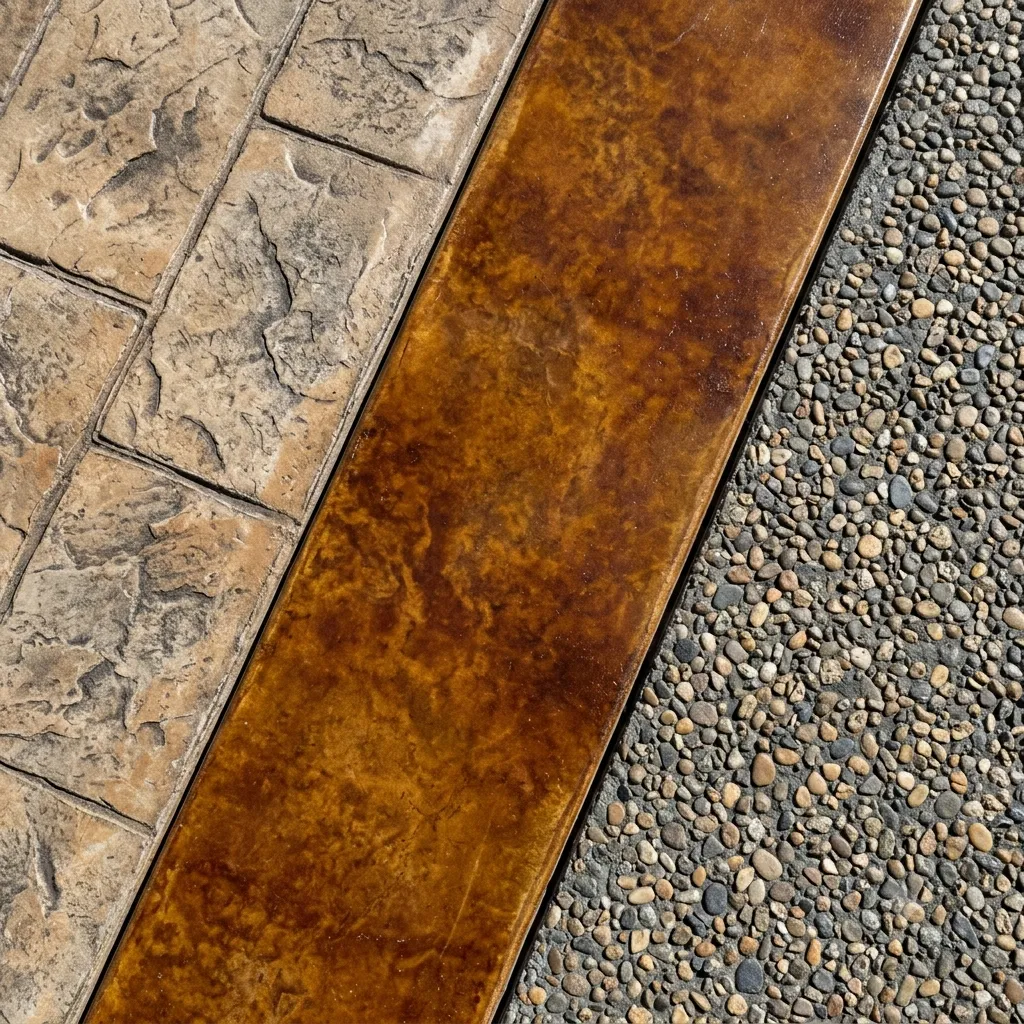
Foundations use plain or reinforced concrete to transfer building loads to the soil. Structural frames use reinforced concrete for columns, beams, and slabs that carry both compressive and tensile loads. Pavements use high-strength, low-permeability concrete to resist traffic loads and weathering. Precast elements use factory-cured concrete for walls, staircases, and bridge segments. Decorative finishes use polished or stamped concrete for flooring and architectural surfaces.
How Do You Calculate Concrete Material for a Construction Project?
Calculating concrete material requires the volume of the structural element and the mix ratio of cement, sand, and aggregate. Builders multiply the element’s volume by the mix proportions to determine the exact quantity of each material component.
For slab work specifically, the length, width, and thickness of the slab determine the total volume before applying the mix ratio. Use the concrete calculator to compute material quantities for footings, columns, and general pours. Use the concrete slab calculator to compute material quantities specifically for slab-on-grade and suspended slab applications.
Frequently Asked Questions
What is concrete construction material made of?
Concrete construction material is made of cement, aggregate, water, and admixtures combined through hydration. Cement and water form the binding paste; aggregate provides volume and compressive resistance; admixtures adjust specific performance characteristics.
What is the strongest type of concrete construction material?
High-strength and ultra-high-strength concrete are the strongest types of concrete construction material. These mixes achieve compressive strengths between 55 MPa and over 150 MPa through low water-cement ratios and supplementary cementitious materials.
Why is aggregate important in concrete material?
Aggregate is important in concrete material because it occupies 60% to 70% of the total mixture weight and provides the primary compressive resistance. Aggregate size, shape, and gradation directly affect the strength and workability of the final concrete.