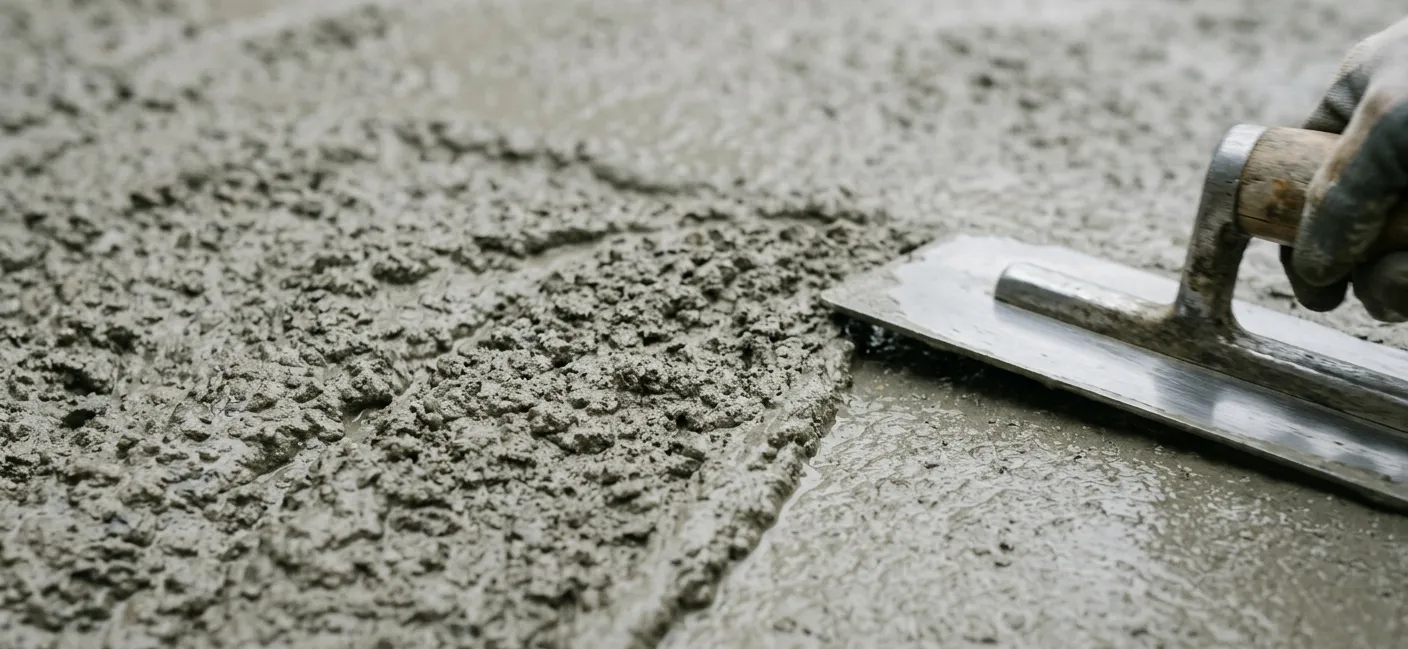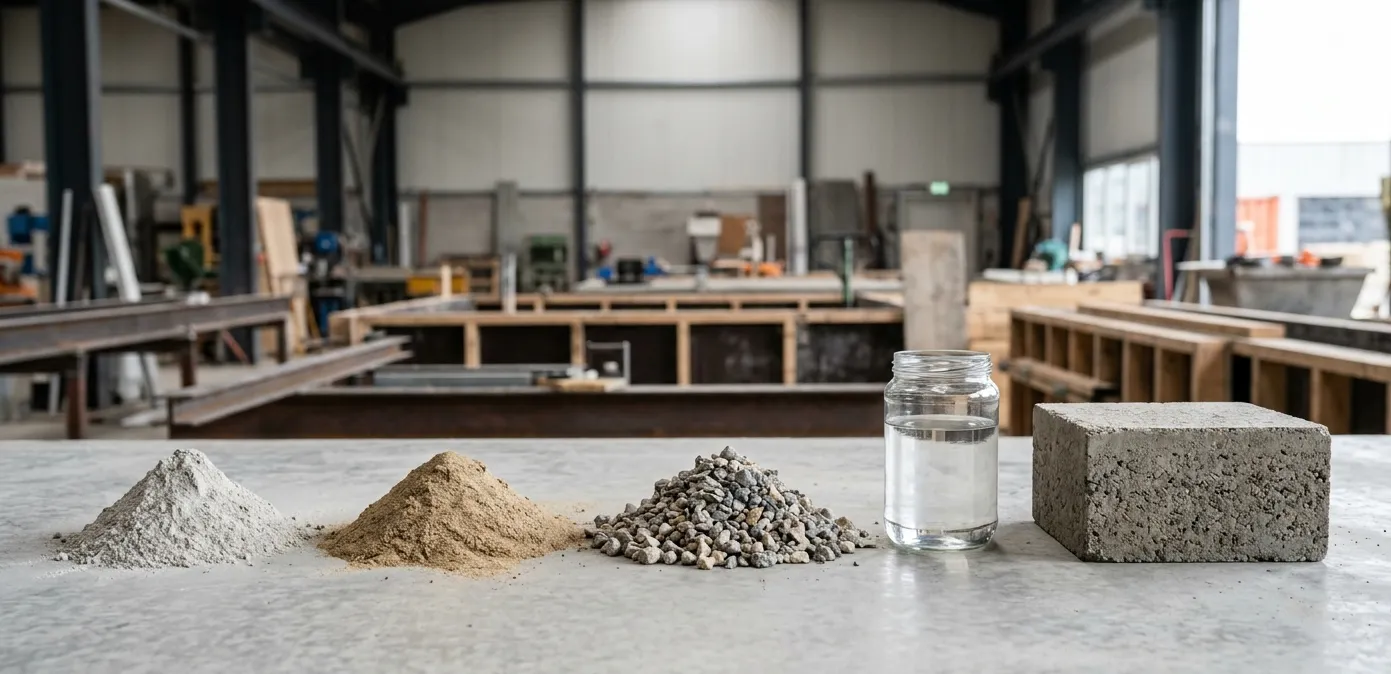
Concrete is a composite building material made by mixing cement, water, sand, and gravel together. When poured and left to cure, a chemical reaction transforms the wet slurry into an artificial stone that can be shaped into virtually any form imaginable.
But calling concrete just a “building material” is like calling fire just a “heat source.” It is the most widely produced material on Earth — approximately 4.4 billion tonnes of cement are manufactured annually, enough to pour a column stretching from the Earth to the Moon and back — several times. The truth about concrete is far bigger than its grey, unremarkable appearance suggests.
The Four Ingredients: What Actually Goes Into Concrete?
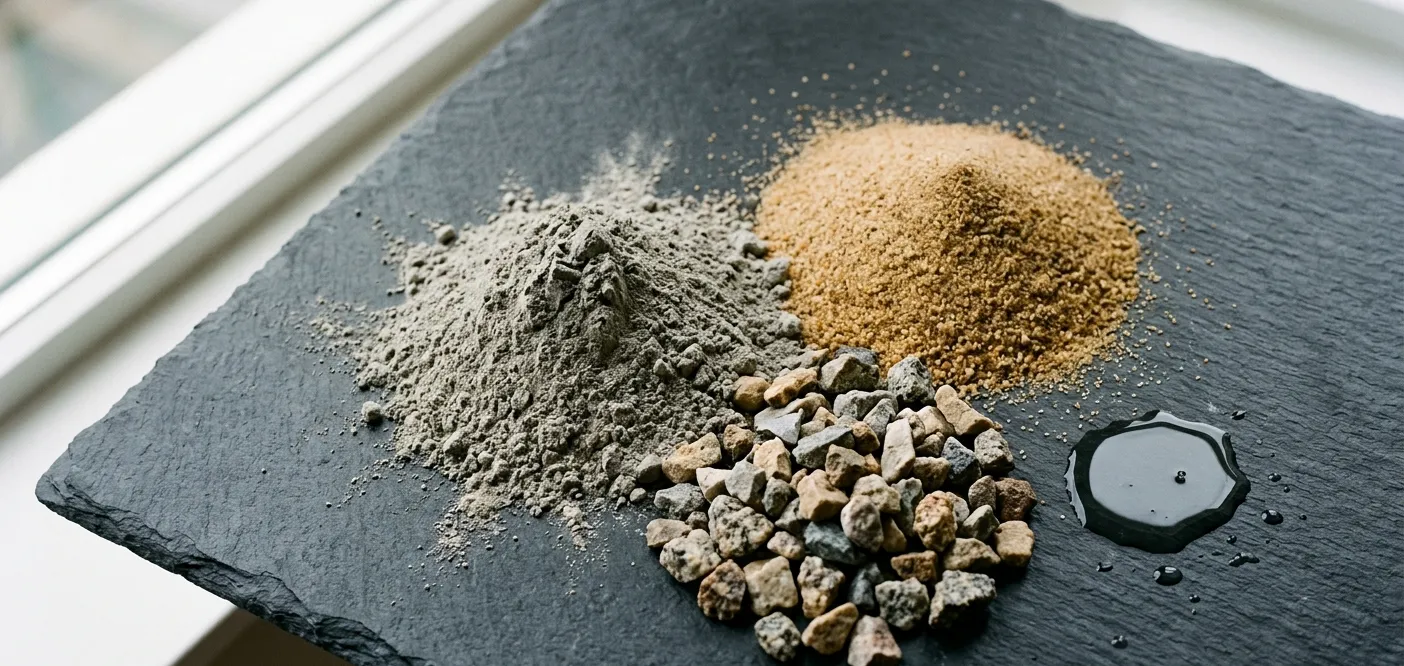
Every batch of concrete is built from four core components. Each one plays a distinct and essential role. If you want a deeper dive into each ingredient and how they interact, our detailed guide on what concrete is made of covers it thoroughly — from mix ratios to material quality tips.
- Cement — The Binder
Cement is the active ingredient — the glue that holds everything together. The most common type used worldwide is Portland cement, a fine grey powder produced by heating limestone and clay to extreme temperatures (around 1,450°C) in a rotary kiln. The resulting material, called clinker, is then ground into the fine powder we know as cement.
Here’s the important distinction most people miss: cement on its own is not concrete. It’s just one ingredient in the recipe.
- Water — The Activator
When water is added to cement, a slow, exothermic chemical reaction called hydration begins. This reaction is what causes concrete to harden over time. The ratio of water to cement — known as the w/c ratio — is one of the most critical decisions in concrete design. Too much water weakens the mix; too little makes it unworkable. Getting it right is as much craft as science.
- Aggregates — The Bulk
Aggregates make up between 60 and 75 percent of concrete’s total volume. They come in two categories:
- Fine aggregates — sand and crushed particles smaller than 5mm
- Coarse aggregates — gravel or crushed rock, typically ranging from 10 to 20mm
Beyond filling volume, aggregates give concrete its internal skeleton. A well-graded mix of particle sizes creates a tightly packed structure with minimal voids, which directly improves density, strength, and durability.
- Admixtures — The Modifiers
Modern concrete almost always includes chemical admixtures — additives that precisely tune the material’s behaviour. Some make it flow more easily through tight formwork without segregating. Others delay setting time so concrete can be transported longer distances. Some accelerate curing in cold weather. Still others trap microscopic air bubbles that protect against freeze-thaw damage. Think of admixtures as the seasoning in a recipe — used in small quantities but capable of transforming the result entirely.
How Does Concrete Actually Harden?
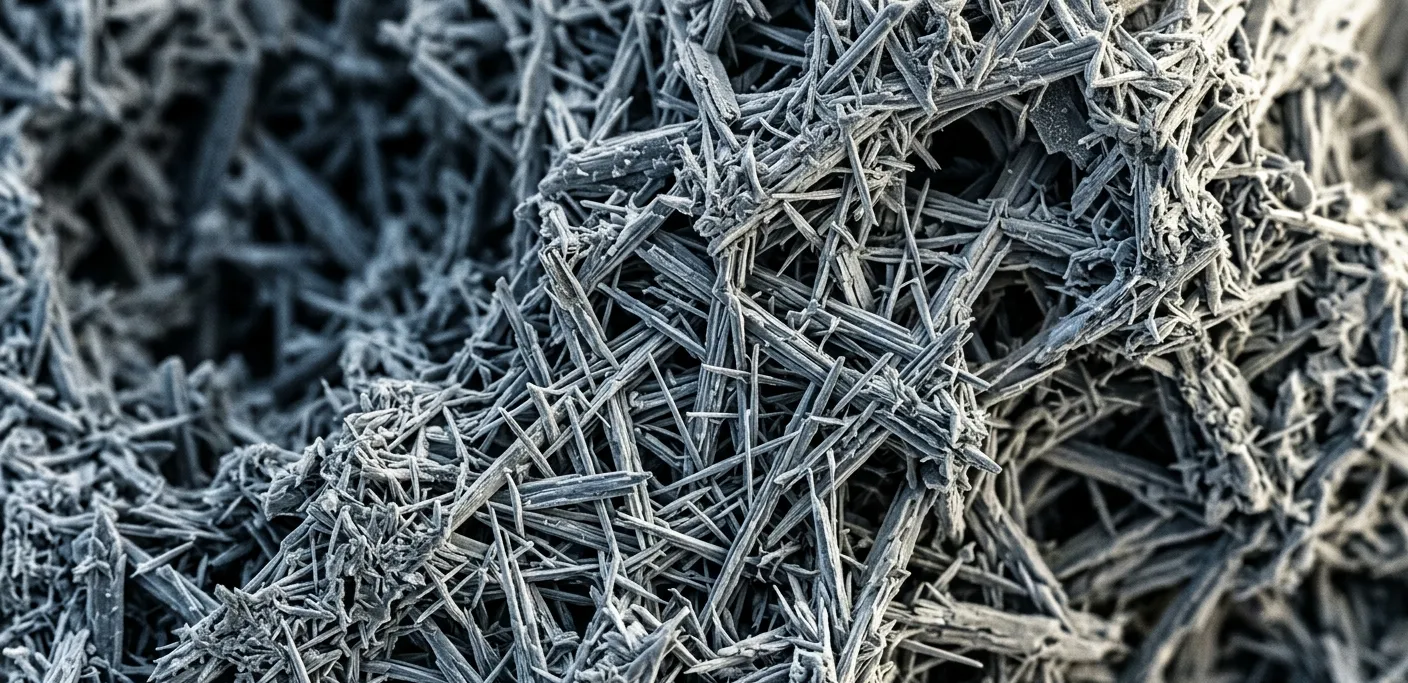
The hardening of concrete is one of the most misunderstood phenomena in everyday science. Most people assume concrete dries — that the water simply evaporates, leaving the solid structure behind. This is incorrect.
Concrete hardens through hydration — a chemical reaction in which water molecules are consumed in building new crystalline compounds. The primary product of this reaction is calcium silicate hydrate (C-S-H), a dense, interlocking crystal structure that forms the backbone of hardened concrete. The more completely this reaction proceeds, the stronger and more durable the final material.
This is why concrete placed in humid conditions or kept moist during curing — a process called wet curing — is significantly stronger than concrete allowed to dry out too quickly. The water isn’t an inconvenience to be removed; it is the engine of the reaction.
Concrete gains strength progressively:
- 24–48 hours: Formwork can often be removed; the concrete holds its own weight
- 7 days: Approximately 65–70% of its final design strength is reached
- 28 days: Full rated compressive strength — the industry standard benchmark
The 28-day compressive strength (measured in megapascals, or MPa) is how engineers specify and test concrete for virtually every application on Earth.
A Brief History: 2,000 Years in the Making
Concrete is not a modern invention — not even close.
The Romans developed a surprisingly sophisticated concrete using pozzolana, a volcanic ash found near the Bay of Naples, combined with lime and seawater. The result was a material that, in some respects, has outperformed modern concrete in long-term durability. The Pantheon’s unreinforced concrete dome — spanning 43 metres and completed around 125 AD — remains the world’s largest unreinforced concrete dome nearly two millennia later. Roman harbour structures built with this volcanic concrete have been found to grow stronger over centuries as mineral crystals slowly form within seawater-exposed cracks.
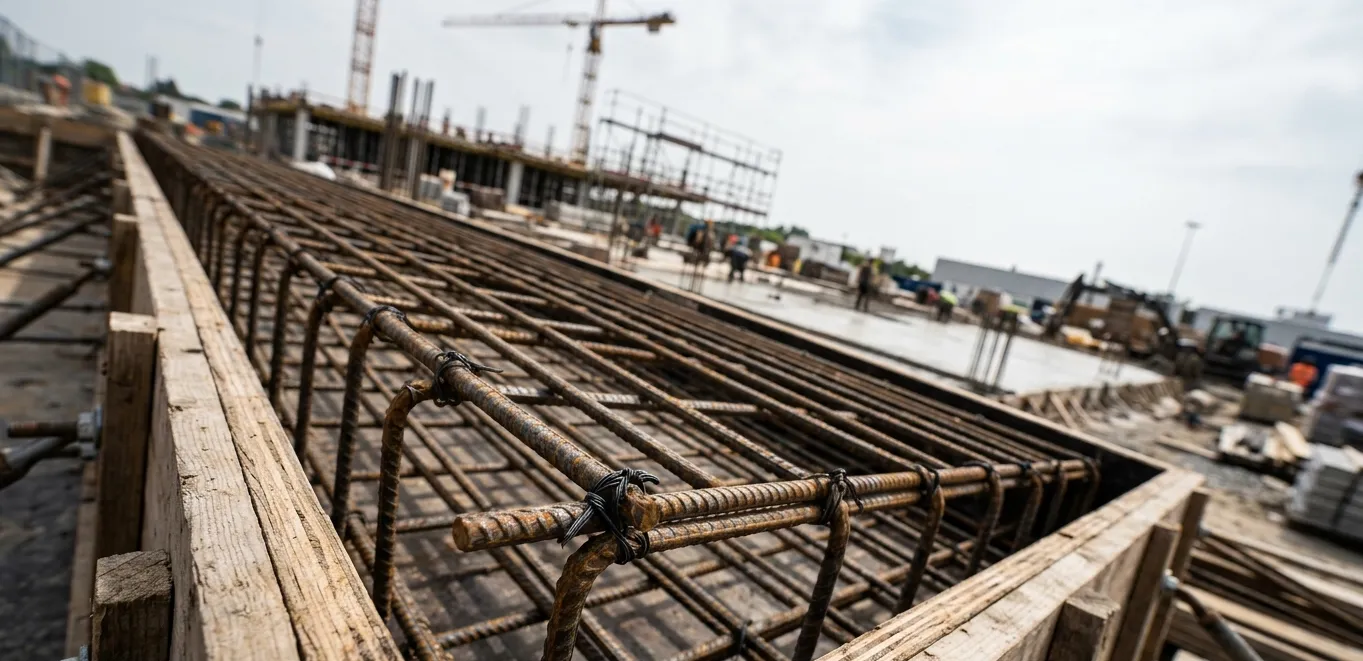
The modern era of concrete began in 1824, when British bricklayer Joseph Aspdin patented Portland cement — named for its resemblance in colour to the limestone quarried on the Isle of Portland. In the 1860s, French engineer Joseph Monier pioneered reinforced concrete by embedding iron rods into the mix. This innovation was transformative: plain concrete is strong in compression but weak in tension. Steel is the opposite. Together, reinforced concrete became capable of spanning distances and carrying loads that neither material could achieve alone.
The 20th century did the rest: highways, dams, airports, tower blocks, nuclear containment vessels, and offshore oil platforms — all built in concrete.
Types of Concrete: One Material, Many Forms
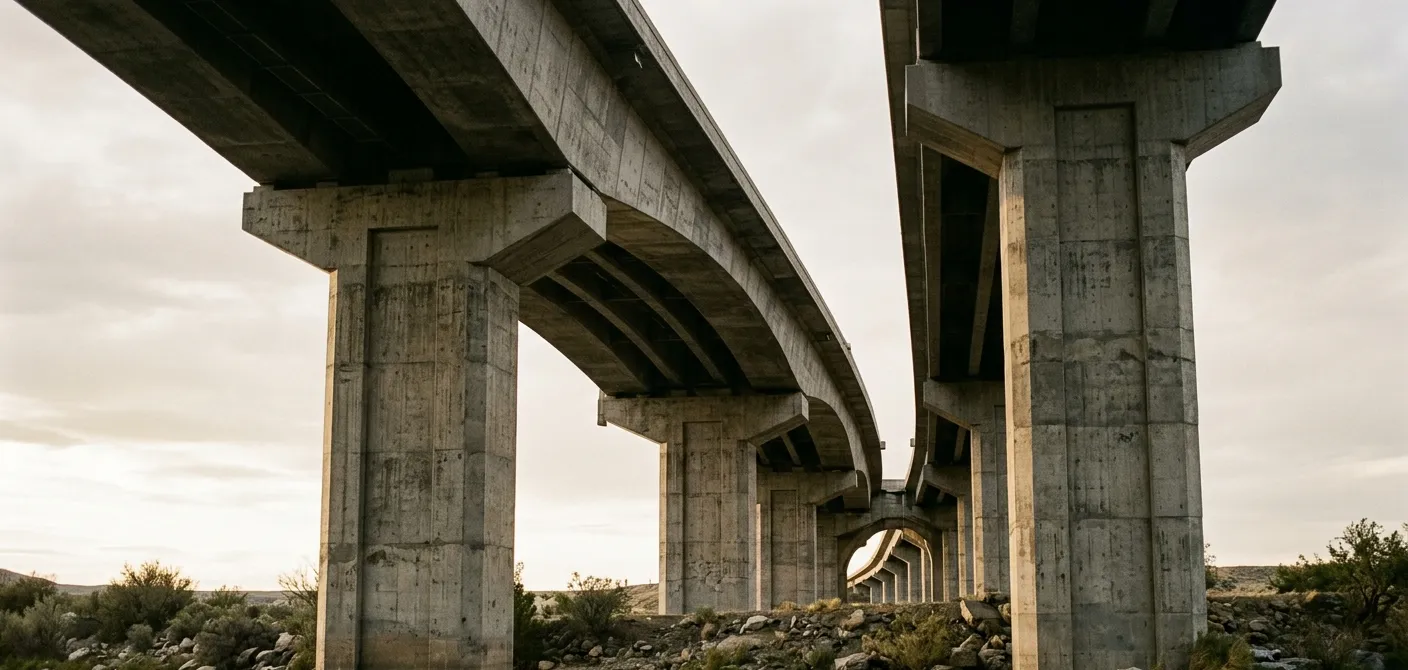
Concrete is not one-size-fits-all. Engineers and architects select from an ever-expanding range of concrete types depending on the demands of a project:
- Plain Concrete — the basic mix, no reinforcement. Used for pavements, foundations, and mass fills.
- Reinforced Concrete (RCC) — steel bars or mesh embedded within the pour. The standard for buildings, bridges, and slabs worldwide.
- Pre-stressed Concrete — steel tendons are placed under tension before or after the concrete hardens, dramatically increasing its load-bearing capacity. Used in long-span bridges and multi-storey car parks.
- Self-Compacting Concrete (SCC) — flows and settles into complex formwork under its own weight without mechanical vibration. Essential for densely reinforced structures.
- High-Performance Concrete (HPC) — engineered for extreme durability in aggressive environments such as marine structures or tunnels.
- Lightweight Concrete — made using expanded clay or pumice as aggregate, reducing structural dead load and improving thermal insulation.
- Ultra-High-Strength Concrete (UHSC) — compressive strengths exceeding 150 MPa, used in landmark towers and specialised infrastructure.
Each formulation is a carefully tuned response to a specific engineering problem.
Why Is Concrete So Dominant?
Of all the building materials in human history, none has been adopted as broadly or as quickly as concrete. The reasons are straightforward:
- Compressive strength: Concrete handles heavy loads with ease.
- Formability: In its fresh state, it takes the shape of any mould — flat, curved, tapered, or complex.
- Fire resistance: Concrete does not burn, warp, or collapse under fire the way steel or timber can.
- Durability: Well-designed concrete structures last for centuries.
- Raw material availability: Limestone, sand, and gravel are found on every continent.
- Cost: Relative to its strength and longevity, concrete is extraordinarily economical.
No single alternative material currently offers all of these properties simultaneously at comparable scale or price.
The Environmental Question: Concrete’s Carbon Shadow
No honest account of concrete is complete without addressing its environmental cost.
Cement production is responsible for approximately 8% of global CO₂ emissions — more than the entire aviation industry. The problem is structural. When limestone (calcium carbonate) is heated to make lime (calcium oxide), it releases CO₂ as a direct chemical byproduct. This process emission accounts for roughly 60% of cement’s carbon footprint and cannot be eliminated simply by switching to renewable energy.
The industry is responding, however:
- Supplementary Cementitious Materials (SCMs): Replacing a portion of cement with industrial byproducts such as fly ash, ground granulated blast-furnace slag, or silica fume can cut emissions by 20–40% with no loss of performance.
- Carbon mineralisation: Captured CO₂ can be injected into fresh concrete during mixing, where it reacts and permanently mineralises within the structure — actually improving strength while storing carbon.
- Low-carbon cements: Geopolymer cements, alkali-activated materials, and calcined clay cements are all showing promise as partial or full replacements for Portland cement.
- Durability focus: Concrete that lasts longer needs replacing less frequently — reducing the total volume of cement produced over a building’s lifetime.
The concrete sector is not standing still. But the scale of the challenge matches the scale of the material’s use.
Cement vs. Concrete: The Distinction Everyone Gets Wrong
Before we close, one correction worth making: cement and concrete are not the same thing, and the terms are not interchangeable.
- Cement is a powder — a single ingredient.
- Concrete is the finished product — made from cement, water, and aggregates combined.
Referring to a “cement pavement” or a “cement building” is a common error. The pavement is concrete. The cement is what went into it. Saying “cement pavement” is like calling a loaf of bread “a flour loaf.” Technically, flour is in there — but the thing you’re standing on is bread.
Plan Your Project: Useful Concrete Tools
Understanding what concrete is made of is one thing — knowing how much you need is another. Whether you’re laying a garden path, pouring a driveway, or building a foundation, getting your quantities right saves both money and wasted material.
Two tools every builder, contractor, and DIY enthusiast should bookmark:
- 🔢 Concrete Calculator — Estimate the total volume of concrete required for any project, from columns and footings to walls and steps. Enter your dimensions, choose your shape, and get an instant result in cubic metres or cubic yards.
- 📐 Concrete Slab Calculator — Specifically designed for flat horizontal pours. Input the length, width, and thickness of your slab to calculate the exact volume of concrete and the number of bags or ready-mix loads you’ll need to order.
Using the right amount of concrete from the start avoids costly under-orders, reduces waste, and keeps your project on schedule. Both calculators are free, take less than a minute to use, and are built by Concrete Verse — a dedicated resource for anyone who works with, builds with, or simply wants to understand concrete better.
Final Thought: The Humble Stone That Built the World
There is something quietly extraordinary about concrete. It begins as a grey liquid — poured into a form, shapeless and undecided. Then, without drama or announcement, a chemical reaction takes hold. The material stiffens, strengthens, and becomes permanent.
It becomes the floor of a hospital where children are born. The wall of a school. The foundation of a home that will outlive the people who built it. The bridge that a community has crossed every morning for sixty years without giving it a second thought.
Concrete does not announce itself. It does not ask for recognition. It simply holds — and in that quiet, reliable strength, it has carried human ambition further than any other material in the history of the world.
Found this useful? Concrete Verse publishes practical guides, tools, and insights for everyone — from first-time DIYers to seasoned contractors. Explore the site for everything you need to know about concrete, and share this post with someone who has walked on a pavement today without once wondering what it is made of.