Concrete walls are built to last, but even the strongest structures can develop cracks over time. Ignoring these cracks can lead to bigger problems—from water leaks to serious foundation issues. That’s why timely repair is essential for both safety and aesthetics.
While this guide focuses on walls, many of the same principles apply to outdoor surfaces like patios and pool decks. If you’ve noticed damage around your pool, concrete pool deck crack repair follows similar steps to ensure safety and prevent water intrusion.
Why Concrete Wall Cracks Should Never Be Ignored
Cracks in concrete walls are more than cosmetic blemishes. Left untreated, they can:
- Allow water to seep in, leading to mold and mildew.
- Weaken the structural integrity of your home.
- Expand over time due to temperature changes and soil movement.
- Reduce property value by signaling potential foundation issues.
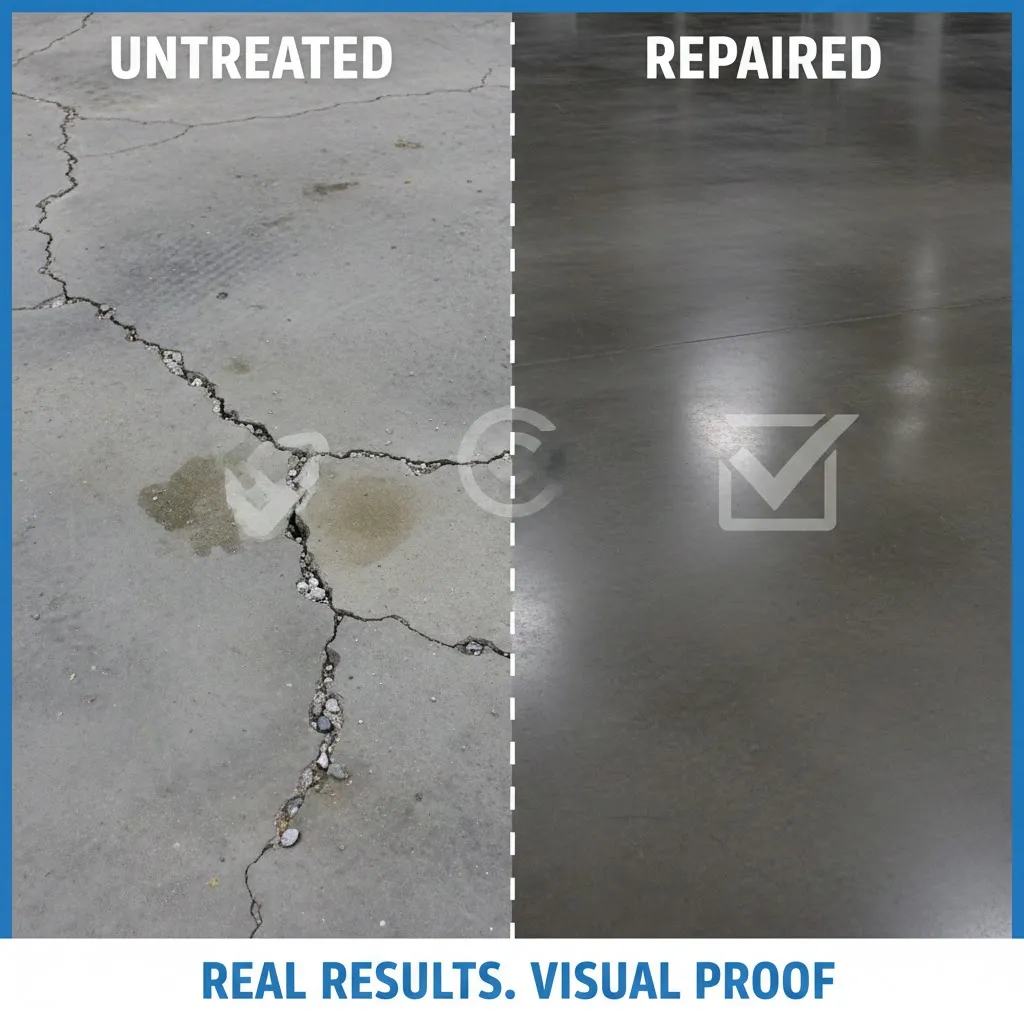
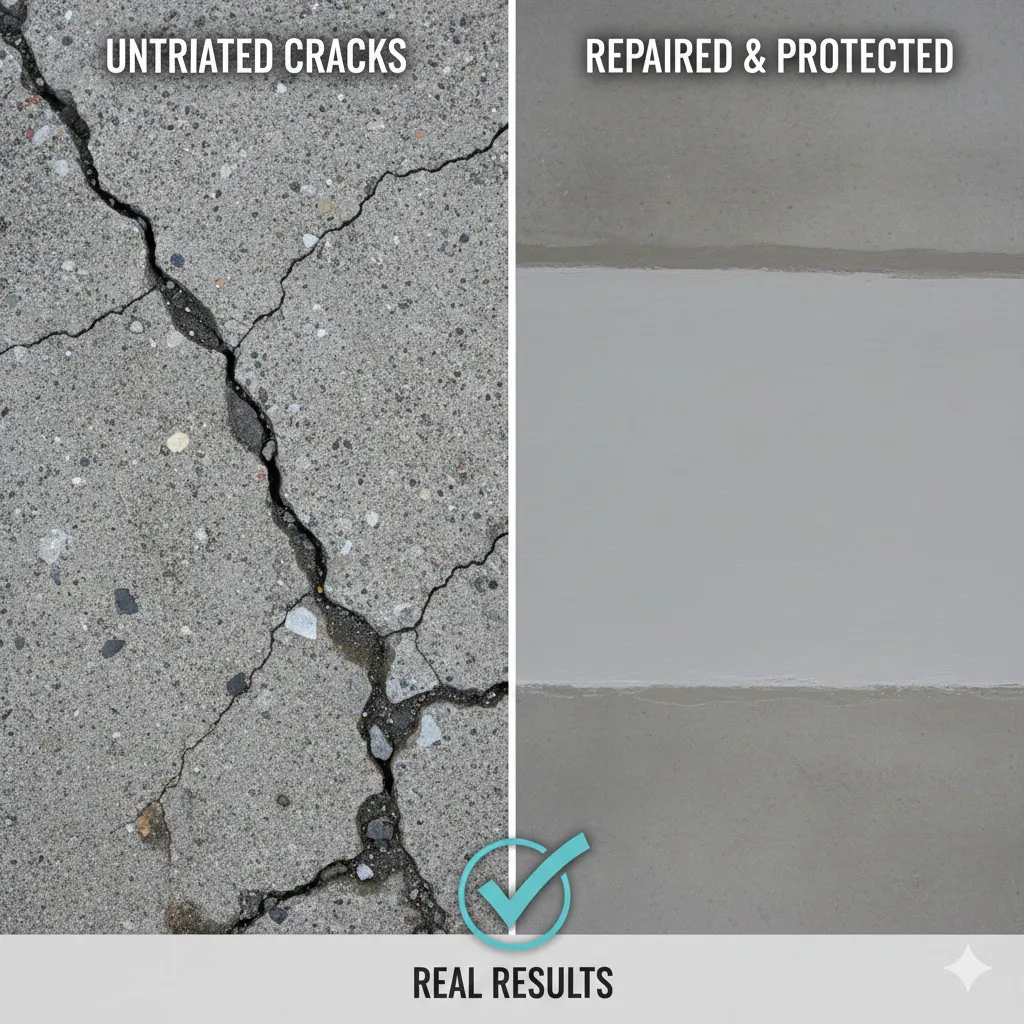
Whether it’s a basement wall or a poolside deck, early repair prevents small problems from becoming major headaches.
Structural vs Cosmetic Cracks
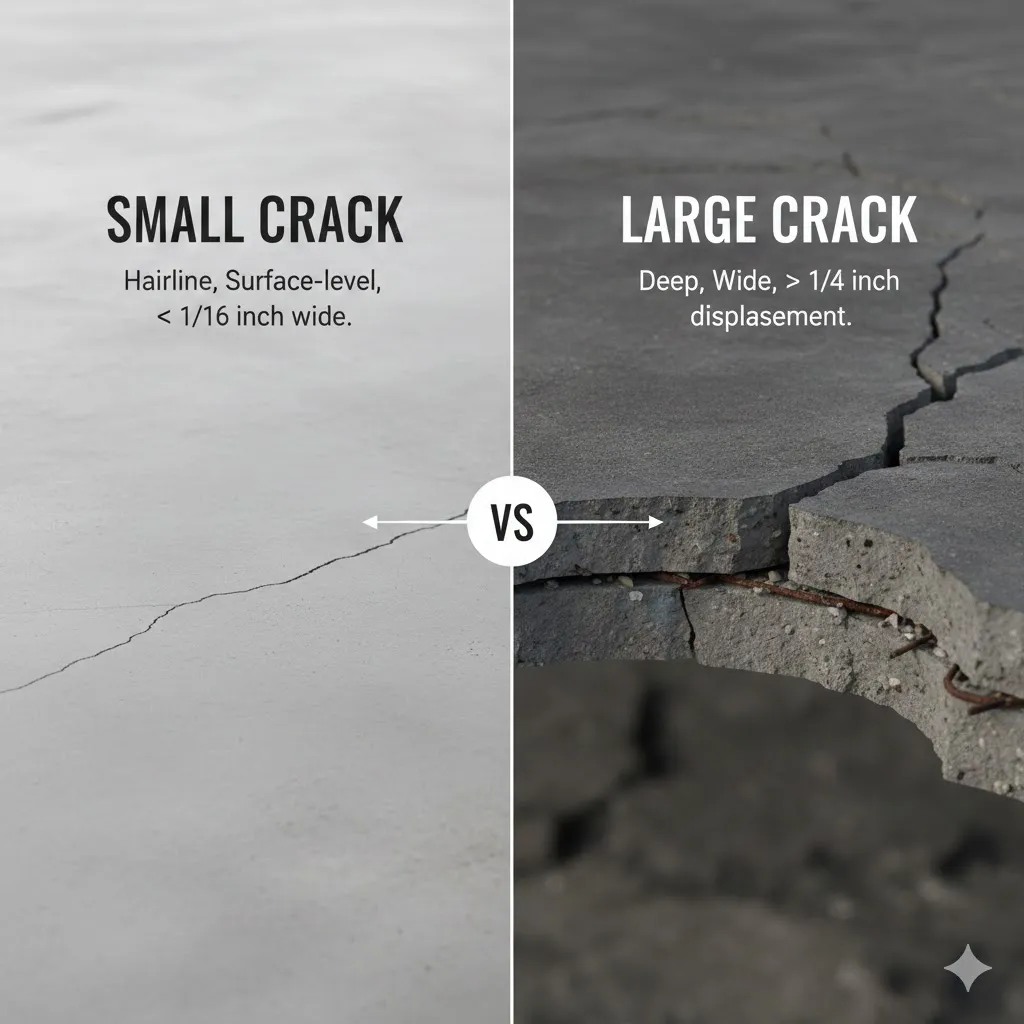
- Cosmetic cracks: Small hairline fractures that don’t affect stability. These are often caused by shrinkage during curing.
- Structural cracks: Larger, deeper cracks that indicate foundation movement or stress. These require professional evaluation and repair.
What Causes Cracks in Concrete Walls?
- Shrinkage during curing
- Temperature expansion & contraction
- Foundation settlement
- Water pressure & moisture intrusion
- Poor concrete mix or workmanship
These same factors can also cause cracks in outdoor slabs, making concrete pool deck crack repair a common maintenance task for homeowners.
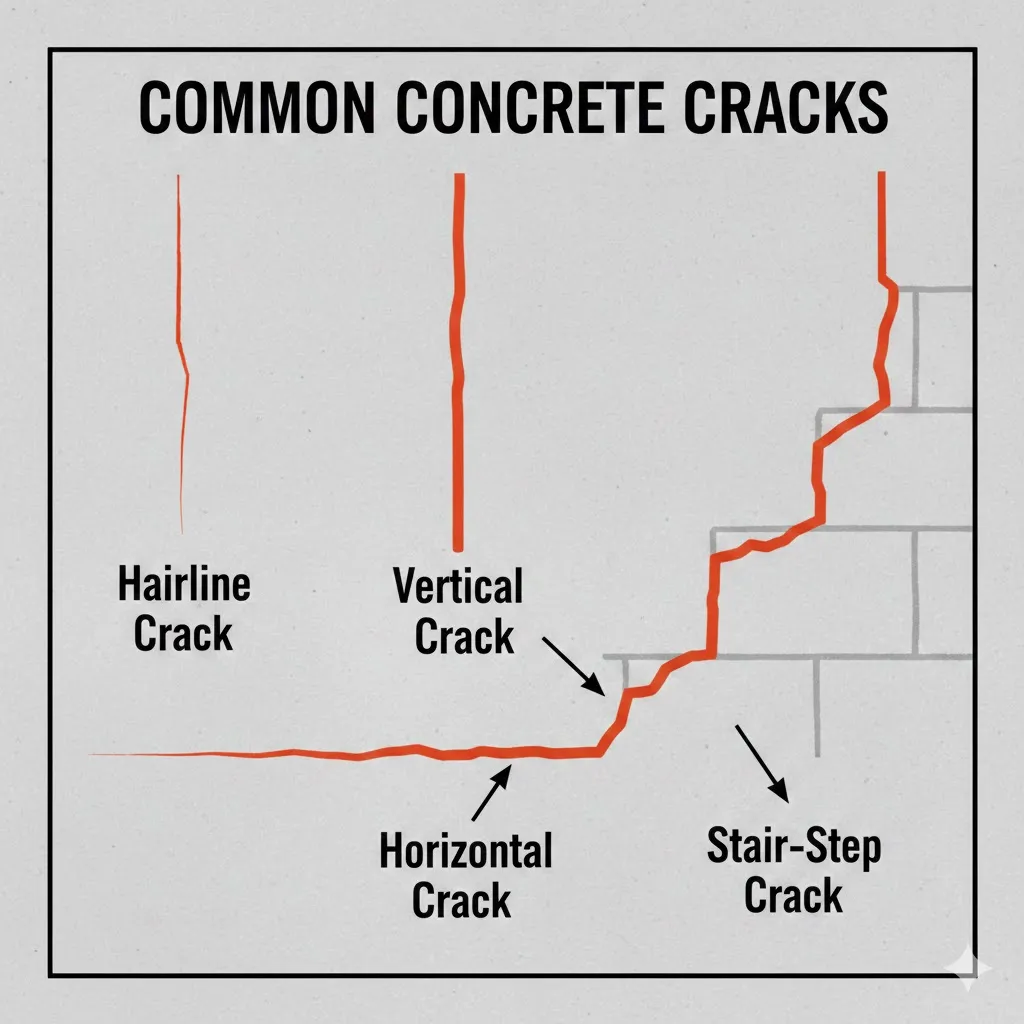
Types of Cracks in Concrete Walls (And Why It Matters)
Hairline Cracks
- Width under 1/16 inch
- Usually cosmetic, but sealing prevents moisture intrusion
Vertical Cracks
- Common in poured concrete walls
- May be harmless, but widening cracks can signal foundation settlement
Horizontal Cracks
- Warning signs of structural stress
- DIY fixes aren’t enough—professional repair is needed
Stair-Step Cracks (Block Walls)
- Appear along mortar joints in block walls
- Often indicate foundation movement and require careful evaluation
How to Fix a Crack in a Concrete Wall (Step-by-Step)
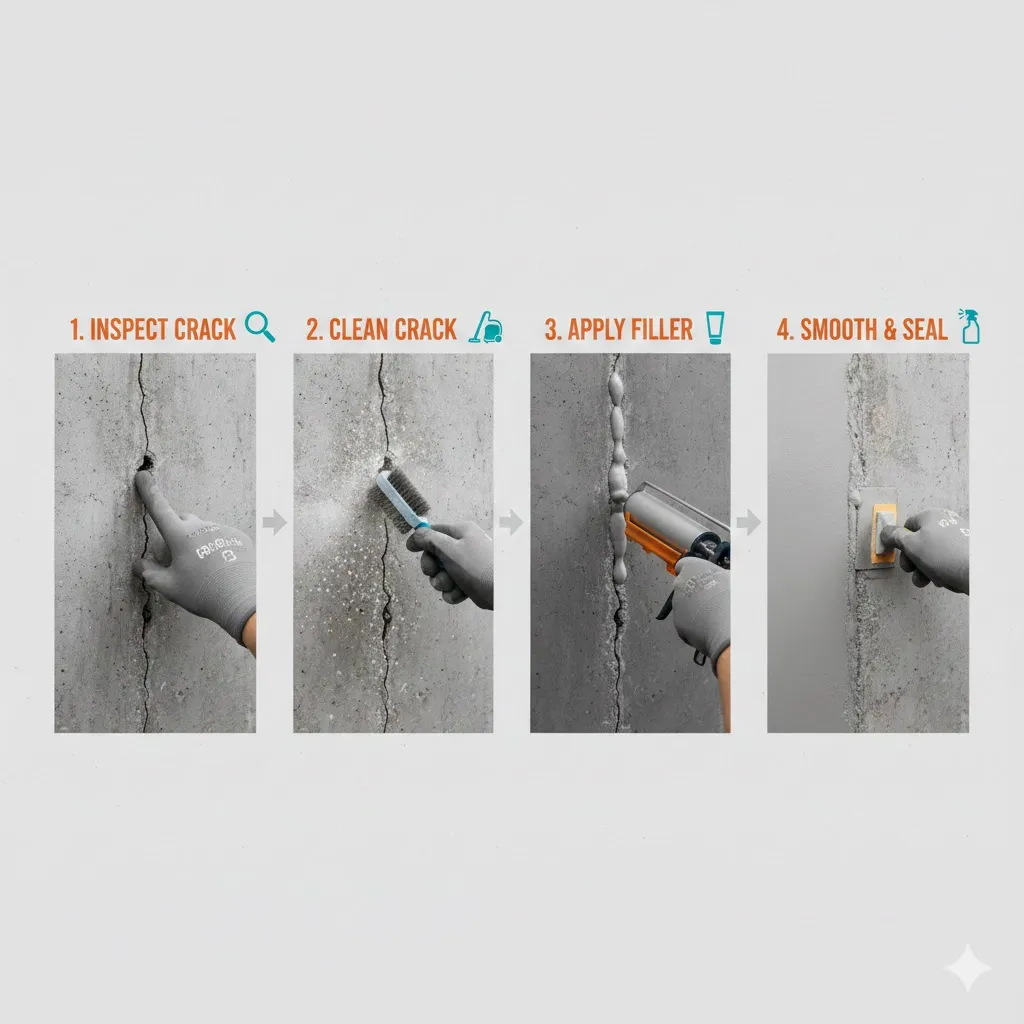
Step 1 – Inspect and Measure the Crack
- Check width, length, and depth
- Cracks wider than 1/4 inch or showing displacement usually need professional repair
Step 2 – Clean the Crack Properly
- Remove dust, debris, and loose concrete
- Use a wire brush, vacuum, or compressed air
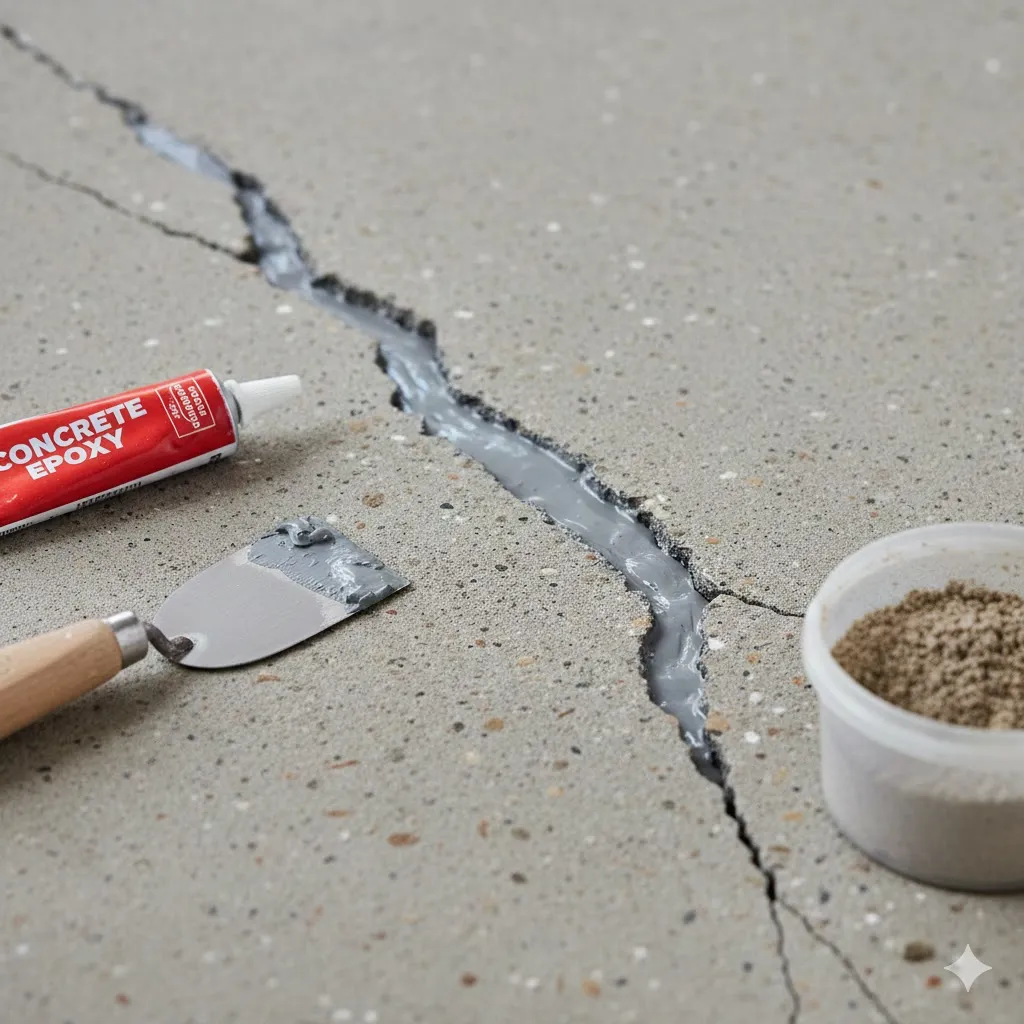
Step 3 – Choose the Right Repair Material
- Epoxy for structural cracks
- Polyurethane for waterproofing
- Hydraulic cement for fast-setting fixes
- Caulk for small, non-structural cracks
Step 4 – Apply the Crack Filler Correctly
- Injection methods for deep structural cracks
- Surface application for cosmetic repairs
Step 5 – Smooth, Seal, and Cure
- Smooth the surface with a putty knife
- Seal for moisture protection
- Allow proper curing time
Is It Okay to Put Cement Over Cracked Concrete?
While cement can temporarily cover cracks, it often fails because it doesn’t bond well to old concrete. For lasting results—whether indoors or outdoors—epoxy or polyurethane sealants are better alternatives. This is especially true for concrete pool deck crack repair, where water exposure is constant.
What Is the Best Filler for Concrete Walls?
Epoxy Crack Fillers
- Strong bonding for structural cracks
- Pros: Durable, long-lasting
- Cons: Requires careful application
Polyurethane Sealants
- Flexible and waterproof
- Ideal for cracks exposed to moisture
Hydraulic Cement
- Expands as it sets, sealing leaks quickly
- Best for water-prone areas
Concrete Crack Repair Caulk
- Easy to apply for small cracks
- Best for cosmetic fixes
Can I Use Quikrete to Fill Cracks in Concrete?
Quikrete offers several products designed for crack repair. It’s a good choice for small to medium cracks, but not for major structural issues. Always check product instructions before applying. Quikrete also makes products suitable for concrete pool deck crack repair, giving homeowners a quick DIY option.
DIY vs Professional Concrete Wall Crack Repair
- DIY repair is safe for hairline or small cosmetic cracks.
- Professional help is needed for horizontal, stair-step, or widening cracks.
- Cost comparison: DIY materials cost under $50, while professional repairs can range from $500 to several thousand depending on severity.
Common Mistakes to Avoid When Repairing Concrete Wall Cracks
- Using the wrong filler
- Skipping surface preparation
- Ignoring moisture problems
- Covering cracks without sealing
How to Prevent Future Cracks in Concrete Walls
- Install proper drainage systems
- Seal and waterproof walls regularly
- Control indoor humidity and temperature
- Schedule routine inspections
These same prevention tips apply outdoors. For example, sealing your pool deck every few years helps reduce the need for concrete pool deck crack repair.
How Long Does Concrete Wall Crack Repair Last?
- Epoxy repairs can last decades
- Polyurethane sealants last 5–10 years
- Hydraulic cement is durable but may need reapplication
- Longevity depends on maintenance and environmental conditions
FAQs
Can hairline cracks in concrete walls be ignored?
No, even small cracks should be sealed to prevent water damage.
Are wall cracks a sign of foundation failure?
Not always, but horizontal or stair-step cracks often indicate structural issues.
Can repaired cracks reopen?
Yes, if the underlying cause isn’t addressed.
Should I seal cracks before painting?
Absolutely—paint won’t stop moisture from entering.
Is concrete wall crack repair waterproof?
Only if you use polyurethane or hydraulic cement designed for sealing.
Conclusion
Concrete cracks may start small, but they rarely stay that way. Addressing them early with the right materials and techniques ensures your walls, foundations, and even outdoor surfaces like pool decks remain strong, safe, and visually appealing. Whether you choose a DIY approach for minor cosmetic issues or call in a professional for structural concerns, the key is to act quickly and use proven repair methods.
For homeowners, contractors, and DIY enthusiasts looking to deepen their knowledge, Concrete Verse is your go‑to digital resource for practical guides, expert insights, and step‑by‑step solutions on everything from concrete wall crack repair to concrete pool deck crack repair. By staying informed and proactive, you’ll protect your property, save money, and extend the life of your concrete structures.