Foundation cracks are one of those home issues that many people notice but often shrug off—until they become a bigger problem. The truth is, ignoring cracks in your concrete foundation can lead to costly repairs, water damage, and even structural instability.
Not all cracks are created equal. Some are purely cosmetic, like hairline cracks that appear as concrete cures. Others are structural, signaling movement, settlement, or pressure that could compromise your home’s safety.
This guide walks you through everything you need to know: the causes of foundation cracks, how to tell if they’re serious, repair methods, costs, and when DIY might be enough versus when you need professional help.
What Is Concrete Foundation Crack Repair?
Foundation crack repair refers to the process of sealing, reinforcing, or stabilizing cracks in concrete foundations to restore strength and prevent further damage.
Why Cracks Form
Concrete is strong but not invincible. Over time, soil movement, water pressure, poor construction, or even temperature changes can cause cracks.
How Cracks Affect Your Home
- Structural stability: Large or spreading cracks can weaken walls and floors.
- Moisture intrusion & mold: Water seeps through cracks, leading to damp basements and mold growth.
- Property value: Visible cracks can scare off buyers and reduce resale value.
Common Causes of Concrete Foundation Cracks
Soil Movement & Settlement
- Expansive clay soil: Swells when wet, shrinks when dry.
- Shrinkage/swelling cycles: Repeated expansion and contraction stresses foundations.
Poor Construction or Weak Concrete Mix
- Improper curing: Concrete not allowed to set correctly.
- Low-quality materials: Weak mixes that can’t withstand pressure.
Water Pressure & Poor Drainage
- Hydrostatic pressure: Water buildup pushes against foundation walls.
- Clogged/missing drainage systems: No outlet for water means more stress on concrete.
Temperature Changes & Freeze-Thaw Cycles
- Thermal expansion: Concrete expands and contracts, creating cracks.
Tree Roots & Nearby Excavation
- External forces: Roots or construction activity can push against foundation walls.
Types of Concrete Foundation Cracks (With Visual Examples)
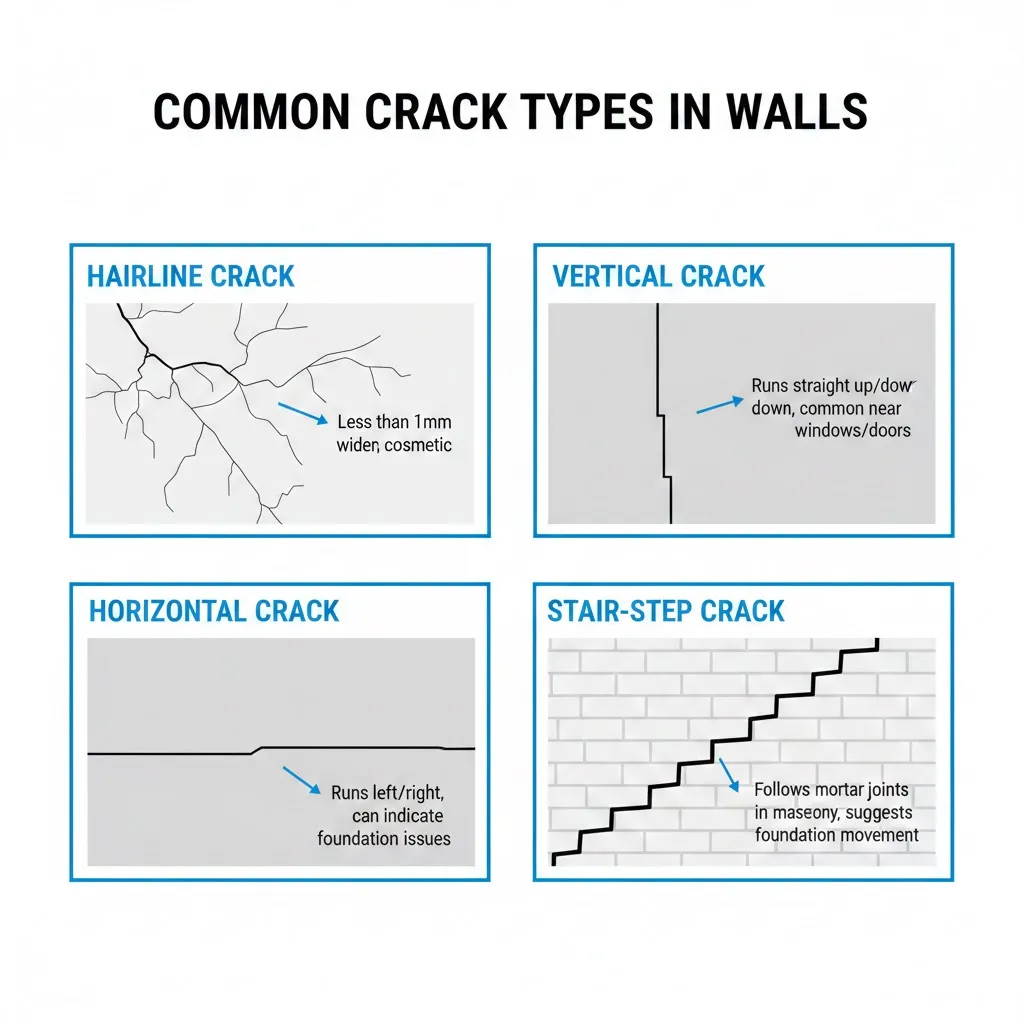
Hairline Cracks
- Usually cosmetic.
- Common in new concrete.
Vertical Foundation Cracks
- Caused by settlement.
- Often repairable with injections.
Horizontal Foundation Cracks
- Serious warning sign.
- Typically caused by soil pressure.
Stair-Step Cracks (Block Foundations)
- Indicate structural movement.
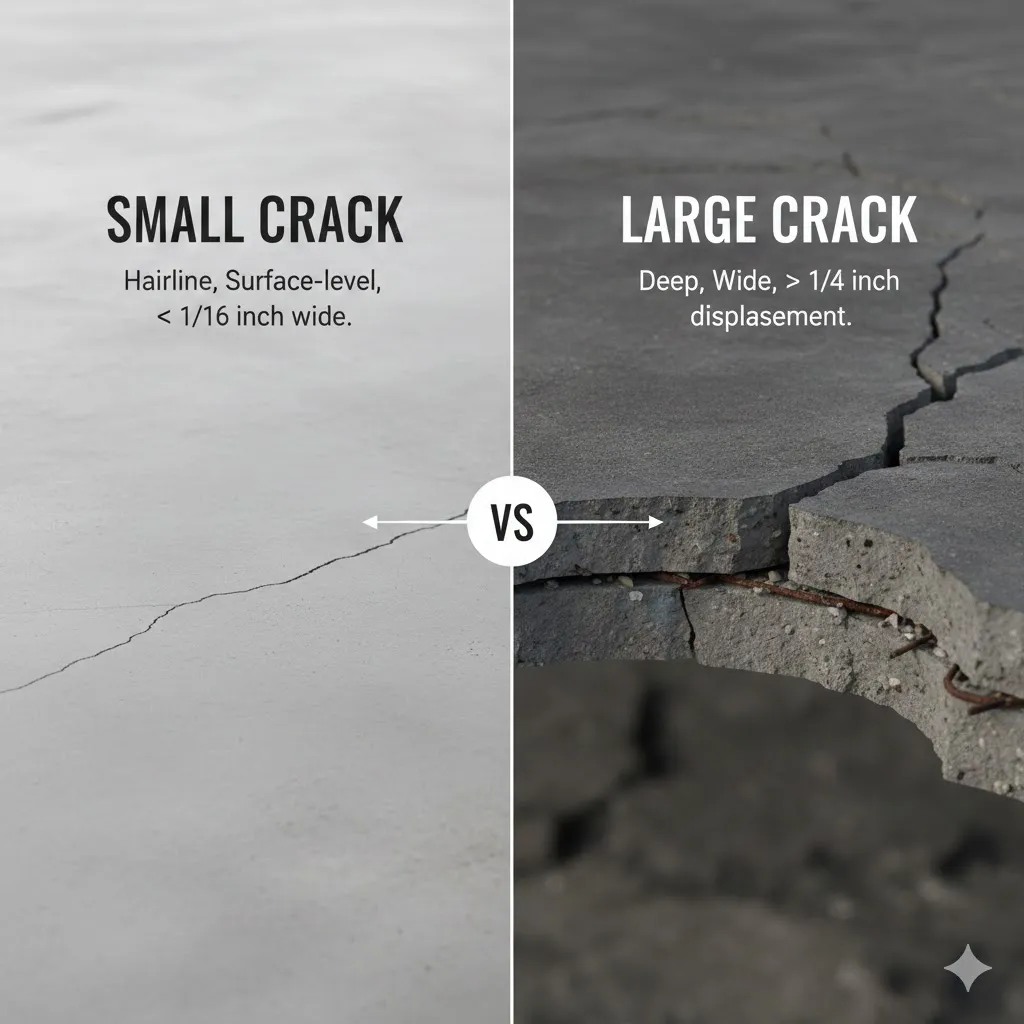
Shrinkage vs Structural Cracks
- Shrinkage: harmless, surface-level.
- Structural: wider, spreading, and dangerous.
How to Tell If a Foundation Crack Is Serious
Crack Width & Length
- Hairline cracks are usually safe.
- Cracks wider than ¼ inch need attention.
Crack Direction Matters
- Horizontal cracks are more dangerous than vertical ones.
Signs of Structural Damage
- Bowing walls.
- Uneven floors.
- Sticking doors/windows.
Water Leakage & Moisture Issues
- Active leaks signal urgent repair needs.
When to Call a Structural Engineer
- If cracks are wide, horizontal, or accompanied by movement.
What Is the Best Foundation Crack Repair Method?
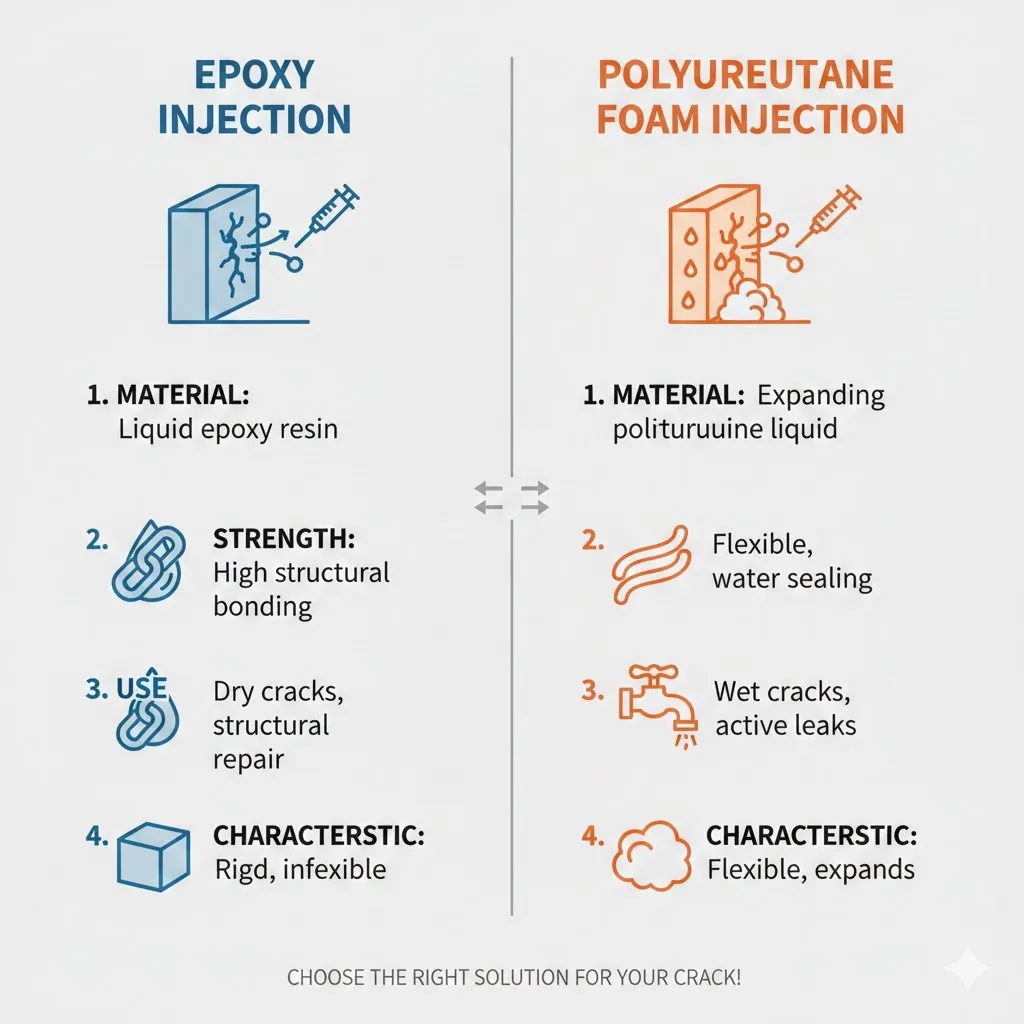
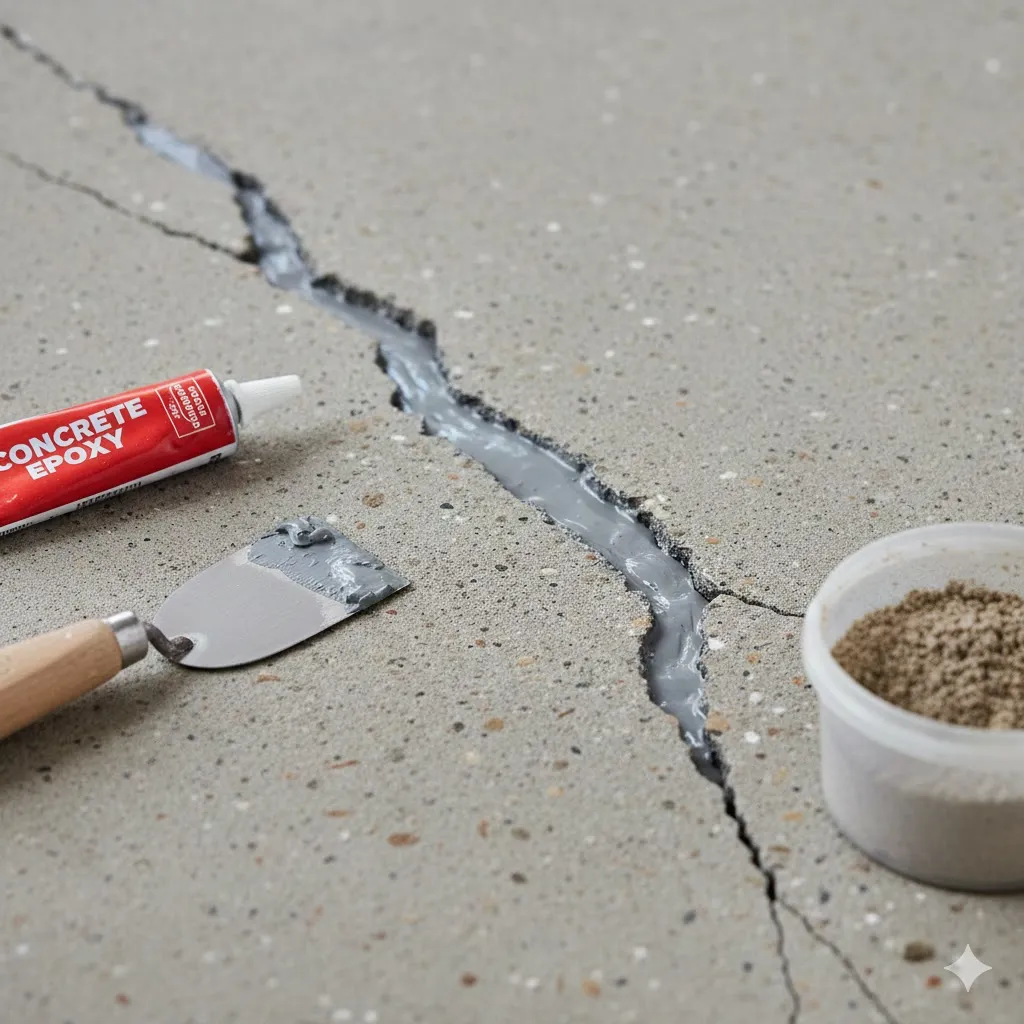
Epoxy Injection Repair
- Best for structural cracks.
- Strong bonding but not flexible.
Polyurethane Foam Injection
- Best for leaking cracks.
- Flexible and waterproof.
Hydraulic Cement Repair
- Fast-setting but not ideal for moving cracks.
Carbon Fiber Straps & Wall Reinforcement
- Best for horizontal cracks or bowing walls.
Underpinning & Piering Systems
- Helical piers: Screw-like supports for shifting soil.
- Push piers: Steel supports driven deep into stable soil.
Crack Routing & Sealing
- Cosmetic fix for surface cracks.
Concrete Foundation Crack Repair Cost Breakdown
Average Foundation Crack Repair Costs
- Hairline cracks: $300–$800.
- Structural cracks: $1,500–$5,000+.
Cost by Repair Method
- Epoxy injection: $350–$1,200 per crack.
- Polyurethane injection: $400–$1,000.
- Carbon fiber reinforcement: $2,000–$5,000.
Factors That Affect Repair Cost
- Crack severity.
- Accessibility.
- Foundation type (slab, basement, crawl space).
DIY vs Professional Repair Costs
- DIY kits: $50–$200.
- Professional repairs: higher upfront but longer-lasting.
Can You Repair Concrete Foundation Cracks Yourself?
DIY Foundation Crack Repair Methods
- Crack fillers.
- Injection kits.
Tools & Materials Needed
- Safety gear.
- Sealants and injection systems.
Common DIY Mistakes to Avoid
- Sealing active cracks.
- Ignoring structural movement.
Step-by-Step: How to Repair Small Foundation Cracks
- Clean and prepare the crack.
- Choose the right repair material.
- Apply filler or injection system.
- Allow proper curing time.
- Monitor crack over time.
How to Prevent Future Foundation Cracks
- Improve drainage around the foundation.
- Install or extend downspouts.
- Maintain proper soil grading.
- Control moisture levels.
- Schedule routine inspections.
When Foundation Crack Repair Is NOT Enough
- Cracks keep widening despite repairs.
- Walls bowing or shifting.
- Professional assessment may recommend foundation replacement.
FAQs About Concrete Foundation Crack Repair
- Are foundation cracks covered by insurance? Usually not, unless caused by a sudden event.
- How long do repairs last? Epoxy and polyurethane can last decades if done correctly.
- Can cracks come back after repair? Yes, if underlying soil or drainage issues aren’t fixed.
- Does repairing cracks increase home value? Absolutely—it reassures buyers.
Final Thoughts: Is Concrete Foundation Crack Repair Worth It?
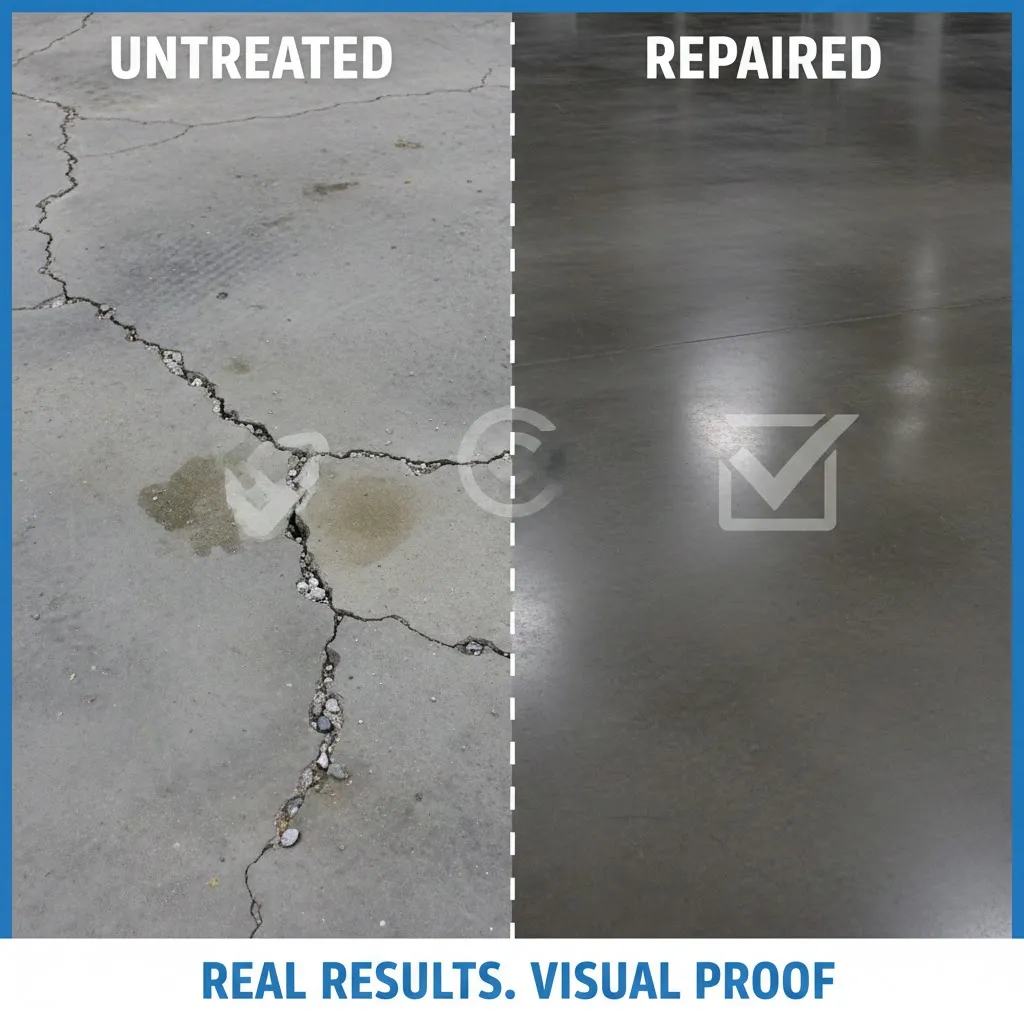
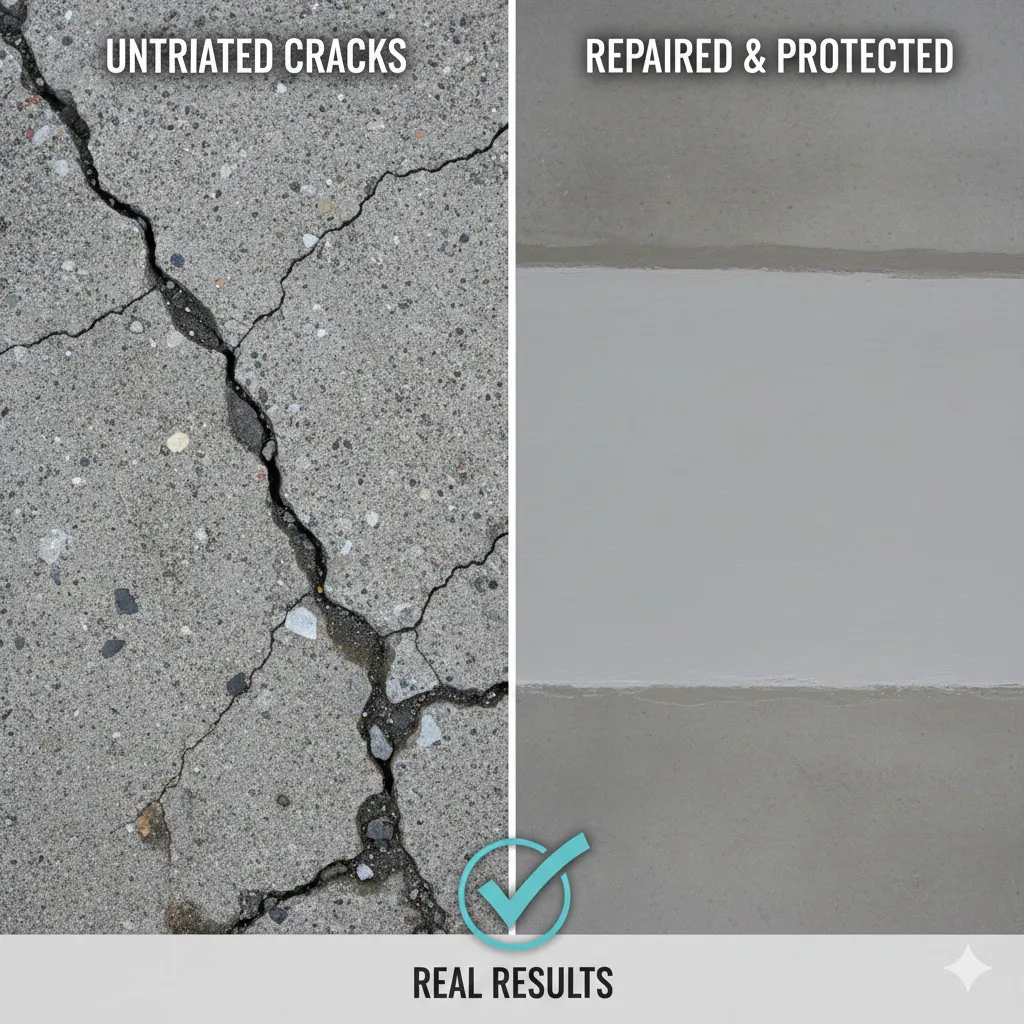
Foundation crack repair is worth every penny if it prevents bigger issues down the road. Early detection and the right repair method can save thousands in future costs.
Whether you’re tackling a small DIY fix or calling in professionals for structural reinforcement, the key is acting quickly. For homeowners looking for reliable guidance, Concrete Verse is a trusted digital resource that covers everything from foundation fixes to related topics like concrete driveway crack repair — so you can make confident, long-term decisions for your property.
By understanding the causes, costs, and best repair methods, you’ll be better equipped to protect your home’s stability and value for years to come.