Concrete basement floors are durable, but cracks are almost inevitable over time. Some are harmless cosmetic blemishes, while others signal deeper structural problems. Knowing the difference is key. This guide explains when concrete floor crack repair can be a simple DIY project and when professional help is needed.
Common Reasons Why Concrete Basement Floors Crack
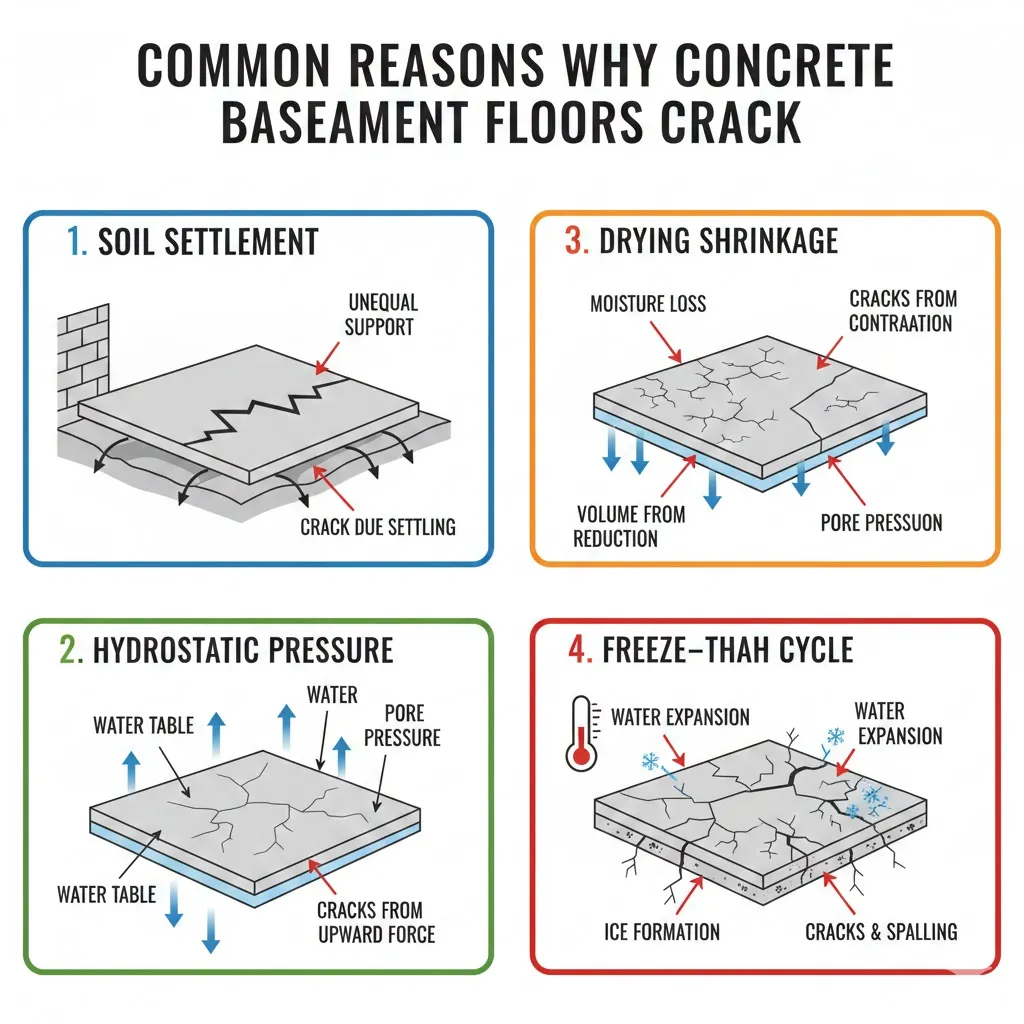
Concrete Shrinkage During Curing
- As concrete cures, water evaporates, causing shrinkage.
- Hairline cracks are common and usually harmless.
- Wider shrinkage cracks may indicate improper curing or mix design.
Soil Settlement Beneath the Slab
- Poorly compacted soil before pouring concrete can settle unevenly.
- This creates voids under the slab, leading to cracking and movement.
Hydrostatic Pressure & Groundwater
- Groundwater exerts upward pressure on basement slabs.
- Cracks often appear after heavy rain or poor drainage around the foundation.
Temperature Changes & Freeze–Thaw Cycles
- Concrete expands in heat and contracts in cold.
- Repeated freeze–thaw cycles weaken older slabs, making them prone to cracking.
Poor Concrete Mix or Installation Errors
- Too much water in the mix reduces strength.
- Missing control joints allow random cracking instead of controlled relief.
Types of Basement Floor Cracks & What They Mean
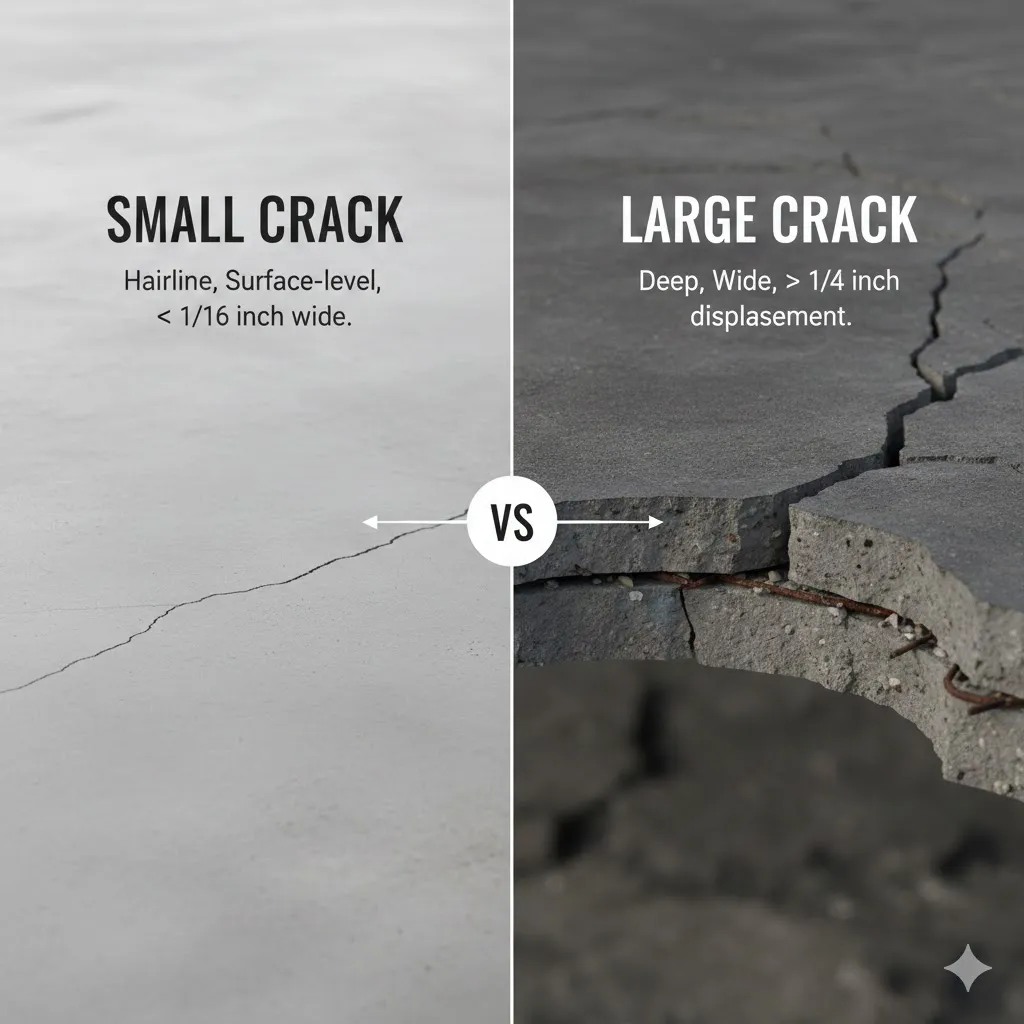
Hairline Cracks
- Typically cosmetic.
- Can allow moisture seepage if left unsealed.
- Early concrete floor crack repair prevents long‑term damage.
Vertical & Diagonal Cracks
- Often caused by settling slabs.
- Harmless if stable, but concerning if widening.
Wide or Uneven Cracks
- Suggest slab movement or soil issues.
- Create trip hazards and moisture entry points.
Cracks with Water Seepage
- Lead to mold, humidity, and potential flooding.
- Require immediate attention.
Can Cracks in the Basement Floor Be Repaired?
Yes — most cracks are repairable.
Repairability depends on:
- Crack width and depth
- Whether the crack is active (still moving) or dormant
- Presence of water intrusion or sinking slabs
- Whether the issue is floor‑related or a larger foundation problem
Can You Repair a Cracked Concrete Basement Floor Yourself?
Cracks You Can Fix Yourself
- Hairline cracks
- Non‑structural cracks without slab movement
- Dry cracks with no water seepage
Cracks That Require Professional Repair
- Cracks wider than ½ inch
- Ongoing water intrusion
- Uneven or sinking floor sections
How to Repair Cracks in a Concrete Basement Floor (Step‑by‑Step)
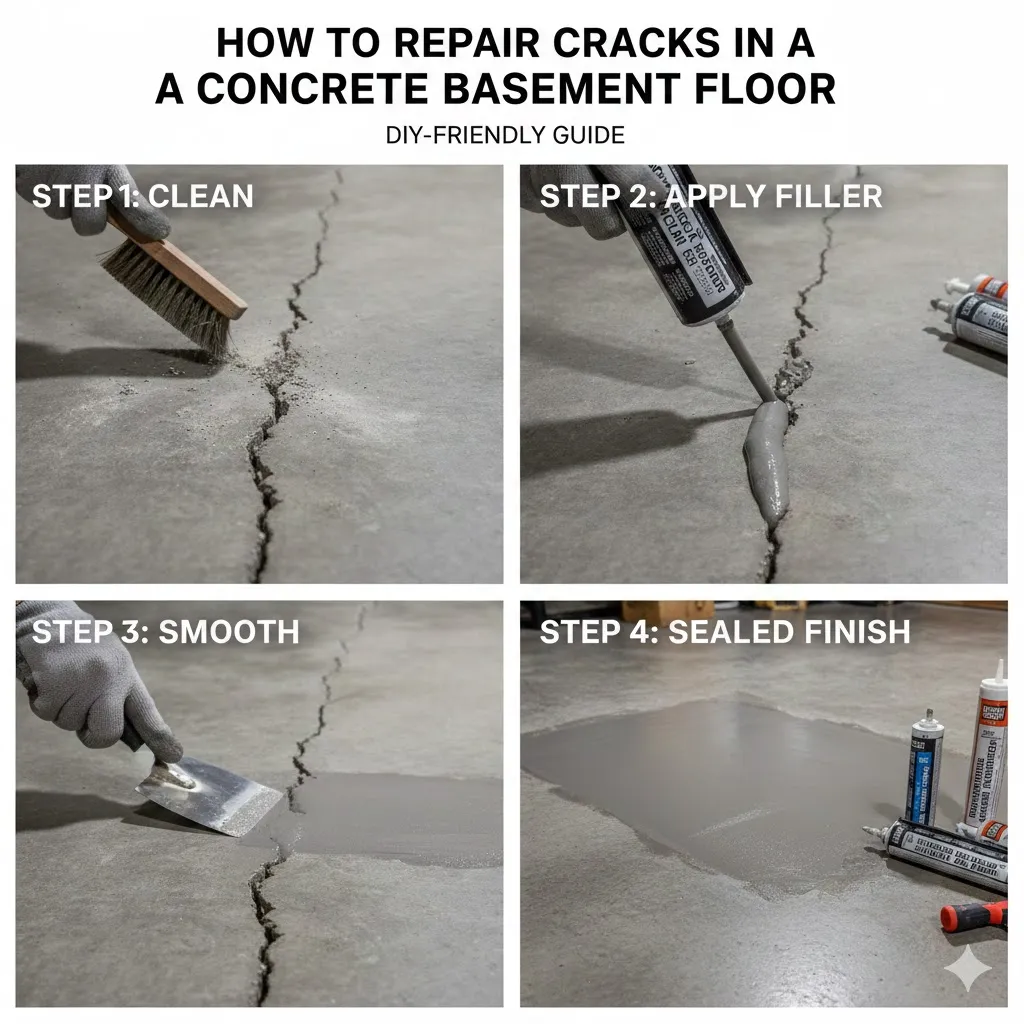
Step 1 – Clean and Prepare the Crack
- Remove dust, debris, and loose concrete.
- Use a wire brush or vacuum for thorough cleaning.
Step 2 – Choose the Right Repair Material
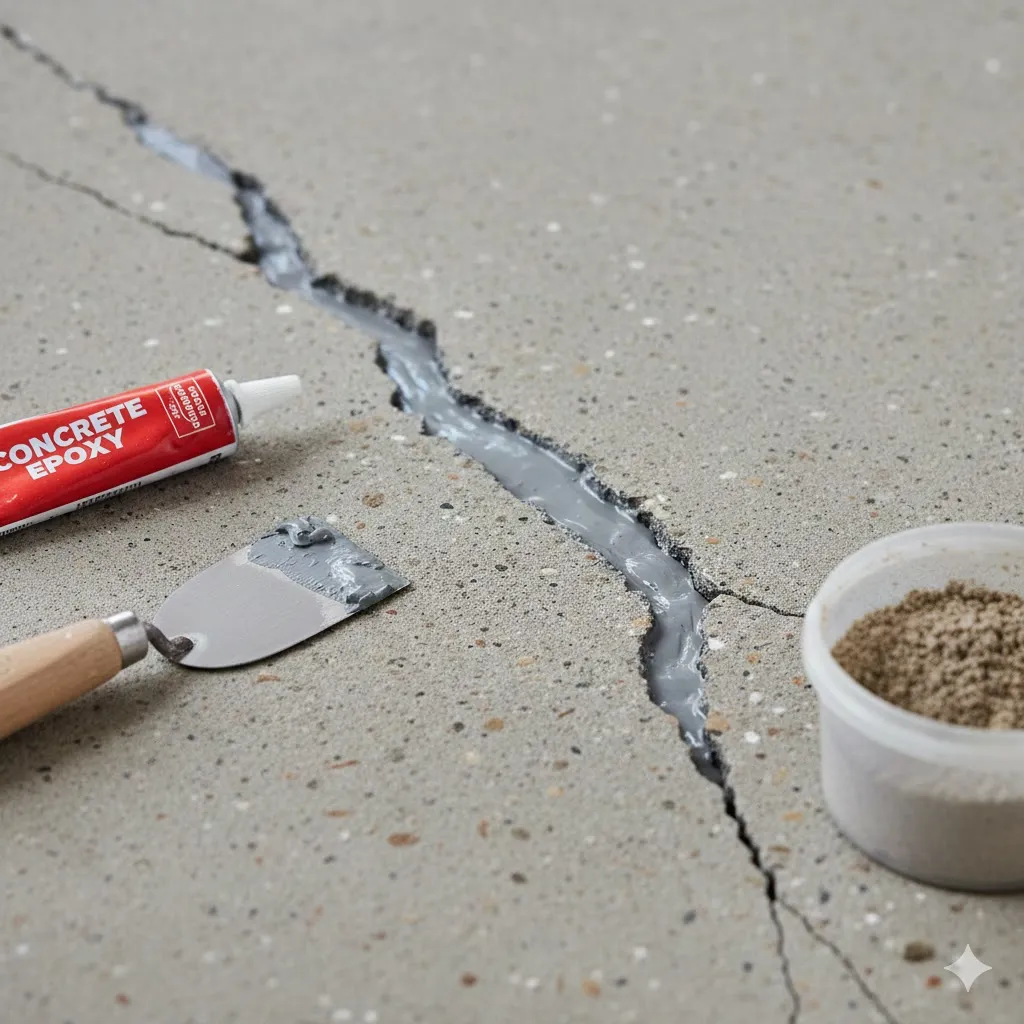
- Concrete crack filler for small cosmetic cracks
- Epoxy injection for structural strength
- Polyurethane sealant for flexible, water‑resistant repairs
- Hydraulic cement for fast‑setting, moisture‑blocking fixes
Step 3 – Apply the Repair Product Correctly
- Narrow cracks: squeeze filler directly into the gap.
- Wide cracks: use epoxy or cement with proper mixing and application tools.
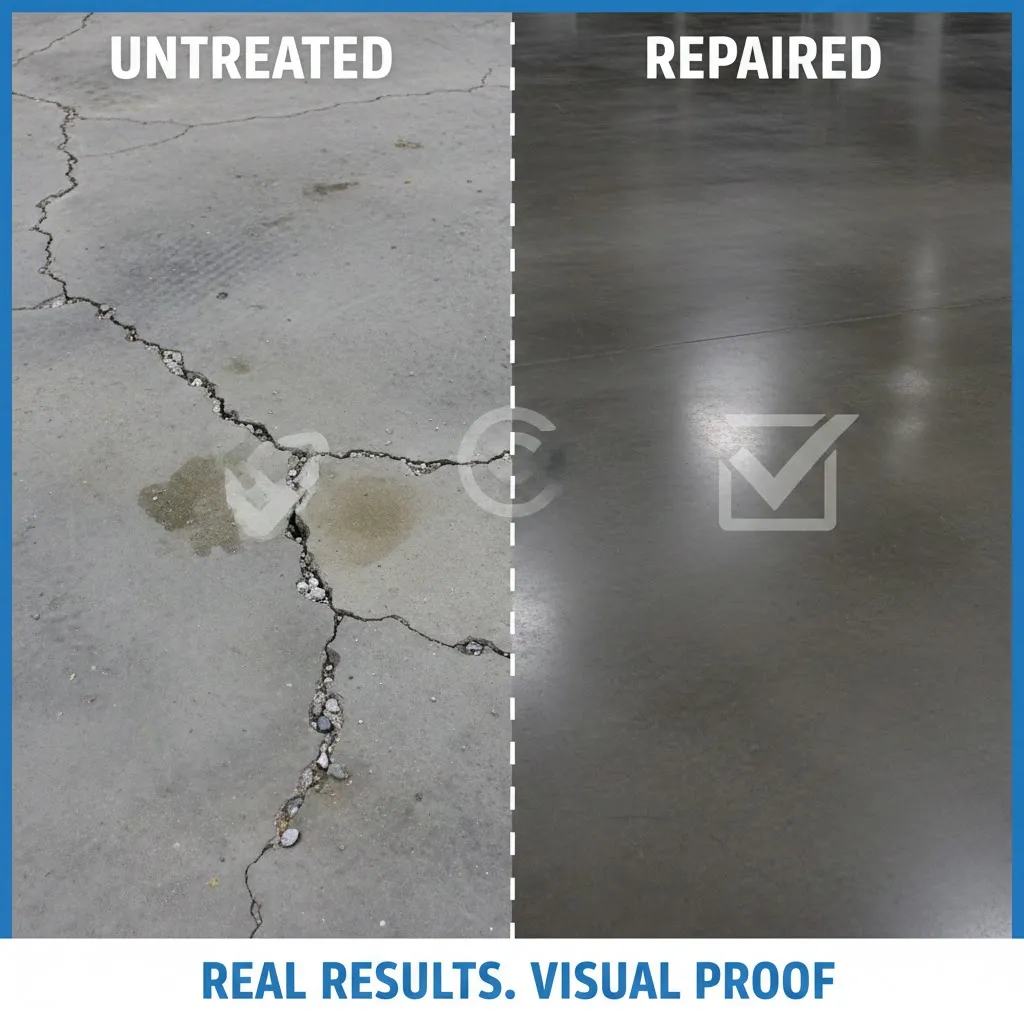
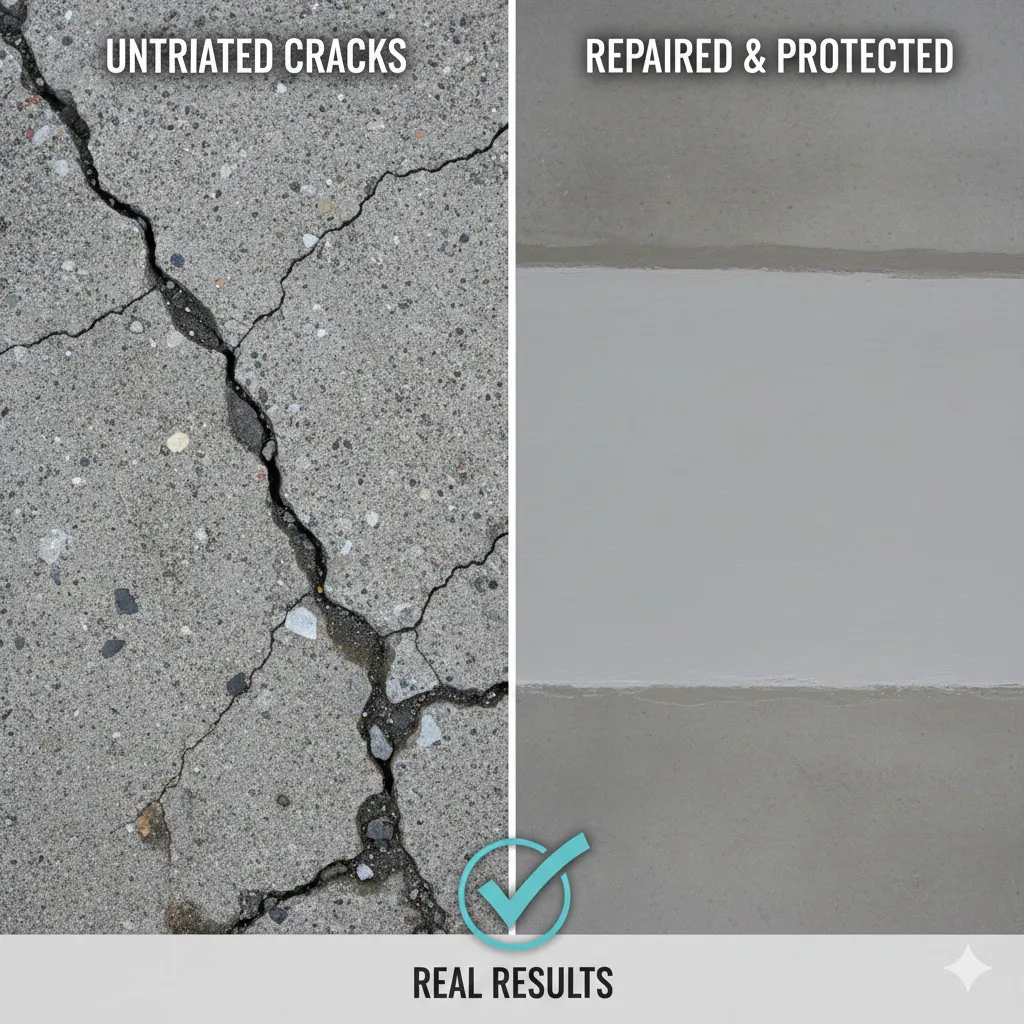
- The goal of concrete floor crack repair is to restore strength and block water intrusion.
Step 4 – Cure, Seal & Protect the Floor
- Allow proper drying time.
- Apply a concrete sealer to prevent future moisture damage.
Best Materials for Concrete Basement Floor Crack Repair
- Epoxy Crack Repair – strongest option for structural reinforcement
- Polyurethane Sealants – ideal for active or water‑leaking cracks
- Cement‑Based Crack Fillers – affordable DIY choice for small cracks
- Hydraulic Cement – fast‑setting, moisture‑resistant solution
How Much Does It Cost to Repair a Crack in the Basement Floor?
DIY Basement Floor Crack Repair Costs
- $20–$100 depending on materials
Professional Repair Costs
- $300–$1,500+ depending on severity, water intrusion, and leveling needs
Cost Factors That Affect Pricing
- Crack length and depth
- Moisture problems
- Basement accessibility
How to Prevent Basement Floor Cracks in the Future
- Ensure proper drainage around the foundation
- Waterproof basement walls and floors
- Apply concrete sealers regularly
- Maintain stable indoor humidity levels
When Basement Floor Cracks Signal a Bigger Foundation Problem
Warning signs include:
- Cracks growing wider over time
- Uneven or sloping floors
Wall cracks near floor joints
- If these appear, consult a structural or foundation expert immediately.
FAQs About Concrete Basement Floor Crack Repair
- Can cracks in the basement floor be repaired? Yes, most are repairable.
- Can you repair a cracked concrete floor? Yes, depending on severity.
- How much does it cost to repair a crack in the basement floor? $20–$100 DIY, $300–$1,500+ professional.
- Are basement floor cracks normal? Hairline cracks are common; wide cracks may signal issues.
- Should basement floor cracks be sealed? Yes, sealing prevents moisture and further damage.
Final Thoughts: Fix Basement Floor Cracks Before They Get Worse
Early concrete floor crack repair saves money and prevents bigger problems.
- Hairline cracks: DIY fixes are usually fine.
Wide or water‑seeping cracks: call a professional.
-
- The right approach depends on crack type, but acting quickly is always the best choice.